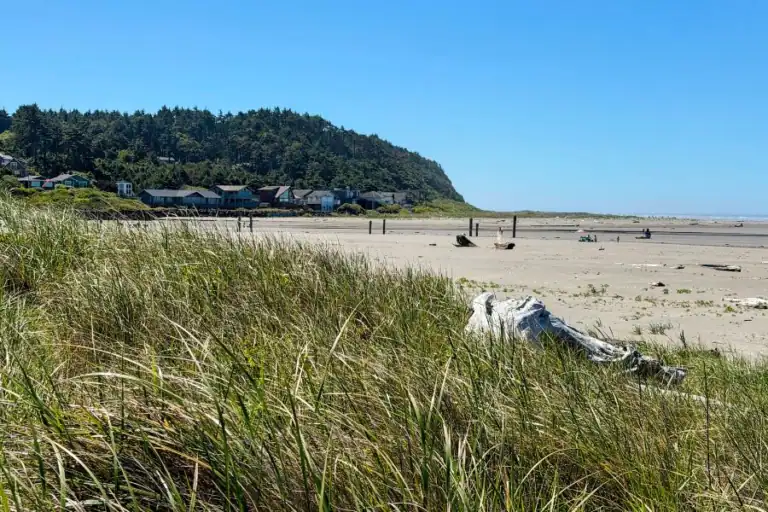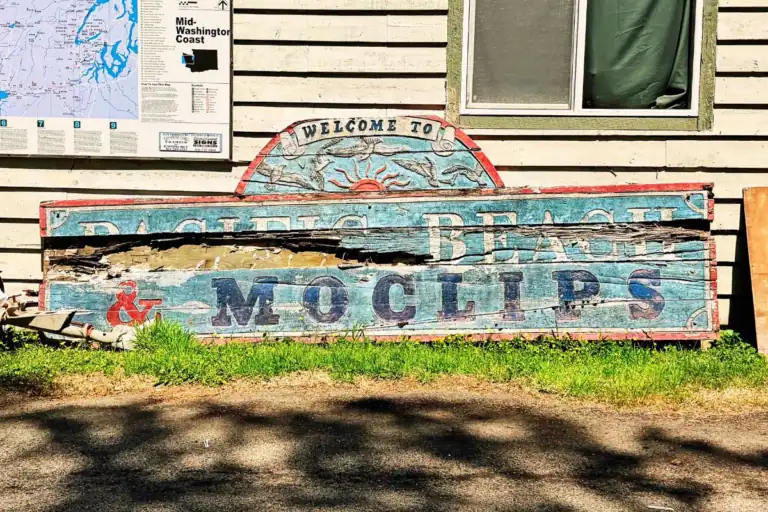

What Pacific Beach Looks Like Today.
If you’ve been following along with my journey through the West Coast’s wild boomtown days… from the grand lost resorts of Moclips to the timber boom of Aberdeen, you know this stretch of Washington’s coastline rarely stays static.
Pacific Beach History Series: This is Part 3. Start with Part 1: the railroad and resort era, then continue to Part 2: WWII, radar, and Cold War surveillance.
After decades of roaring trains, anti-aircraft drills, and all sorts of Cold War surveillance up on the bluff, Pacific Beach has finally settled into its own laid-back groove.
But unlike towns that pave over their past, Pacific Beach wears every era right on its sleeve.
Modern Pacific Beach, Washington today doesn’t bother hiding its older layers.
Honestly, that’s one of the things I love about it.
Drive through town and you’ll spot shiny new vacation rentals cozied up right next to homes that have definitely seen a few decades… and probably a few questionable paint jobs.
Military cottages still occupy the bluff.
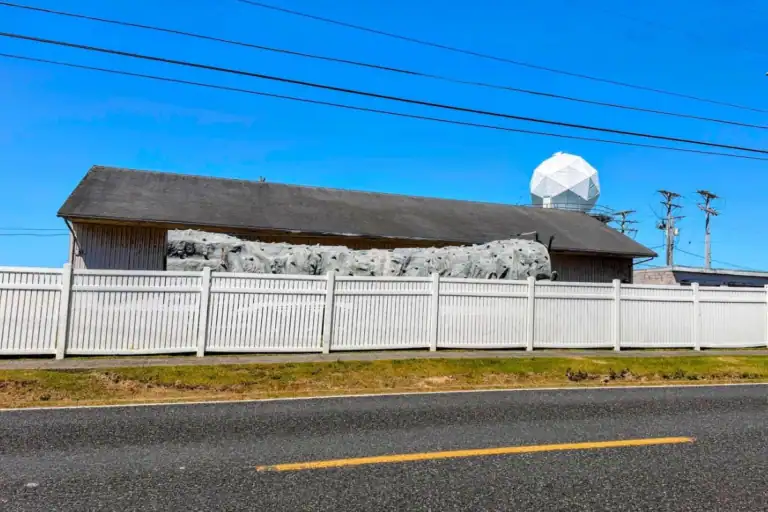
Older commercial buildings sit among newer businesses.
Blackberries and ivy creep around spots that look like they’ve been waiting forever for someone to finally decide what to do with them.
Then, just a few minutes south, you hit Seabrook.
Suddenly, everything feels a lot more… intentional.
Fresh cottages.
Walkable streets.
Landscaping.
Restaurants and boutiques.
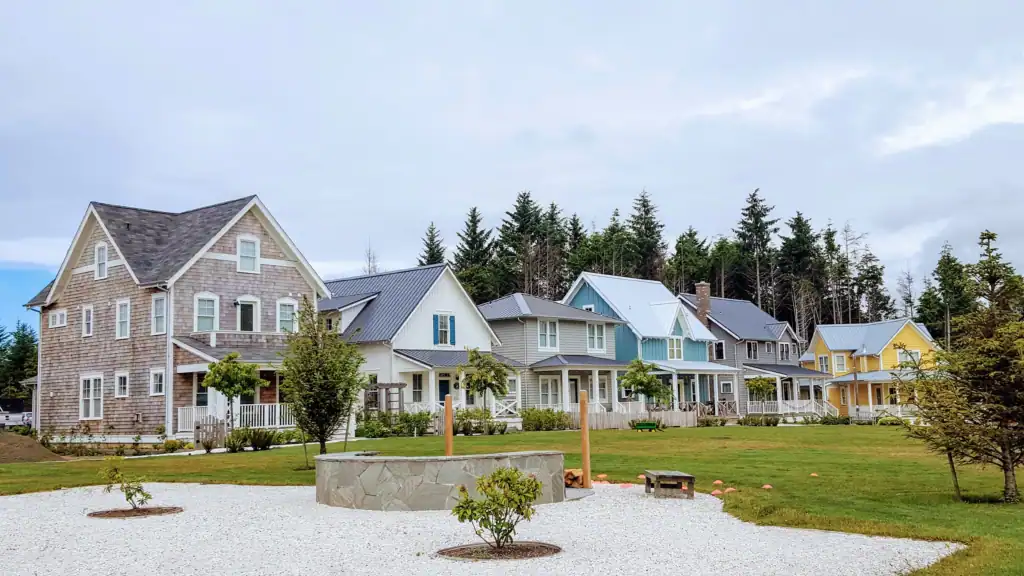
It’s almost like you’re seeing two totally different versions of Washington coast tourism, sitting side by side and pretending not to notice each other.
One has been carefully planned. The other evolved.
Pacific Beach doesn’t hide its history. It’s been logged, built up, torn down, militarized, reimagined, and rediscovered… and somehow, you can still spot little bits and pieces of all those past lives if you know where to look.
Quick View: Pacific Beach Today
- Overall vibe: Quiet, weathered, relaxed, noticeably less polished than nearby Seabrook.
- What stands out: Run down homes mixed in with renovated and new vacation rentals, military cottages, small local businesses, wide open beach access.
- Best for: Quiet coastal escapes, solo getaways, history lovers, storm watching, camping, and those who like small towns with character.
- History you can still see: Navy property on the bluff, old transportation corridors, longtime local buildings, and the nearby Museum of the North Beach.
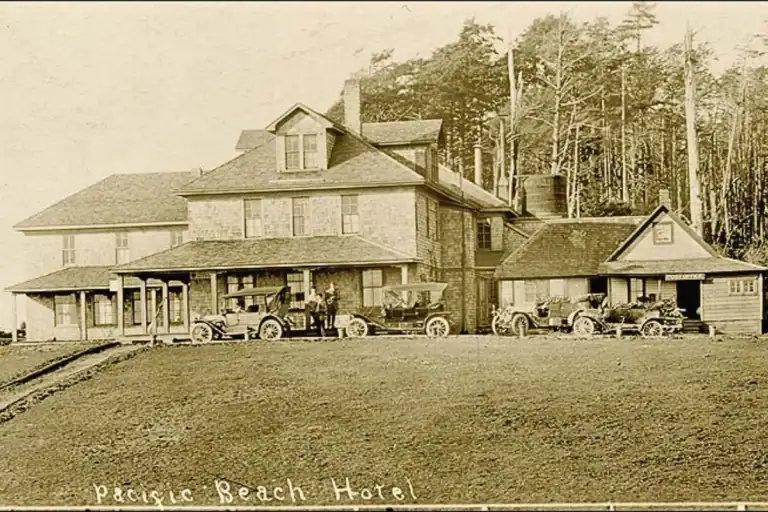
- What has changed: The grand hotel, railroad, wartime training, and Cold War surveillance are gone.
- What has not changed: The beach, the weather, the tides, and the reason people still come here to get away from everyday life.
Where to Find Pacific Beach History Today:
Pacific Beach does not have one big historic district where everything is neatly labeled and preserved. Its history is scattered around town in small pieces, on the bluff, along old transportation routes, and in buildings that have taken on new lives.
That is part of what makes exploring it interesting.
Once you know what you are looking for, the town starts to reveal itself a little differently.
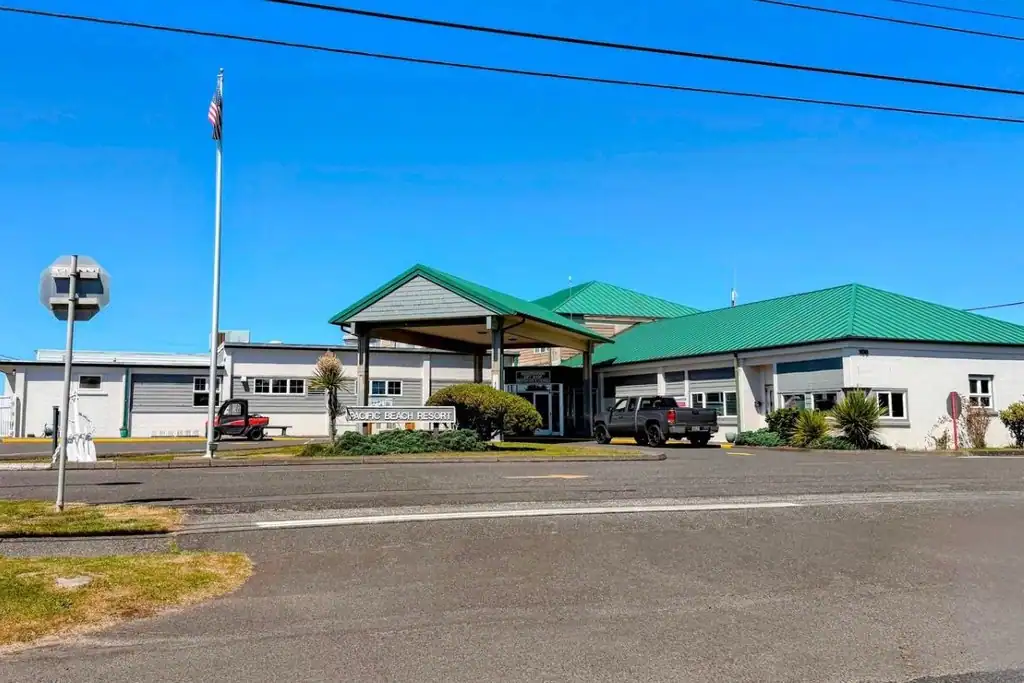
The current Navy recreation property occupies the same bluff that once held the Pacific Beach Hotel and later housed WWII training and Cold War surveillance facilities.
These days, it’s hard to imagine this place as anything but a quiet coastal escape. Rows of low cottages line the bluff and wind along the little roads, some so close to the ocean you could almost claim the beach as your backyard.
Navy Getaways has the whole setup… hotel rooms, RV and camping spots, and those fully furnished cottages (three, four, or five bedrooms if you’re feeling fancy).
However, you do need some kind of military connection to book a stay.
That’s one of the interesting things about Pacific Beach… a spot that used to be all about training sailors and top-secret Cold War business is now the backdrop for family vacations, reunions, and weekends spent digging for clams or just hanging out by the water.
You can still feel the military connection in the layout and the simple buildings in all the same style that scream ‘company houses’, but the purpose has changed completely.
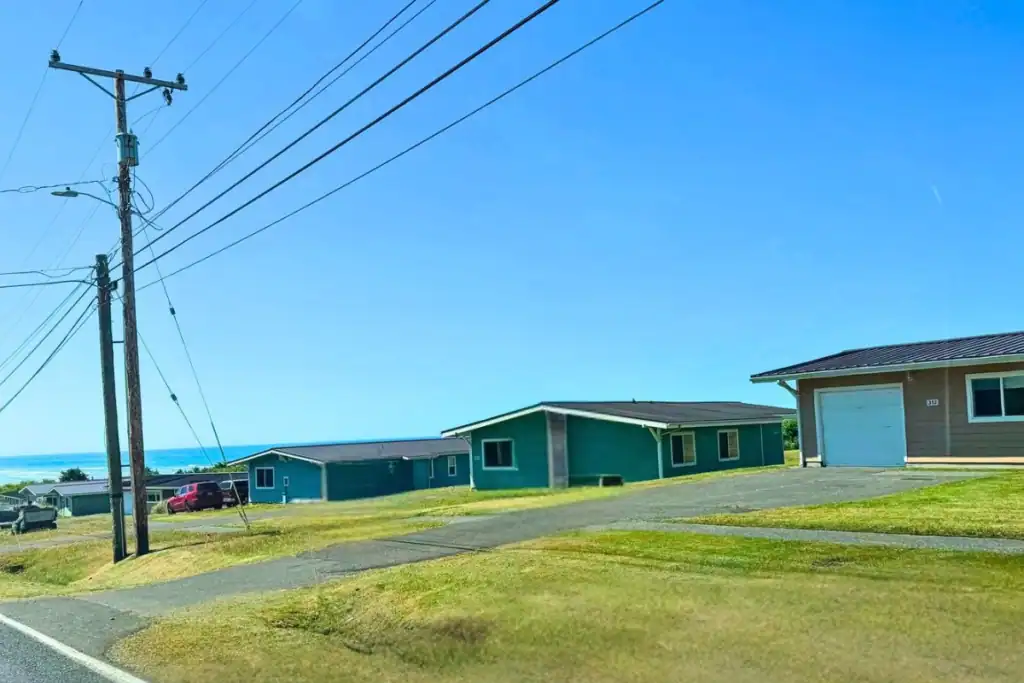
Now, instead of drills and surveillance, you’ll spot families hauling coolers, kids making a beeline for the sand, dogs getting their daily sniff along the bluff, and people just settling in for a much-needed weekend away.
The Pacific Beach Café is right there on the property too, serving up casual lunch and dinner… just check the hours, since they can be a little unpredictable depending on staffing.
When I stopped by, a sign said the Pac Beach Café and bar are open to the public, even if you need the right connections to stay overnight. I would still advise verifying that before planning the cafe as your main stop.
Pacific Beach State Park and Joe Creek:
Pacific Beach State Park sits right in the center of town, with camping, day-use access, and a wide stretch of beach just steps away.
The park grew out of the first homesteads built in Pacific Beach, which later became a private campground near the mouth of Joe Creek before Washington State Parks began acquiring it in the early 1970s.
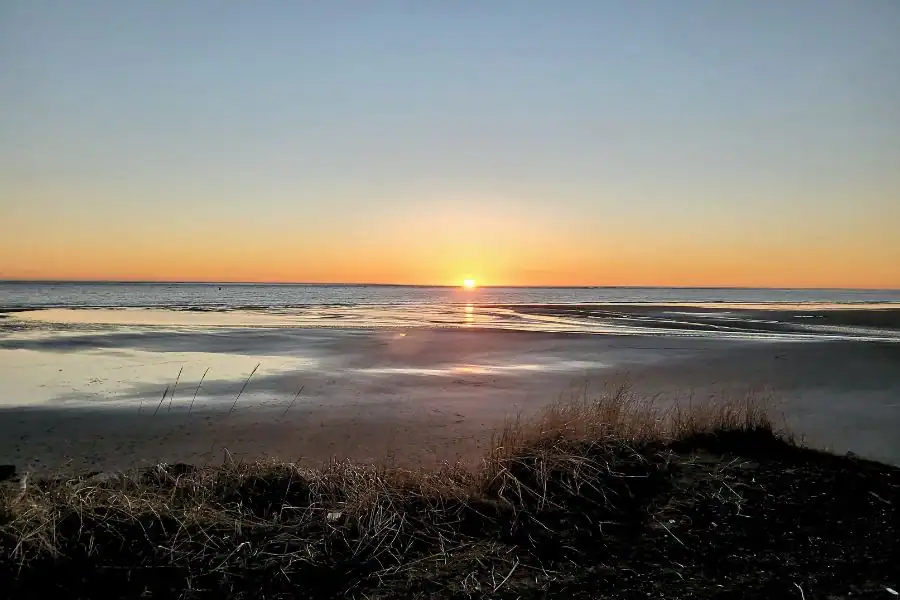
Joe Creek is one of those things you’ll probably walk right past if you’re laser-focused on hitting the ocean… but it’s actually one of the oldest parts of the Pacific Beach story.
The creek winds its way to the beach right by the state park, and way before there were hotels, railroad tracks, or those cute little vacation cottages, this spot was a stopping place for Indigenous people traveling up and down the coast between trading centers.
That makes this a good place to pause and reflect for a minute instead of simply walking straight toward the surf.
Stand by the creek, look out toward the beach, and try to picture this coastline before there was even a town here.
Back then, the creek was a source of freshwater for people moving between communities, gathering food, and traveling the shore… long before Pacific Beach was on anyone’s vacation radar.
These days, it’s a whole different scene.
RVs and tents pack the campground, people are out walking their dogs, and when clam season hits, you’ll see folks heading out onto the sand with their buckets and shovels.
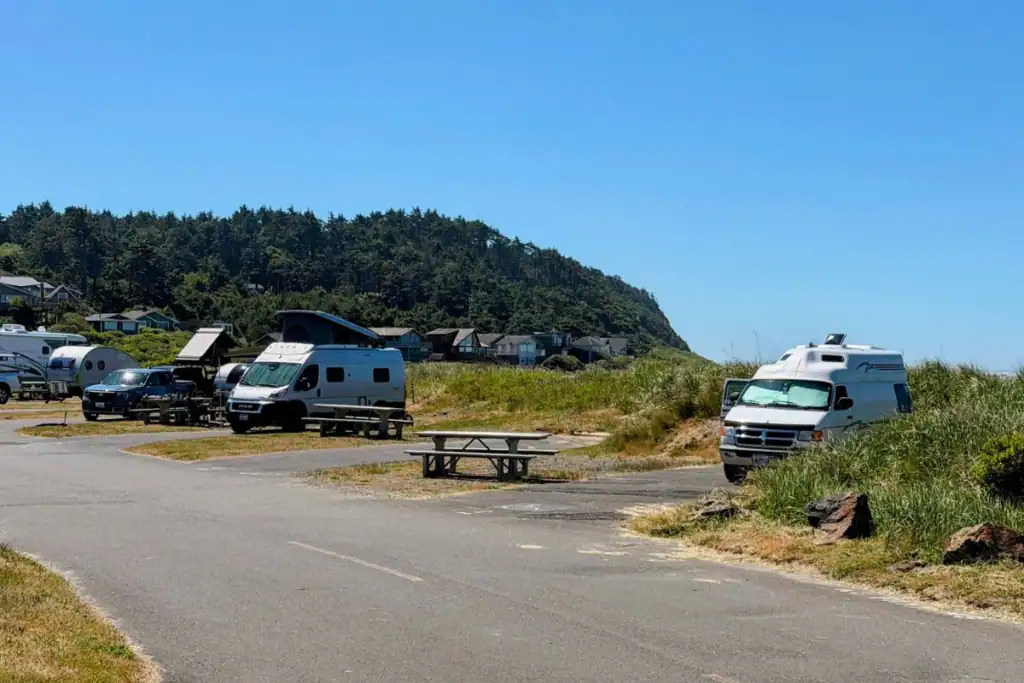
But the same geography that made this a perfect stopping spot way back when… it’s still right here.
The Old Railway Route:
The old Northern Pacific railway is a bit of a ghost these days… most of the rails and structures have vanished, but if you know what to look for, you’ll spot little hints of its path.
One of the easiest spots to see it is right in Pacific Beach, where the old railroad grade slices through a man-made cut that sits lower than the rest of town.
Don’t bother hunting for actual rails… instead, look for a long, suspiciously flat corridor or a shallow trench winding through the landscape, sometimes with steep, overgrown banks on either side.
That flat stretch is the kind of feature a railroad needed to keep trains moving steadily along the coast.
In one of these sections near the old railroad corridor, sit a couple of weathered buildings being swallowed up by the blackberries, that have especially caught my attention.
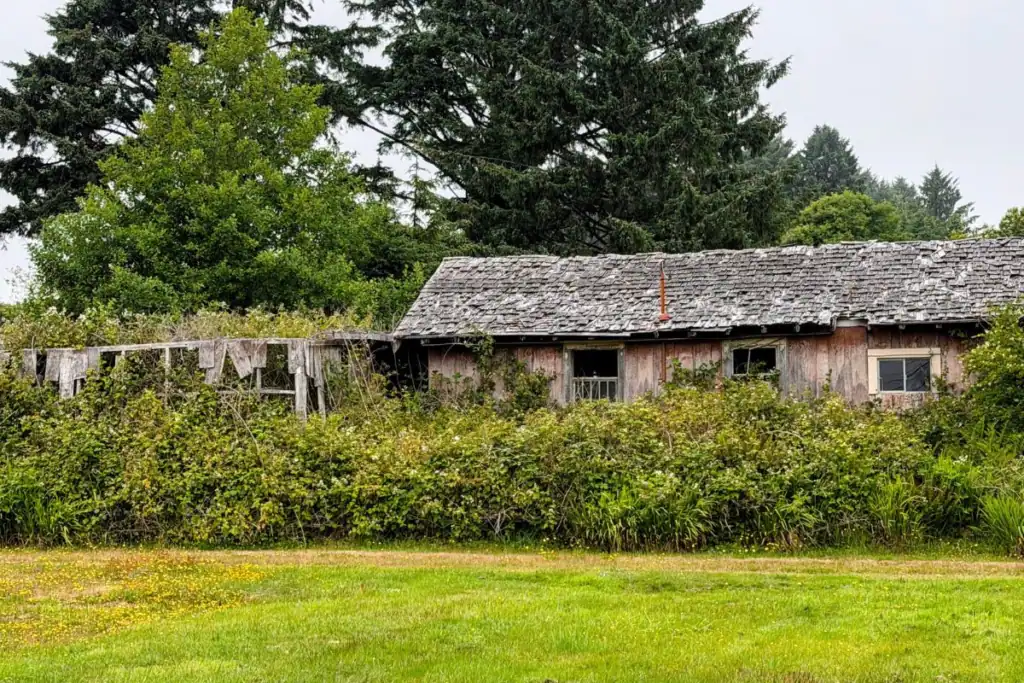
I did some digging, by way of folks from the Museum of the North Beach and locals and found that by the 1970s, they were part of the Driftwood Court Motel, but local records place some of the structures as early as 1929, right around the time the Northern Pacific station was still active nearby.
The small, narrow buildings even have the look of old railroad-era bunkhouses or cabins.
I have not found documentation proving they belonged to the railroad, but their age and location make the possibility intriguing.
For now, they are one more Pacific Beach mystery I am still trying to untangle.
So, What you are seeing today is not an intact abandoned railroad where you can simply follow the tracks. It is more subtle than that.
A flat berm here.
A straight cut through bumpy ground over there.
A corridor vanishing under a tangle of blackberry vines.
Once you realize trains used to haul vacationers and supplies right through Pacific Beach toward Moclips, all those weirdly flat patches of ground suddenly make a lot more sense.
I honestly love that about this stretch of coast… the railroad might be mostly gone, but the land still remembers.
The Museum of the North Beach:
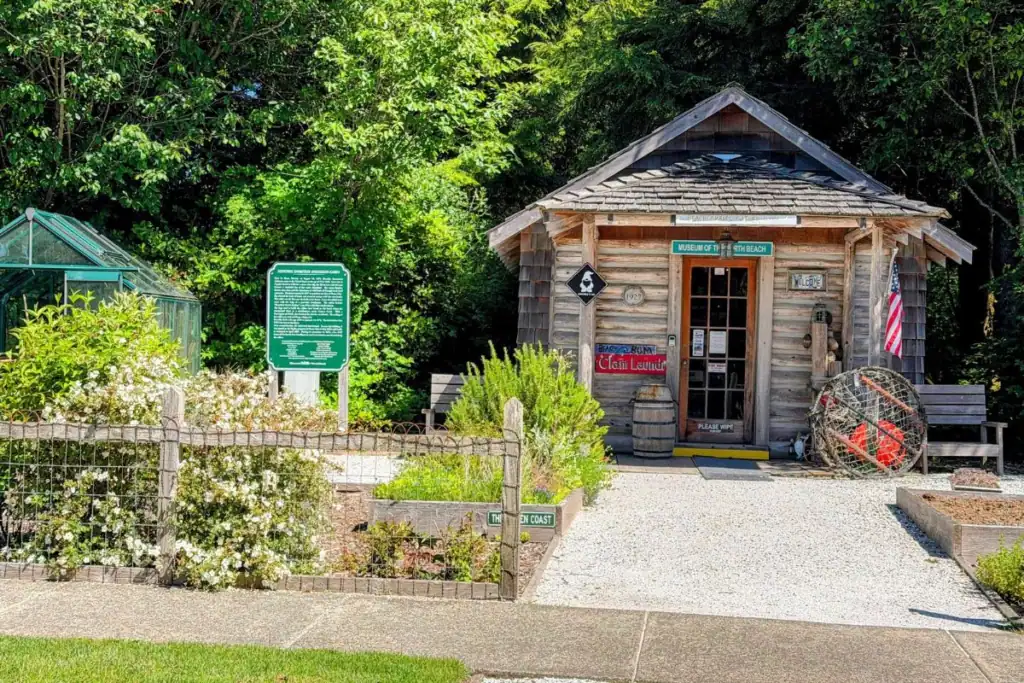
If you are interested in the history of Pacific Beach and Moclips, the Museum of the North Beach is one of the best places to dig deeper.
The museum is temporarily operating out of a historic cabin in nearby Seabrook while work continues on its new permanent home.
The smaller setting gives the museum a cozy, almost tucked-away feel, but it still does a great job of bringing the North Beach resort era to life through historic photographs, hotel artifacts, railway memorabilia, and stories from Pacific Beach, Moclips, and the surrounding coast.
It is one of those places where I usually end up spending far longer than I planned because one old photograph leads to another story, and then another rabbit hole.
When the new museum site is complete, it will give these collections more room, but for now, the Seabrook cabin is still well worth the stop.
The temporary location is worth a look on its own.
The museum is currently housed in the historic Dorothy Anderson Cabin in Seabrook, so even before you start browsing the exhibits, you are already standing inside another piece of North Beach history.
What Changed and What Stayed the Same:
Pacific Beach looks very different from the town those first railway passengers visited.
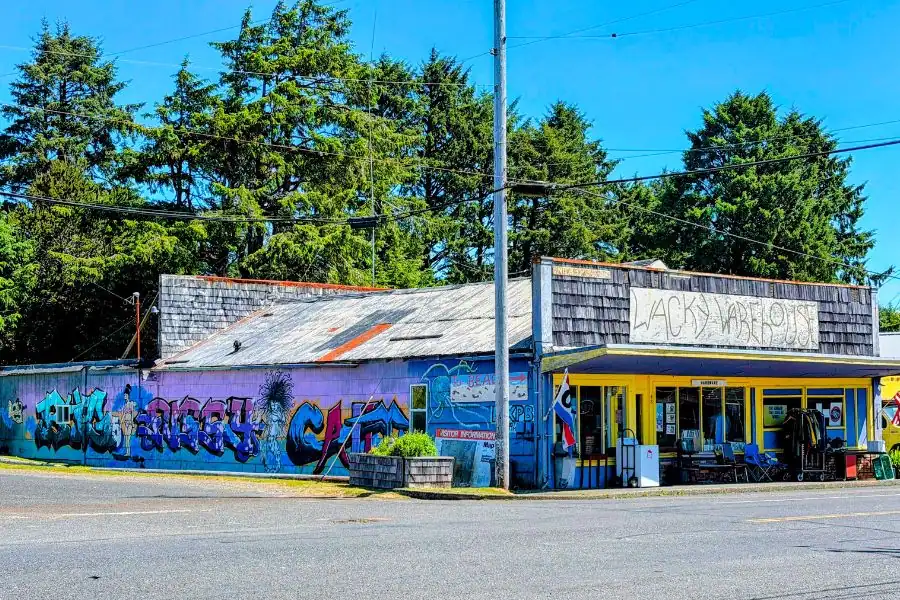
The big hotel is gone.
The trains are gone.
The anti-aircraft guns are gone.
The radar equipment is gone.
The classified listening station is gone.
The surrounding forest has also changed.
The landscape that got pretty much clear-cut during the timber years has had decades to grow back.
What feels lush and tucked-in along Route 109 now is really just nature doing its thing and taking back what was once all work and no play.
But some things have not changed nearly as much.
The weather still decides what kind of day you are going to have.
The tide still controls clam digging.
The beach is still wide and open.
Storms still roll in off the Pacific.
And people still show up here when they need a little space from real life.
More than a century ago, travelers stepped off the train looking for fresh air, ocean views, and a break from the city.
These days, we pull into Pacific Beach with rain jackets, coffee, groceries, dogs, kids, books, or absolutely no plans at all… and honestly, that last one is my favorite.
Different century.
Same basic idea.
Why Pacific Beach History Still Matters:
Pacific Beach has never stayed the same for long.
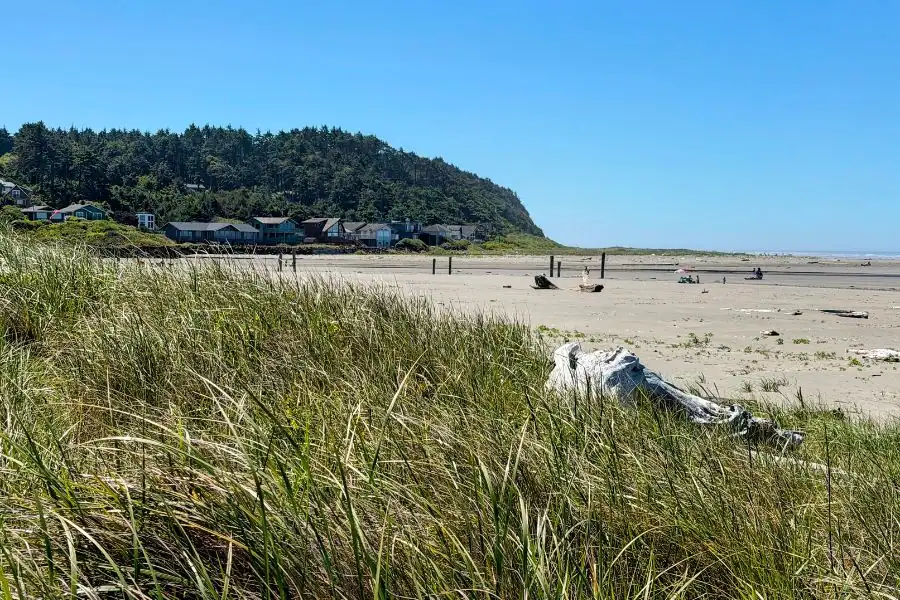
It was part of an Indigenous travel and gathering landscape long before it became a town.
Then came homesteaders, timber companies, mills, and the railroad.
The railroad brought vacationers.
The resort brought workers.
Fire brought rebuilding.
War brought the Navy.
The Cold War brought radar and submarine surveillance.
Eventually, the same bluff used for military training and secret defense work became a place for people to relax again.
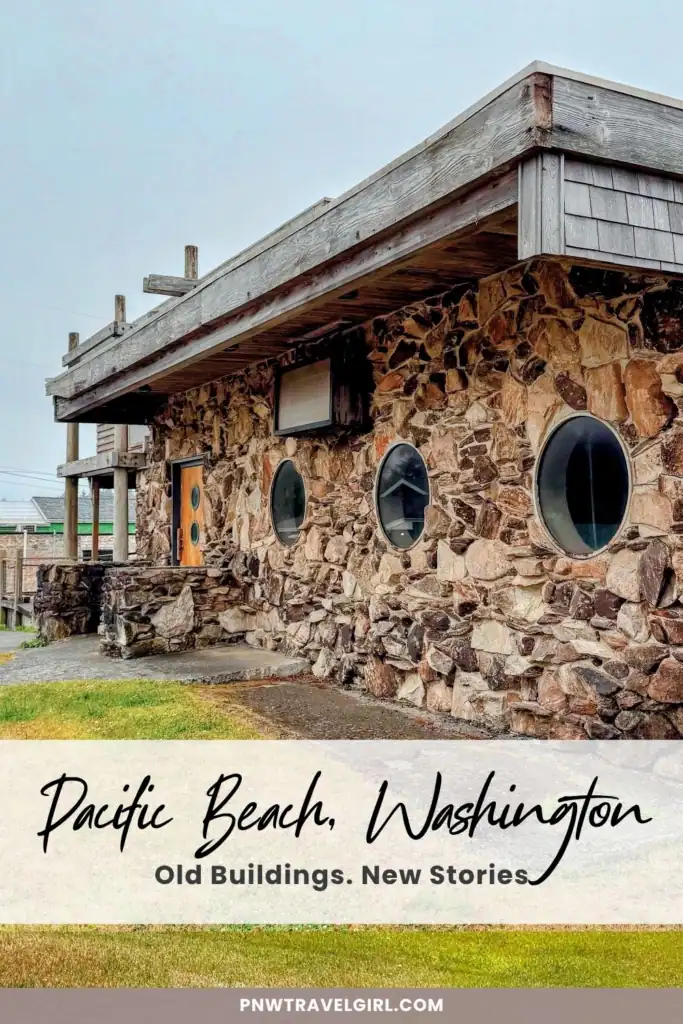
That’s what makes Pacific Beach interesting to me… it didn’t stick around because nothing ever changed. It’s still here because it just kept rolling with whatever came next.
You can still come here and simply enjoy the beach.
You do not need to know anything about the railroad, the old hotel, or Soviet submarines to have a good weekend.
But once you know the history, the town feels different.
The bluff becomes more than a pretty viewpoint.
The Navy cottages become more than lodging.
Those overgrown corners and weathered old buildings start to feel less like they’ve been forgotten and more like they’re just part of a place that’s lived a lot of different lives.
Pacific Beach might not have Seabrook’s shiny new look or Moclips’ dramatic lost-resort backstory. What it does have is something a lot quieter.
Layers.
And if you slow down enough to actually notice, this little town along Route 109 gets far more interesting than you’d expect.
Continue the Pacific Beach Story
If you missed the earlier parts of this series, you can follow Pacific Beach from its resort beginnings through its military years and into the town you see today.
- Part 1: Pacific Beach’s railroad and grand resort era
- Part 2: WWII training, radar, and Cold War submarine surveillance
- Part 3: Pacific Beach today and where the past still shows
Planning Your Own Pacific Beach Trip?
If this history has you wanting to see Pacific Beach for yourself, my full Pacific Beach, Washington guide covers where to stay, where to eat, what to do, and what the town feels like today.