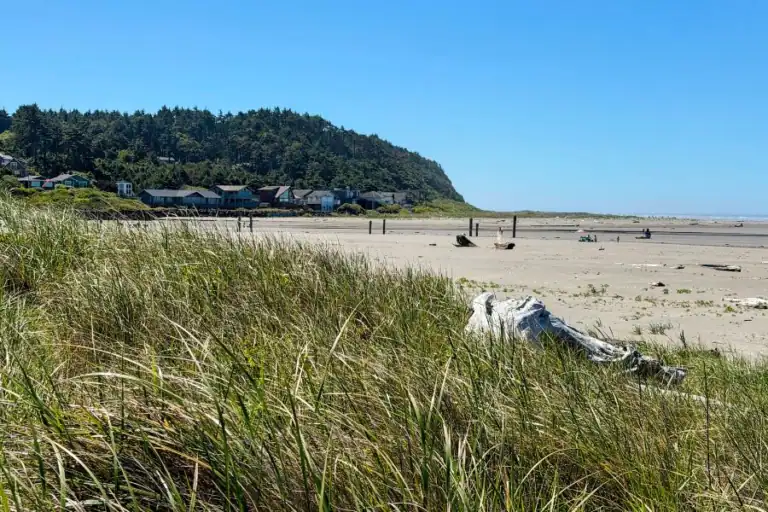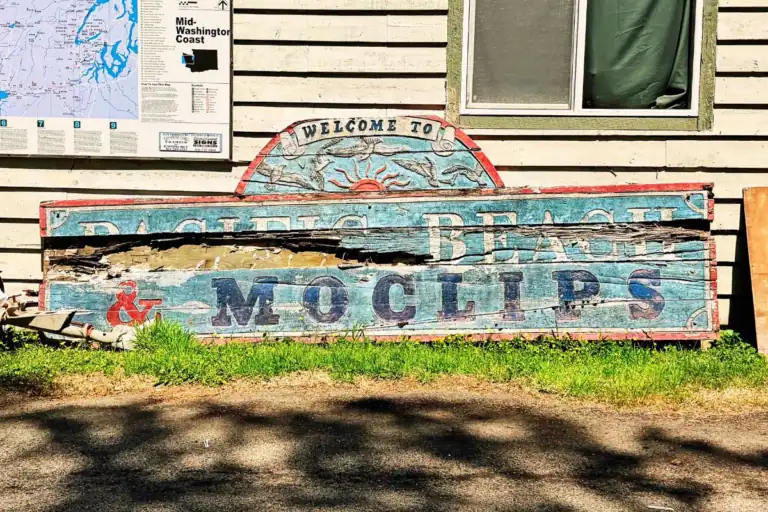

Imagine stepping off a luxury passenger train in the early 1900s, the salty ocean air mixing with smoke from a steam engine.
Long before it became a quiet coastal getaway, Pacific Beach, Washington was a bustling hub of logging, grand hotels, and high-society beach vacations.
(Planning a trip here soon? Be sure to pair this history with my ultimate Pacific Beach Travel Guide for where to stay, eat, and explore today!)
Before we dive into the old railroad tracks and vanished resorts, a quick behind-the-scenes note from me:
I’m not here to write a textbook…
I’m just a history-obsessed traveler with a soft spot for Washington’s wild coast.
This series is basically my love letter to the beaches, bluffs, and all the weird, wonderful history I’ve dug up.
This has included assistance from my friends, Gemini and ChatGPT, to guide me on where to look and how to put it together.
Is this 100% academic?
Not a chance.
But it’s the coast as I know it and love it. If you’re here for stories and not a history exam, let’s get going.
Quick View:
- Early roots: The area was part of an Indigenous coastal travel and gathering landscape long before non-Native settlement.
- Working town: Logging, mills, seafood, and transportation shaped the early community.
- Railroad era: The Northern Pacific Railway made Pacific Beach much easier to reach.
- Resort boom: The Quinault Inn and later Pacific Beach Hotel turned the bluff into a popular seaside getaway.
- What visitors came for: Ocean air, clam digging, storm watching, dancing, and a break from city life.
- Why this chapter matters: This resort era set the stage for the military takeover that came next.
Anyone who has taken Route 109 north from Hoquiam already knows this part of the Washington coast starts to feel different pretty quickly.
The road becomes narrower, the towns shrink, and the further you travel, the more the landscape dominates.
Tall evergreens border the highway, the ocean shows up and then vanishes among the trees, and in the end you arrive at Pacific Beach.
Today, Pacific Beach is quiet and a little weathered… in the best way.
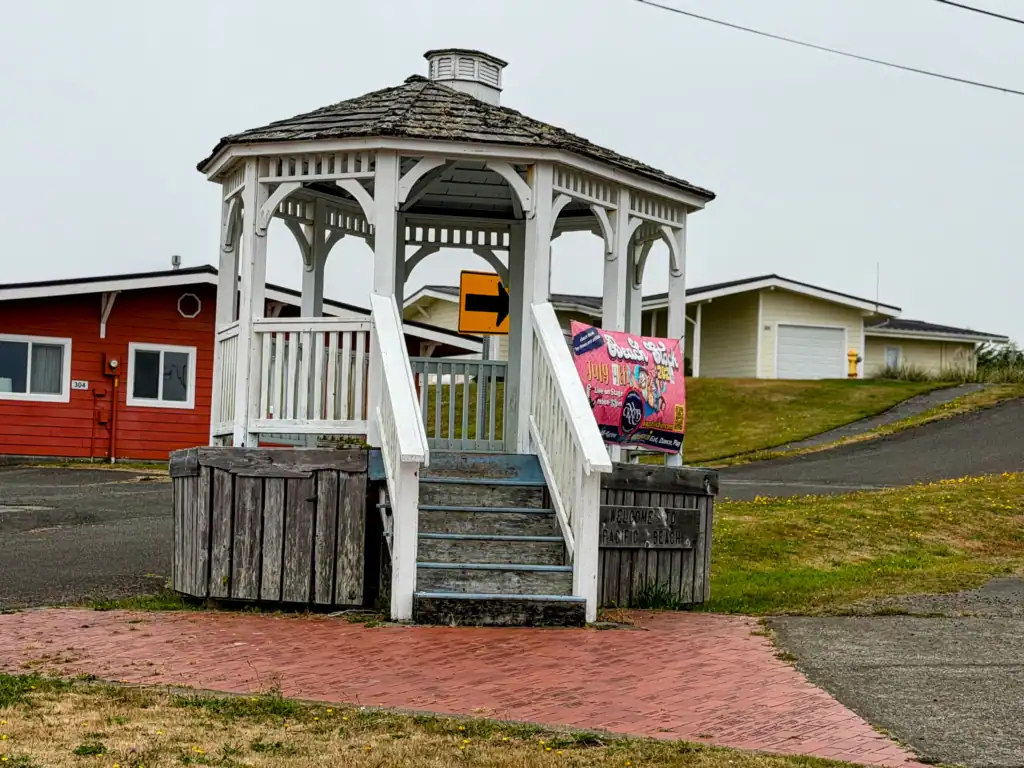
It sits north of Seabrook and south of Moclips, with a state park, a few local businesses, older homes, vacation rentals, and Navy property on the bluff overlooking the ocean.
Pacific Beach hasn’t just survived… it kept adapting.
Over the decades, it has transformed into:
- A rugged working logging coast
- An elite railway resort destination
- A vital WWII military training site
- A top-secret Cold War submarine-listening network
Before anyone was swinging axes or firing up steam trains, this part of the Washington coast was pure wilderness.
The Quinault Indian Nation and other coastal tribes had been walking these beaches for generations, living off the ocean, rivers, and heavy coastal forests long before outsiders arrived.
The landscape was defined by impenetrable old-growth timber that met the breaking waves of the Pacific.
To early pioneers, the area was isolated, rugged, and nearly impossible to reach by land.
- The Only Highways: Early travelers relied on tribal canoe routes winding along rivers or braved risky trails carved into the hard-packed beach sand at low tide.
- The Early Landscape: The cozy beach town we know today was once hidden behind a wall of towering cedar and fir, cut off from the busy cities of Puget Sound.
Pacific Beach Before the Railroads and Resorts
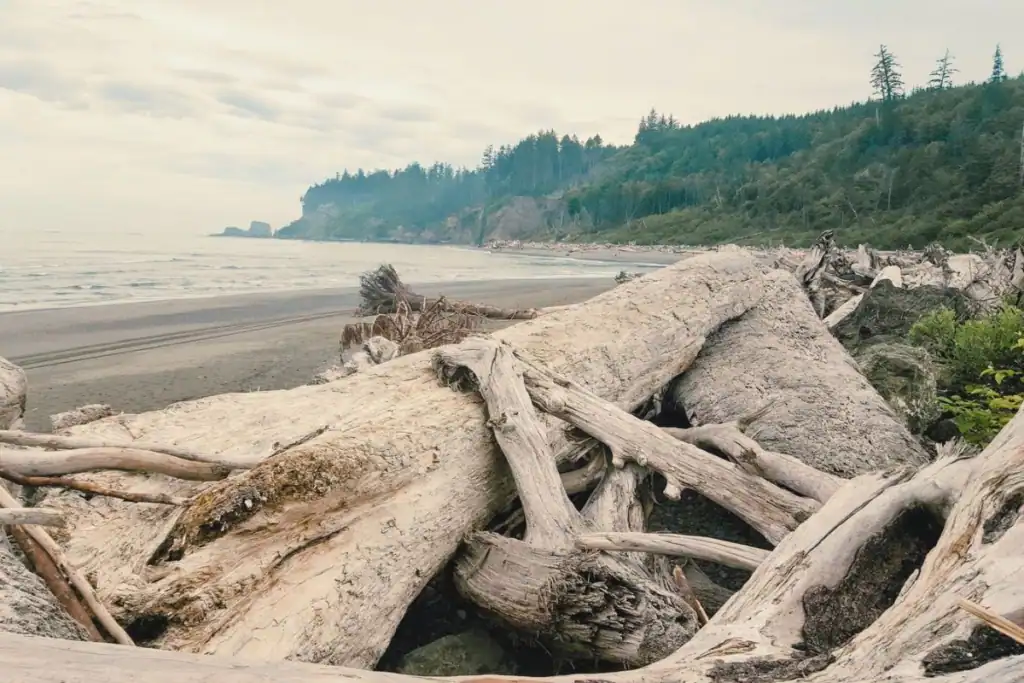
Indigenous peoples had lived in this area long before tourists started searching for a room with an ocean view.
For generations, the Quinault Indian Nation and neighboring coastal tribes knew the beaches, rivers, tides, forests, and seasonal food sources intimately… far better than those who came afterward to develop the region.
The coast wasn’t an untamed wilderness to be conquered; it was a deeply connected home, pantry, and highway system managed perfectly for thousands of years.
The Coast Salish people used the mouth of Joe Creek… located right near present-day Pacific Beach State Park, as a strategic rest stop while traveling between various trading centers along the outer coast.
Today, this historic area is part of the traditional territories of groups whose descendants include members of both the Quinault Indian Nation and the Confederated Tribes of the Chehalis Reservation.
📍 Then vs. Now: When you stand by Joe Creek today, it might look like just a nice little spot where freshwater meets the ocean sand. But centuries ago, this exact creek mouth was a vital crossroads in a much larger coastal travel, trading, and food-gathering network.
People traveled along the coast by canoe and on land, stopping at places where fresh water, shellfish, fish, plants, and other resources were available.
A Shift in Perspective: The beach was not merely scenery to the people who lived here… it served as part highway, part storehouse, and part meeting place.
That is worth remembering when we start talking about the “founding” of Pacific Beach.
The town did not begin with homesteaders. It began as part of a landscape people had already deeply known, managed, and used for generations.
How Logging Changed Early Pacific Beach
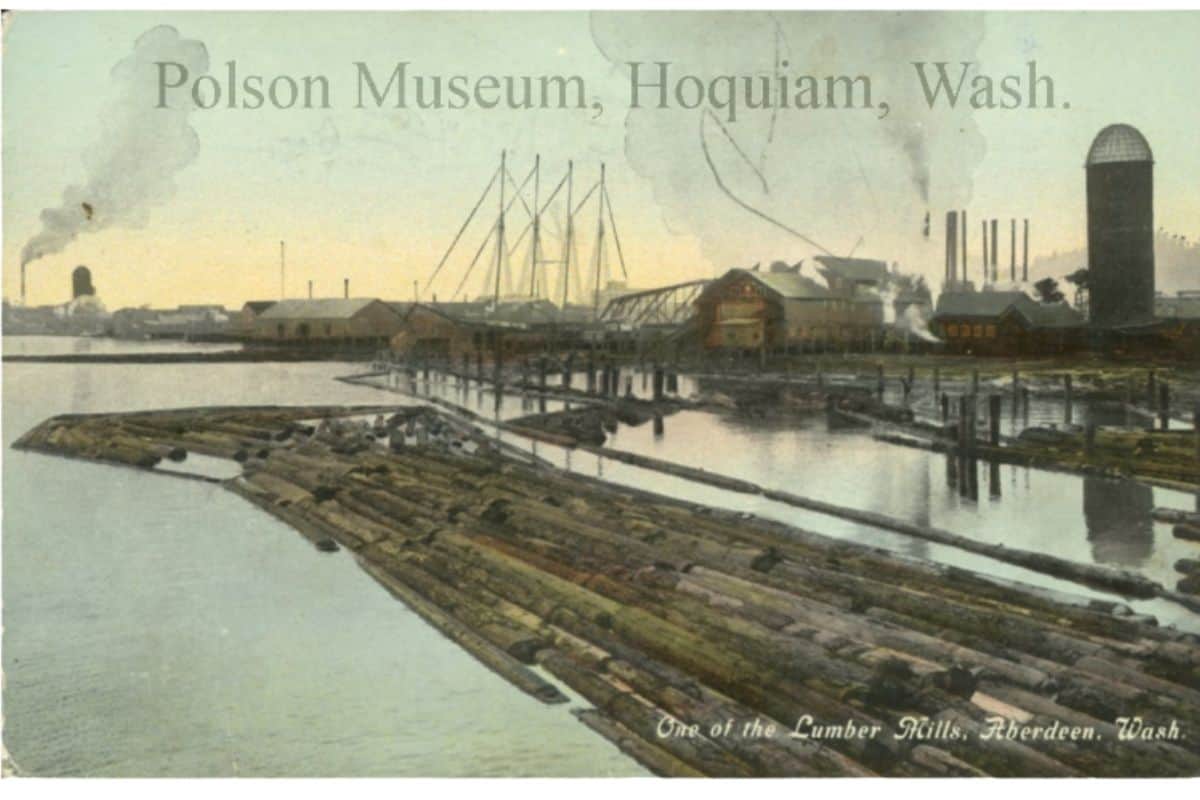
In the late 1800s, homesteaders began laying claims to land along the coastal bluff and Joe Creek. Back then, the area looked vastly different from the lush green corridor you drive through today.
The primary draw for these early settlers was the massive, untouched forest.
The old-growth timber of western Washington was incredibly valuable, sparking a rapid expansion of logging camps, sawmills, and timber companies across the Grays Harbor region.
Instead of an extensive, romantic canopy of mature evergreens, a visitor in the late 19th century would have seen:
- Cleared Hillsides: Massive swathes of forest completely felled and stripped.
- Industrial Scars: Muddy transit roads, fields of giant stumps, and busy mill yards.
- Crude Settlements: Rough wooden buildings scattered among the remaining standing timber.
The Corporate Shift:
According to Washington State Parks records, the land surrounding present-day Pacific Beach State Park passed from early homesteaders straight into the hands of the powerful Hoquiam Timber Company.
Formed by the region’s famous Polson logging brothers, this massive outfit bought up vast stands of North Beach timber, transforming quiet coastal forests into bustling railroad logging camps powered by steam donkeys and winding timber trains.
(If you want to see what life was like in these early logging days, be sure to stop by the excellent Polson Museum in Hoquiam on your drive out to the coast!)
At the turn of the century, Pacific Beach was not yet a romantic coastal retreat. It was a gritty, working industrial landscape.
People lived in the area because there was steady employment to be had in the timber industry, fishing, shellfish harvesting, coastal transportation, and the various small businesses necessary to support a isolated community.
People lived in the area because there was steady employment to be had in the timber industry, fishing, shellfish harvesting, coastal transportation, and the various small businesses necessary to support an isolated community.
The population at the turn of the century consisted of:
- Laborers and mill workers facing long, grueling hours.
- Railroad crews and timber fallers expanding into the woods.
- Shopkeepers, cooks, and housekeepers keeping the camps running.
- Pioneer families attempting to make a living where the weather was severe and travel was rough.
Then, the railroad changed everything.
The Northern Pacific Railway Comes to Pacific Beach
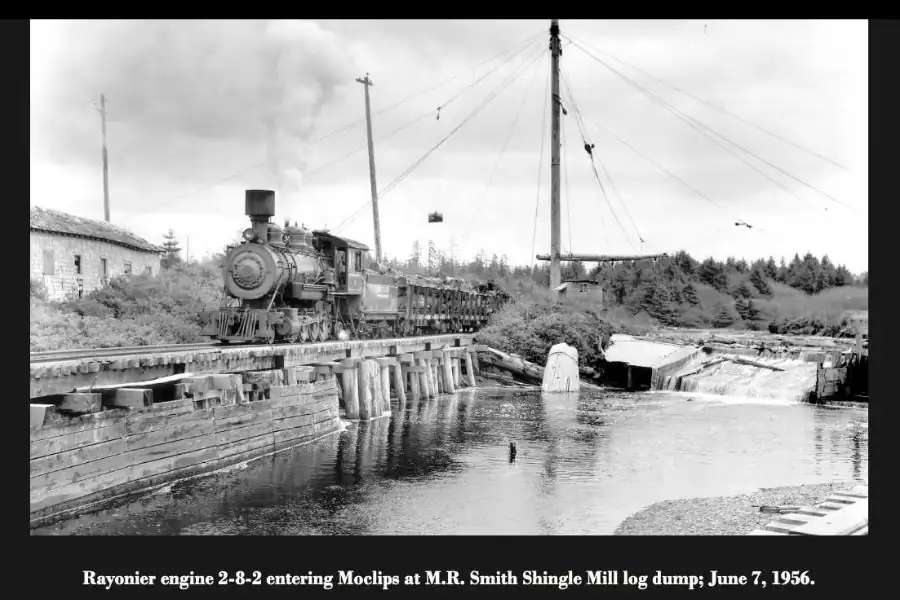
In 1902, the Northern Pacific Railway officially extended its tracks to connect Pacific Beach with the bustling hubs of Aberdeen and Hoquiam.
While it might seem like a simple infrastructure upgrade by today’s standards, back then it completely transformed how people experienced the Washington coast.
Before the rails arrived, reaching this rugged shoreline meant enduring a grueling, uncomfortable journey over rough, muddy wagon roads.
Suddenly, the remote coast became a practical weekend getaway.
Step Back to 1902: Imagine boarding a passenger car at the Hoquiam station, trunk in hand and children in tow. As the steam engine chugs north, you rattle through active timber country and small pioneer settlements, thick locomotive smoke hanging over the route.
Then, the dense woods begin to break. The scenery opens up, the air grows crisp and salty, and the sky suddenly looks massive. Instead of arriving at your destination completely exhausted from a bone-shaking wagon ride, you step off the train refreshed, energized, and ready to walk along the beach.
The railway did far more than just transport people. It turned ordinary citizens into tourists.
And Pacific Beach was ready for them.
The Quinault Inn and Pacific Beach Hotel Resort Era
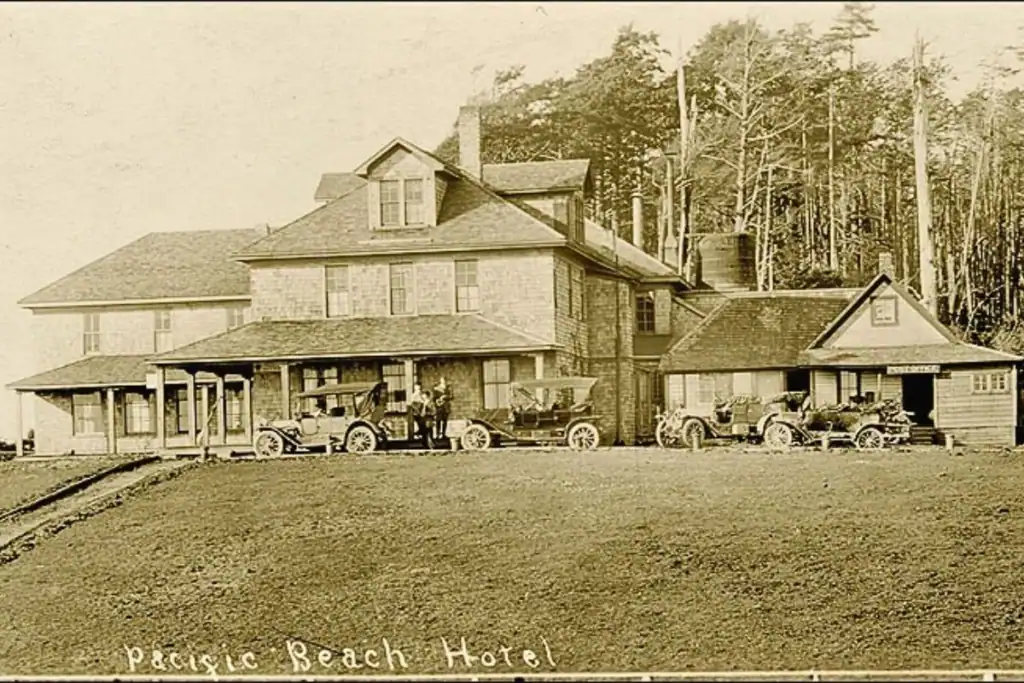
In 1906, a grand resort hotel opened its doors high on the Pacific Beach bluff.
Initially named the Quinault Inn before later being rechristened the Pacific Beach Hotel, its location was a massive part of its allure.
The high bluff gave wealthy Edwardian guests dramatic, sweeping views of the Pacific Ocean while keeping them safely perched above the rough, exposed shoreline.
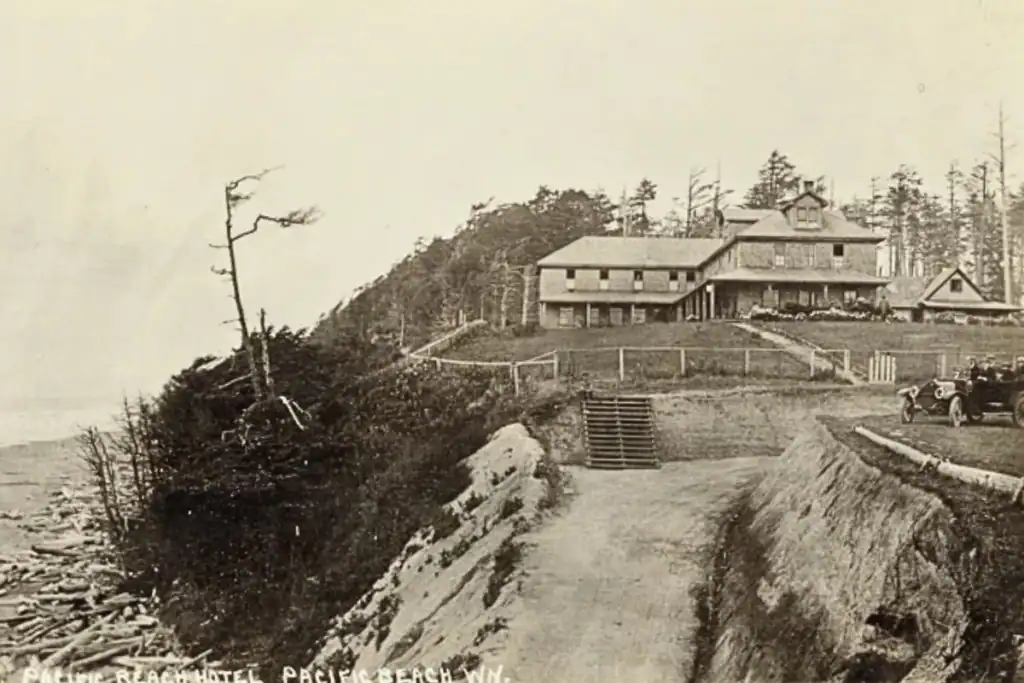
Photo courtesy of the Washington State Historical Society.
It offered front-row seats to winter storms without placing the building directly in harm’s way.
The resort quickly blossomed into a beloved destination for regional travelers… and eventually, even drew a few Hollywood stars looking for an escape.
Vacationing in Slow Motion:
Staying here was vastly different from a modern vacation.
- No packed itineraries
- No checking reviews on a smartphone
- No rushing between attractions.
- The beach was the attraction.
A Day in the Life of a 1900s Beach Guest
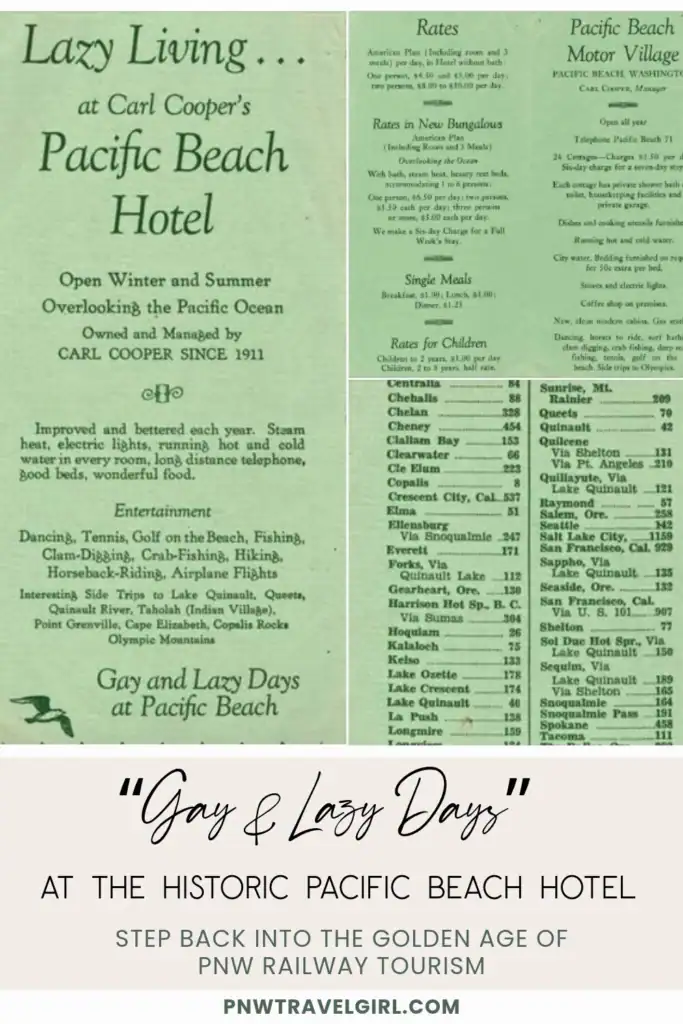
A typical stay revolved entirely around the rhythms of the coast:
- Low Tide Explorations:
Morning walks along the hard, compacted sand or digging for razor clams. - Storm Watching:
Travelers actually journeyed here in the winter specifically to watch massive weather fronts march across the open ocean. - Cozy Respite:
Guests enjoyed hot meals inside the grand sunroom while the wind rattled the windows outside.
You can almost picture the scene perfectly:
- Wet wool coats hanging near the doorway.
- Steaming coffee being poured as dark clouds roll over the water.
- Children secretly tracking beach sand into areas they shouldn’t.
- Someone quietly writing a postcard home about the storm.
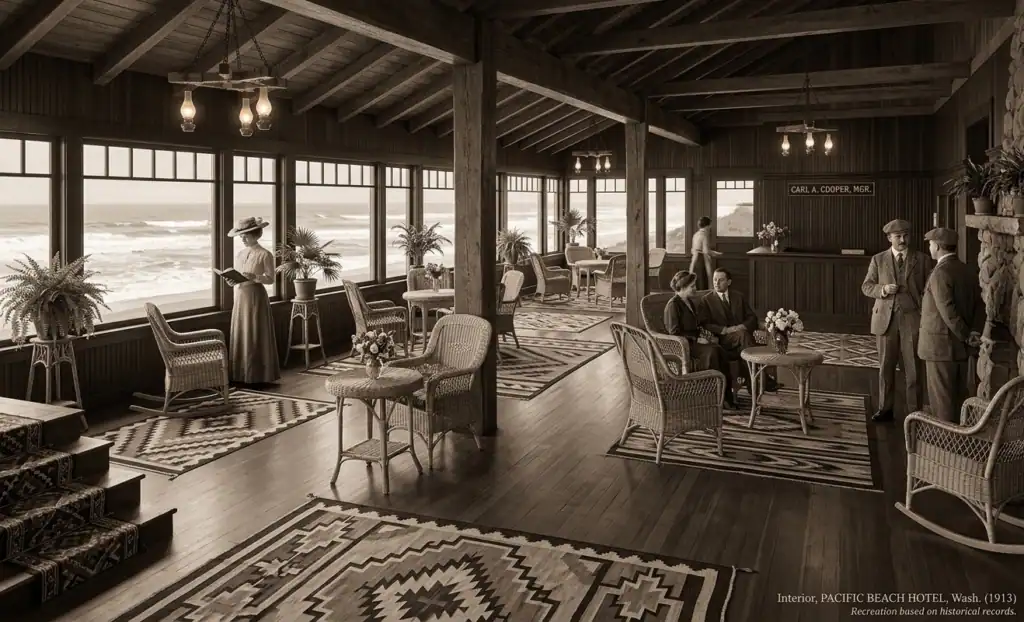
The Labor Behind the Leisure
Behind this effortless relaxation stood a dedicated local workforce. For guests, Pacific Beach was a romantic escape—but for residents, it was hard work:
- Cooks & Housekeepers prepared endless meals and turned rooms.
- Maintenance Crews constantly battled damp wood, corrosive salt air, leaky windows, and thick coastal mud.
- Railroad Workers labored through all weather to keep the stream of visitors and supplies moving north.
In that sense, the historic Pacific Beach wasn’t much different from the resort towns we visit today.
The 1914 Pacific Beach Hotel Fire
The original grand hotel did not last. In October 1914, a devastating fire erupted on the second floor, quickly spreading and destroying the entire wooden structure.
During the chaos, local lore says that a female guest fainted in an upper hallway.
The hotel owner, Carl Cooper, rushed into the smoke and carried her to safety just before the building was completely consumed.
While a tragedy like this could easily have signaled the permanent end of the town’s tourism era, the owners refused to give up. Instead, they rebuilt for the future.
Rebuilding Bigger and Better
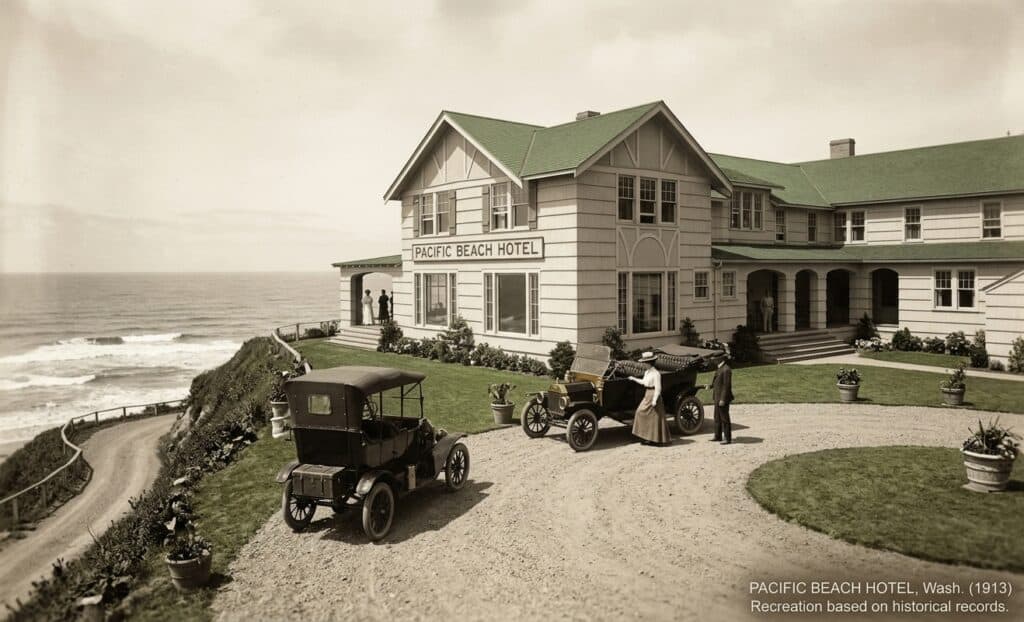
The town’s resilience showed a massive amount of confidence in Pacific Beach as a premier destination. Rather than downscaling, they expanded:
- 1915: A new, much more modern Pacific Beach Hotel opened with 50 guest rooms.
- Later Expansions: Workers added 25 individual cabins complete with private baths directly to the property.
For decades, the gamble paid off.
Couples arrived for honeymoons, families packed the beach for summer holidays, and winter storm-watchers kept the rooms full.
Pacific Beach had successfully cemented itself as a crown jewel in the larger North Beach resort corridor, alongside its booming neighbor, Moclips.
However, as the mid-century approached, these two sister towns would not experience the exact same fate.
Why Pacific Beach Survived the End of the Resort Era
Moclips constructed some of its most magnificent buildings quite near the sea.
That made for spectacular views, but it also placed them directly in the path of erosion, high tides, and powerful winter storms.
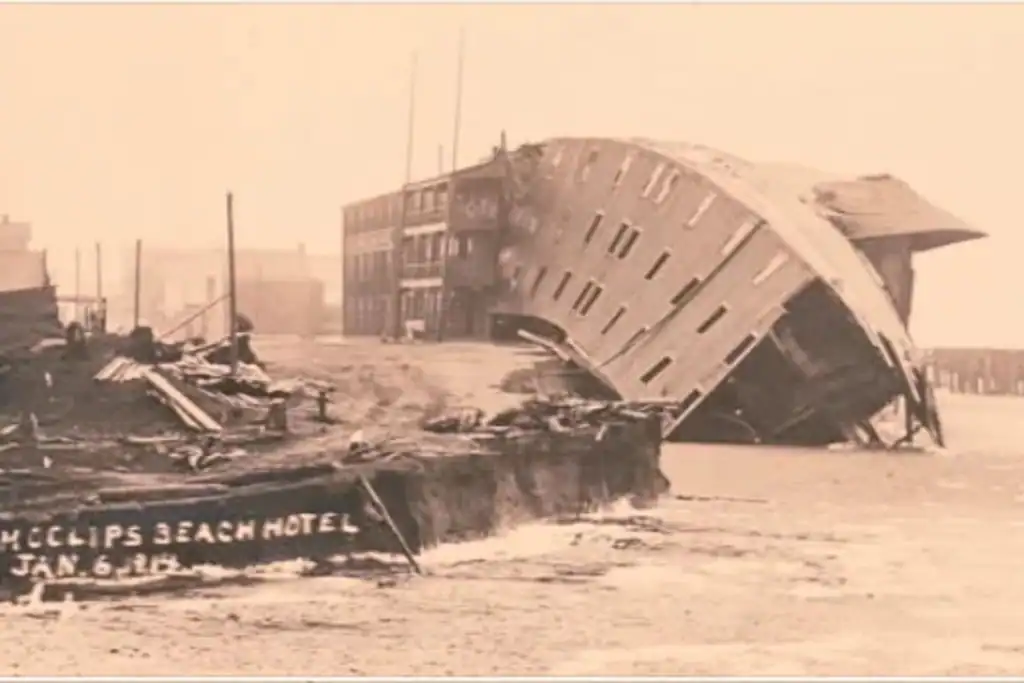
Photo courtesy of the Museum of North Beach
Pacific Beach had an advantage.
While its neighbor Moclips built right on the fragile shifting sands—leading to the heart-wrenching destruction shown in the postcard above—Pacific Beach was protected by its geographical layout.
(Curious about the full story of the neighboring town that nature reclaimed? Be sure to read my complete guide: Echoes on the Sand: The Wild Boom, Lost Grandeur, and Hidden History of Moclips!)
Its main resort sat high on the bluff.
The coast might still be severe, but the town’s significant buildings were not nearly so exposed.
Another factor that contributed to Pacific Beach’s survival was its continual change.
The resort era did not end overnight.
- Cars gave people more freedom to travel where they wanted, rather than following railroad schedules.
- The Great Depression reduced vacation spending.
- Later, wartime travel and gasoline restrictions hurt tourism even more.
By the early 1940s, the once-busy Pacific Beach Hotel was considered underused.
The era of the large railroad resort was coming to an end.
History then made another sharp turn.
Up Next: The Secret Coastal Bases of World War II
While neighboring Moclips would battle devastating ocean storms, Pacific Beach’s destiny was about to be reshaped by a entirely different force: global warfare.
As the mid-century approached, the sound of laughing tourists and rattling train cars would be replaced by anti-aircraft guns and top-secret underwater sonar equipment.
Pacific Beach was about to become a vital, locked-down military hub tracking Soviet nuclear submarines right off the Washington coast.
Ready for the next chapter?
Part 2: The Secret Military History & Cold War Submarine Bases of Pacific Beach
Part 3: Pacific Beach today and where the past still shows