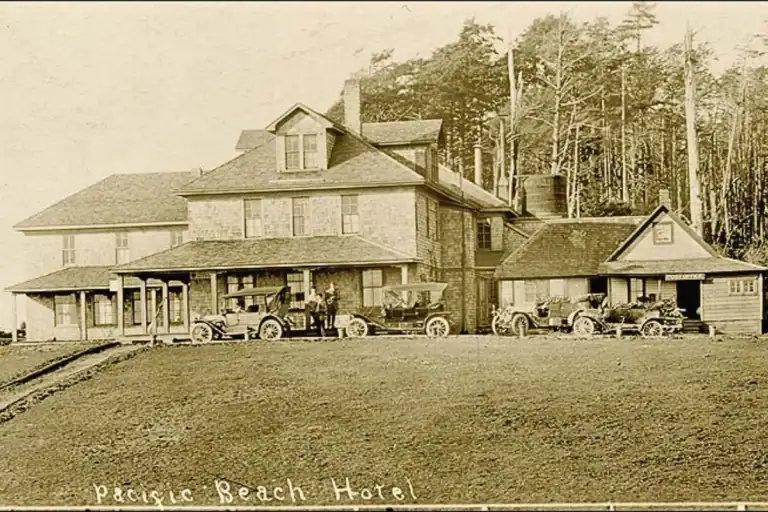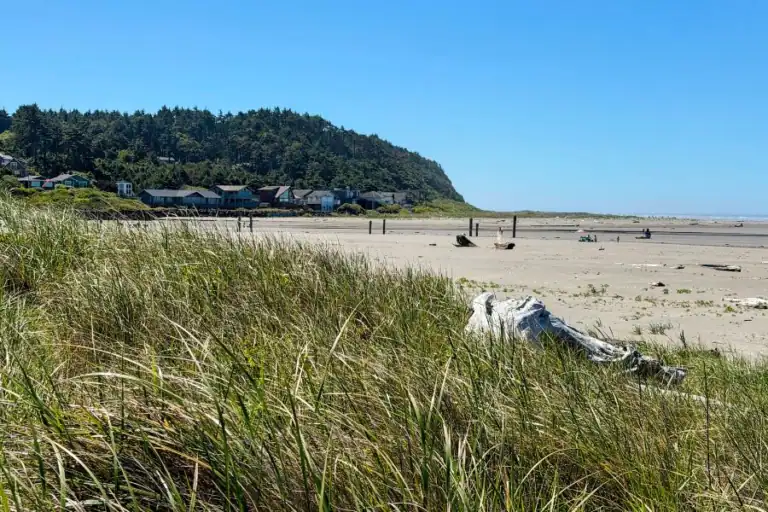

By the end of Pacific Beach’s grand resort era, the town had already changed dramatically from the place those first railway passengers once knew.
The trains were no longer bringing the same steady stream of vacationers.
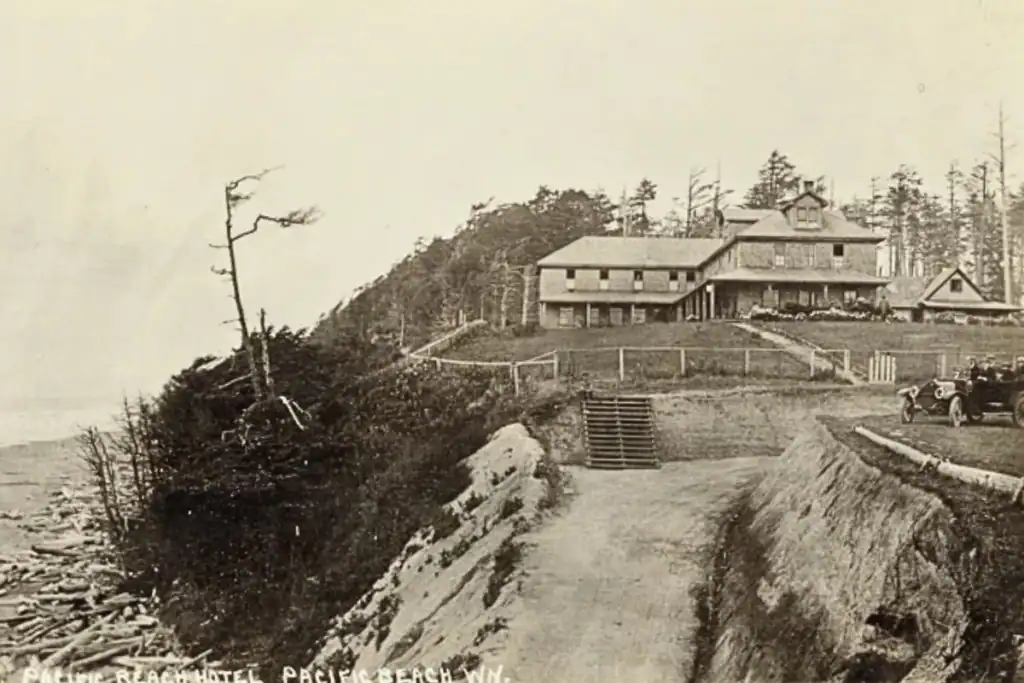
The Pacific Beach Hotel still stood on the bluff, but the golden age of rail travel and seaside resort life was fading.
Then World War II changed everything.
After the attack on Pearl Harbor, this quiet stretch of Washington coast suddenly looked very different to the U.S. military.
What had once been valued for ocean views, fresh air, and a peaceful escape was now seen as an exposed piece of coastline facing the vast Pacific.
The bluff that had welcomed honeymooners, storm watchers, and summer vacationers was about to take on a completely different job.
In 1942, the Navy took over the Pacific Beach Hotel and surrounding property, transforming the former resort into an anti-aircraft training center.
And that was only the beginning.
Over the next several decades, Pacific Beach would move from wartime training to radar surveillance and eventually become part of a highly classified Cold War submarine-listening network.
If you missed the first part of this series, start with Pacific Beach History Part 1: Logging, Luxury, and the Golden Age of Rail Travel to see how this rugged stretch of coast became a resort destination before the military arrived.
Then continue here, where Pacific Beach leaves the resort era behind and enters one of the most surprising chapters in its history.
Quick View:
- Big shift: Pacific Beach changed from a fading resort town into an important military site
- WWII era: The Navy converted the former Pacific Beach Hotel into an anti-aircraft training center
- Postwar years: The bluff was later used for radar operations
- Cold War role: Pacific Beach became part of the classified SOSUS submarine surveillance network
- Daily life: Military families lived beside highly secret defense work
- What remains today: The bluff is still tied to the Navy and now serves as a recreation property
Pacific Beach During World War II
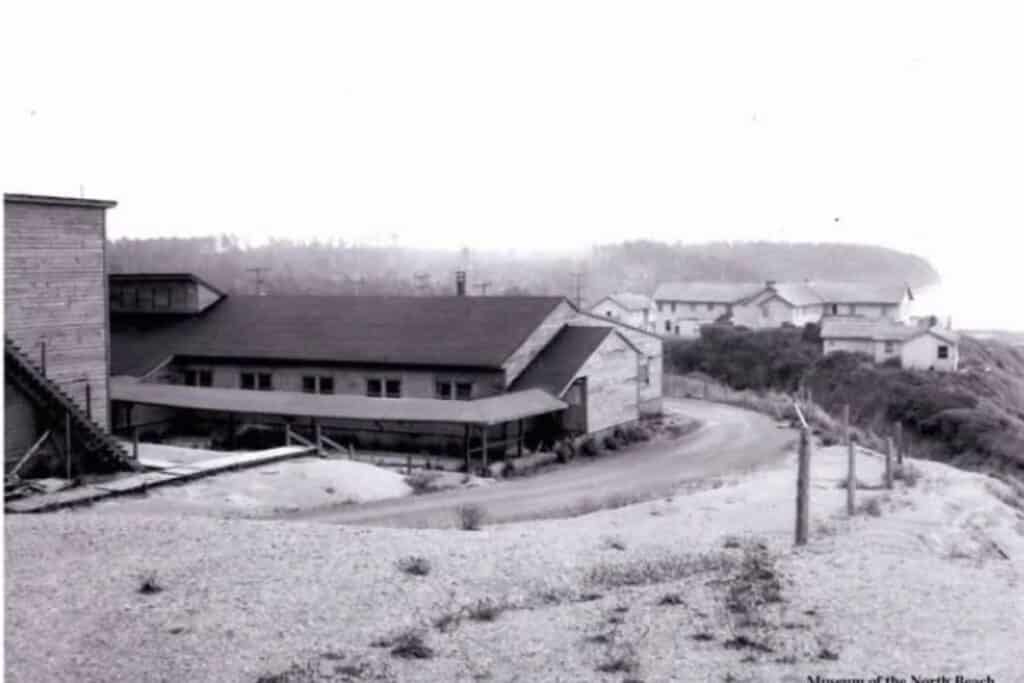
In 1942, the U.S. Navy officially requisitioned the grand Pacific Beach Hotel, completely converting the luxury resort into a bustling anti-aircraft training center.
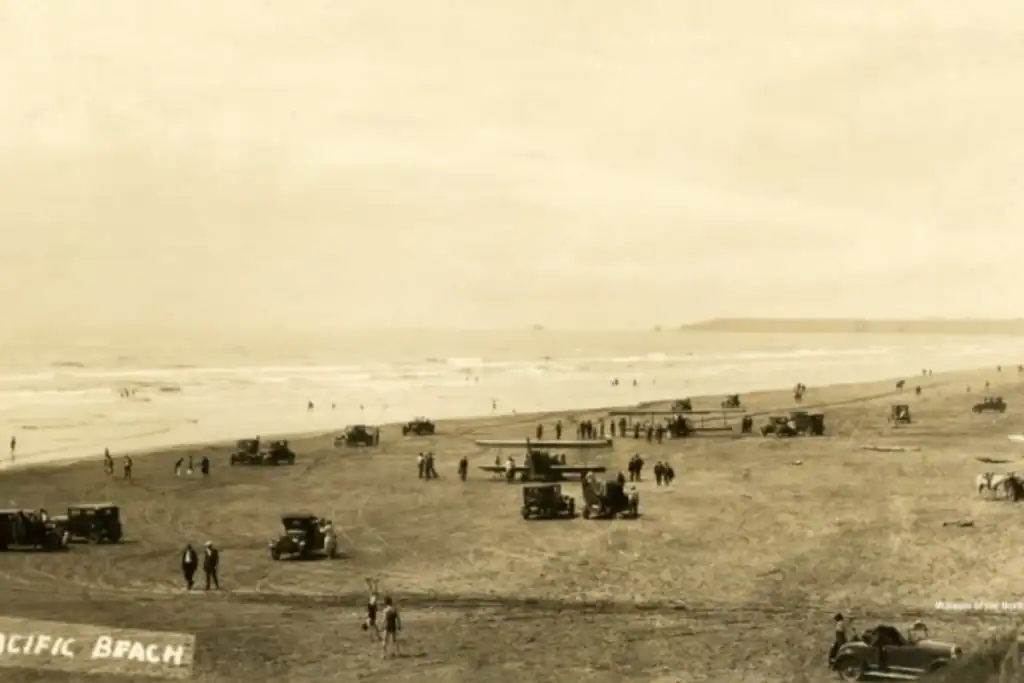
(Photo courtesy of the Museum of the North Beach Calendar)
The immediate transition was surreal for the local community:
- The Luxury Rooms: Grand guest suites that once housed honeymooners and vacationing families were stripped down into military barracks.
- The Ballroom & Restaurant: The resort’s elegant dining spaces were retrofitted into a massive mess hall cafeteria capable of feeding hundreds of personnel at a time.
- The Cottages & Lounges: Guest cottages were reassigned as officer housing, while resort lounges became classrooms and administrative offices.
The Beach Transforms:
Down on the sand, the Navy graded the shoreline and installed heavy anti-aircraft gun positions pointed directly out to sea. Training crews spent their days practicing live firing at targets towed by aircraft offshore.
Picture the jarring contrast… just a few years prior, visitors stood on this exact sand with clam shovels and picnic baskets.
Now, it was a restricted military zone bristling with live training exercises.
The ocean remained unchanged, but the soul of the town had shifted completely.
For the young sailors stationed here, life was a bizarre mix of rigorous military routine and isolated coastal living.
When their grueling drills and instruction were finished for the day, they were still just kids living at the edge of Washington… where the wind still howled, the rain still came sideways, and the dark Pacific stretched endlessly beyond the bluff.
The Pacific Beach Radar Station
When World War II came to a close, the gunnery school was shut down, and for a brief window, the property sat silent.
But the dawn of the Cold War quickly handed Pacific Beach a brand-new, vital mission.
In 1948, trial flights revealed dangerous gaps in Washington state’s coastal aircraft-detection network.
To fill the void, the U.S. Air Force stepped in and established a temporary radar installation right on the high bluff.
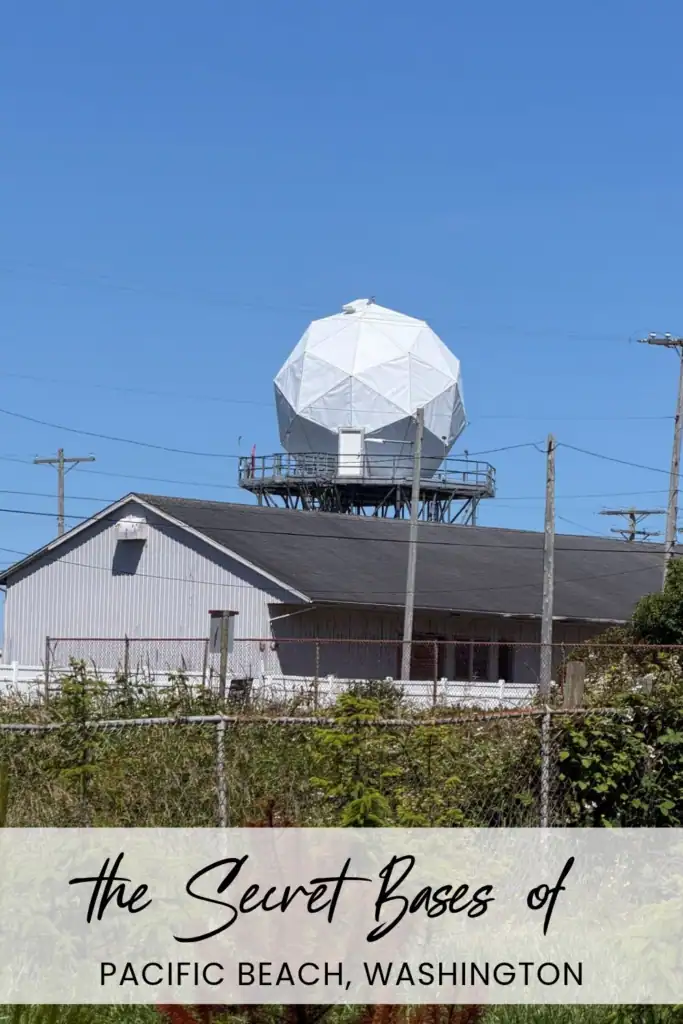
The town’s purpose shifted once again… the bluff was no longer watching the water for enemy ships or tracking practice targets.
Now, eyes were locked entirely on the sky.
- Continuous Vigilance: Radar operators worked around the clock in continuous shifts, monitoring early screens for any undetected aircraft that might approach the Pacific Northwest.
- Back to Barracks: The former hotel once again became housing and office space for the stationed airmen.
Imagine the psychological weight… a handful of young military personnel stationed in a small, damp coastal town, staring at radar scopes at 3:00 AM for a world-ending threat that might never appear and then stepping outside into the cold, silent coastal fog.
The radar station eventually closed down as technology advanced, and Pacific Beach waited quietly once more.
But the military wasn’t finished with the bluff just yet.
Pacific Beach and the Secret Cold War SOSUS Base
According to regional historical records, the U.S. Navy officially commissioned Naval Facility (NAVFAC) Pacific Beach in 1958.
Publicly, the military described the new installation as an “oceanographic research station.”
The bluff was actually a critical node in SOSUS (Sound Surveillance System), a highly classified Cold War network designed to detect and track Soviet submarines.
Technically, that wasn’t entirely a lie… but it conveniently left out the most fascinating part of the mission.
Giant underwater microphone arrays (hydrophones) listened constantly across the ocean floor, while Navy personnel inside a heavily secured facility analyzed the sound data for the unique acoustic fingerprints of enemy vessels.
By The Numbers: NAVFAC PACIFIC BEACH
- 12 Naval Officers
- 115 Enlisted Personnel
- 15 Dedicated Civilian Workers
From Naval Facility to Navy Getaways Pacific Beach
As global surveillance technology rapidly advanced toward satellite systems, the top-secret SOSUS facility was officially decommissioned in 1987.
For a town defined by constant transformation, Pacific Beach was called upon to reinvent itself yet again.
Instead of abandoning the historic bluff or leaving the concrete installations to rot in the salt air, the U.S. Navy made a brilliant pivot.
They reclaimed the property’s original 1900s roots, transforming the sprawling complex into a modern, state-of-the-art military recreation and conference center.
Today, the property operates as Navy Getaways Pacific Beach.
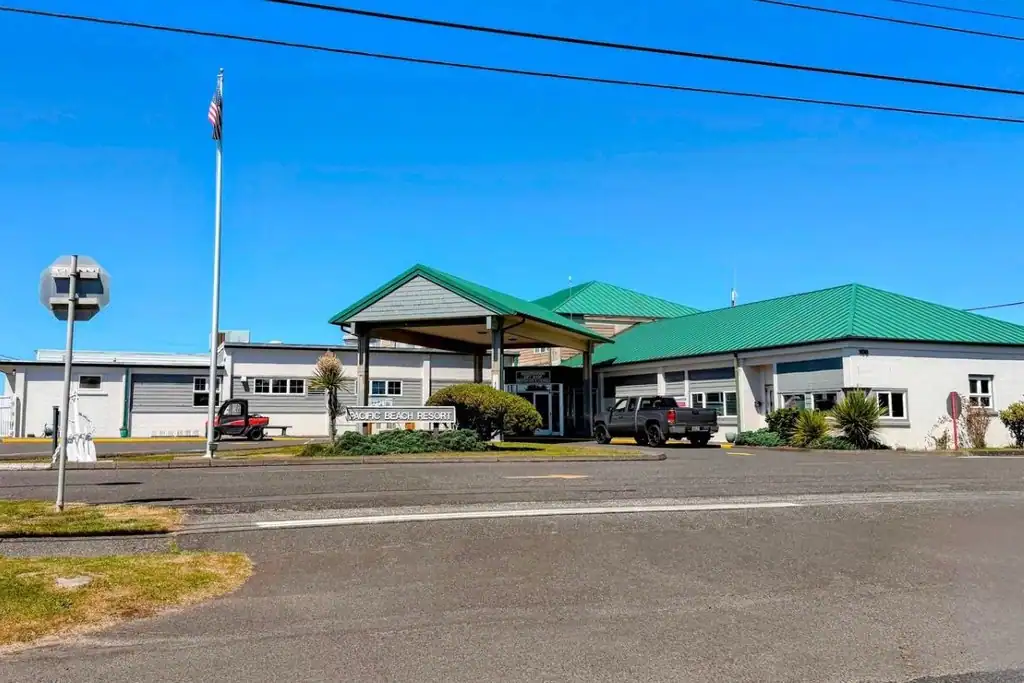
It serves as a premier, budget-friendly coastal sanctuary where active-duty military members, retirees, National Guard, federal employees, and their sponsored guests can escape ordinary life.
The modern resort footprint spans across the historic property, offering:
- The Main Lodge & Cottages: Comfortable hotel rooms and fully equipped seaside cottages standing near the footprint of the old resort.
- Outdoor Camping: Full-hookup RV spaces and traditional campsites tucked right up against the ocean breeze.
- Resort Amenities: A recreation center, bowling alley, and viewing points perfect for storm-watching inside where naval personnel once scanned radar screens.
There is something deeply moving and almost circular about this timeline.
More than a century ago, Edwardian travelers endured grueling journeys just to escape the clamor of the city and find a quiet patch of sand by the water.
After decades of intensive anti-aircraft training, around-the-clock radar vigils, and secret underwater submarine tracking, people are once again gathering on this exact bluff for the simplest of reasons… to rest.
The architecture has completely shifted.
The visitors arrive in modern SUVs rather than wood-burned steam locomotives.
But the soul of the coast remains beautifully unchanged.
Come to the beach.
Slow down.
Stare at the horizon.
Stay awhile.
Continue the Pacific Beach History Series
Missed the beginning? Start with Part 1: Logging, Luxury, and the Golden Age of Rail Travel to see how Pacific Beach grew from a working coastal settlement into a resort destination.
Then continue to Part 3: Pacific Beach Today, Where the Past Still Shows to see what remains from the railroad, resort, military, and Cold War eras.
Planning a visit?
Read my full Pacific Beach, Washington guide for where to stay, eat, and explore.