Twin Falls Trail near North Bend, Washington offers plenty of Pacific Northwest scenery without requiring an all-day trek into the mountains.
In just a few miles, you’ll follow the South Fork Snoqualmie River, wind through lush forest with ferns and old-growth trees, climb a few hills, and eventually reach viewpoints overlooking the cascades of Twin Falls.
Despite the name, you’re actually getting three waterfalls for the price of one along this stretch of river.
At about 2.4 miles round trip with around 500 feet of elevation gain, Twin Falls is short enough for a North Bend day trip, but interesting enough that it never feels like you’re just trudging out to a waterfall and turning around.
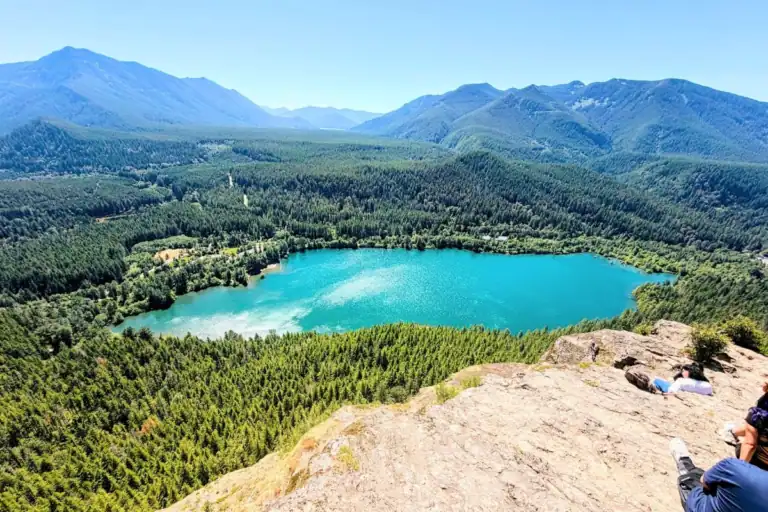
It’s also just about 10 minutes from Rattlesnake Lake, so if you’re feeling ambitious (or just indecisive), you can easily combine both in a single North Bend day.
This post covers hiking Twin Falls Trail near North Bend, including what the trail is like, waterfall viewpoints, parking, when to go, and what to know before you hike.
Trail Update: As of September 2026, Washington State Parks reports that the Lower Falls Viewpoint is temporarily closed due to storm damage. Check current conditions with Washington State Parks before your visit.
Twin Falls Trail Quick Guide
Location: Olallie State Park near North Bend, Washington
Distance: About 2.4 miles round trip to the falls
Elevation gain: About 500 feet
Highest point: Around 1,000 feet
Difficulty: Easy to moderate
Trail type: Out and back
Best for: Waterfalls, forest scenery, slow hiking and short nature escapes
Dogs: Allowed on leash
Parking: Twin Falls Trailhead
Crowds: Popular, especially weekends
Parking pass: Discover Pass required
Restroom: Available at the trailhead
Best time to hike: Spring through fall, although the trail is accessible year-round when conditions allow
Is Twin Falls Trail Worth Hiking?
If Rattlesnake Ledge is all about climbing through the forest for that huge view at the end, Twin Falls is almost the opposite.
Here, the trail itself is the attraction.
You spend much of the hike beneath a thick canopy of trees, with the South Fork Snoqualmie River running alongside you.
You’ll see river views, moss-covered trees, ferns, enormous old-growth trees, rocky sections, wooden bridges, switchbacks, and plenty of stairs before you reach the waterfall viewpoints.
It’s about as classic as Western Washington hiking gets.
Where Is Twin Falls Trail?
Twin Falls Trail is located inside Olallie State Park, just east of North Bend, Washington, along I-90.
It’s an easy day trip from both Tacoma and Seattle, making it a great option for anyone who wants to escape to the Cascade foothills without driving too far.
- From Tacoma: Approximately 60–65 miles, or 1 hour to 1 hour 20 minutes.
- From Seattle: Approximately 35 miles, or 40–50 minutes.
- From North Bend: About 10 minutes.
Driving times vary depending on traffic and your starting point.
Olallie State Park stretches along the South Fork Snoqualmie River and offers waterfalls, old-growth forest, rock climbing areas, and connections to the Palouse to Cascades State Park Trail.
Despite being relatively close to I-90, parts of the Twin Falls Trail feel much farther into the Cascades than they actually are.
How to Get to Twin Falls Trail
From Seattle, take I-90 east toward North Bend and Snoqualmie Pass.
Take Exit 34 and turn right onto 468th Avenue SE.
Continue a little over half a mile and turn left onto SE 159th Street.
Follow the road for approximately another half mile until it ends at the Twin Falls Trailhead parking area.
I’d recommend downloading directions before you leave. Cell service gets spotty near mountain trailheads, and I’ve learned the hard way that hiking apps sometimes send you on a wild goose chase.
Parking at Twin Falls
Unlike Rattlesnake Lake, where parking is free, Twin Falls is inside a Washington State Park and requires a Discover Pass for day-use parking.
You can use an annual Discover Pass or purchase a one-day pass.
A restroom is also available at the trailhead.
Twin Falls is a popular hike, especially on sunny weekends. If you want to avoid circling the lot like a vulture, arriving early is your best bet.
What Does Twin Falls Trail Actually Feel Like?
This is the part that matters just as much as mileage and elevation gain… maybe more, depending on your mood that day.
Twin Falls isn’t simply a flat stroll to a waterfall.
The trail starts near the South Fork Snoqualmie River and initially follows the water through thick forest.
You’ll encounter dirt trail, tree roots, rocks, and some muddy sections depending on recent rain.
The surrounding forest is wonderfully green, especially during spring.
Ferns cover the forest floor, moss clings to trees and rocks, and in spring you may spot trillium and other wildflowers growing beside the trail.
The route also has impressive old-growth trees.
Walking Along the Snoqualmie River
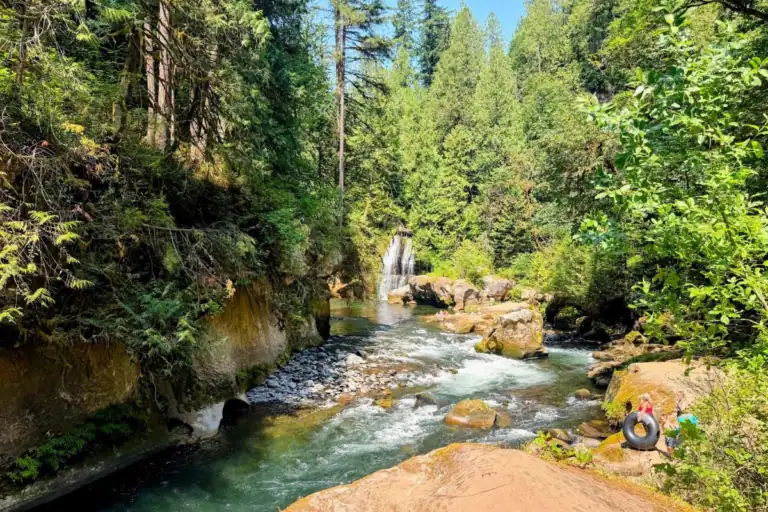
One of my favorite things about waterfall hikes is hearing the water long before you reach the actual falls, and Twin Falls gives you plenty of river scenery along the way.
The trail stays fairly close to the South Fork Snoqualmie River at first.
You can get closer to the river in places, but don’t assume every little side trail is an official route. Stay on established trails whenever possible, both for safety and to protect the surrounding vegetation.
The river can also be extremely powerful, especially during high-water periods.
Forest, Ferns and Old-Growth Trees
One of the trail’s quieter highlights is an enormous old-growth tree along the route.
It’s easy to become so focused on reaching the waterfall that you walk right past some of the best parts of the forest.
Take a minute to appreciate this one… it’s been here a lot longer than any of us.
Old-growth trees aren’t simply big trees. They’re part of a much older forest ecosystem, providing habitat for wildlife, storing carbon, and creating the conditions that allow the mosses, ferns, fungi, and smaller plants around them to thrive.
Please stay back from the base rather than climbing onto the roots. Repeated foot traffic compacts the soil surrounding old trees and can damage their root systems.
When the Climbing Begins
Eventually, the easy riverside walking gives way to more elevation.
You’ll climb through the forest using a series of switchbacks.
This is where the hike starts to feel more “moderate” than “easy.”
It’s not a huge mountain climb, but you’re definitely going uphill.
If you need a break, take one… no one’s handing out medals at the end.
The nice thing about Twin Falls is that something interesting is always around you, whether it’s an enormous tree, a fern-covered hillside, or the sound of the river somewhere below.
Reaching the Twin Falls Waterfall Viewpoints
Eventually, the sound of rushing water becomes harder to ignore.
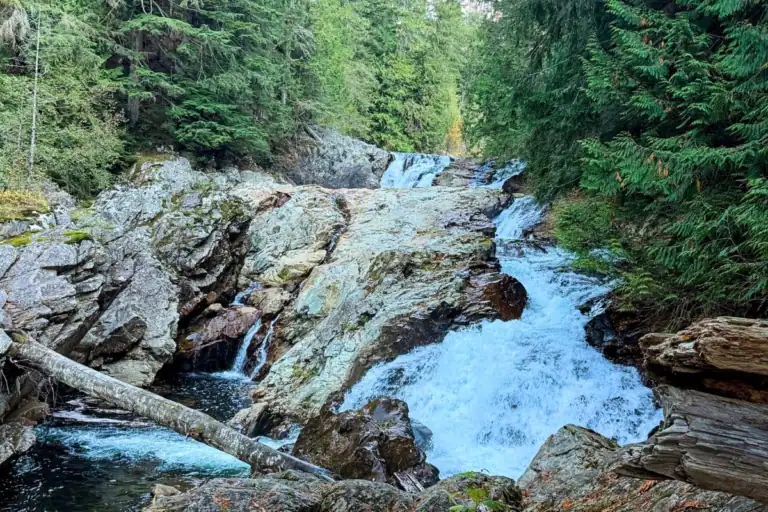
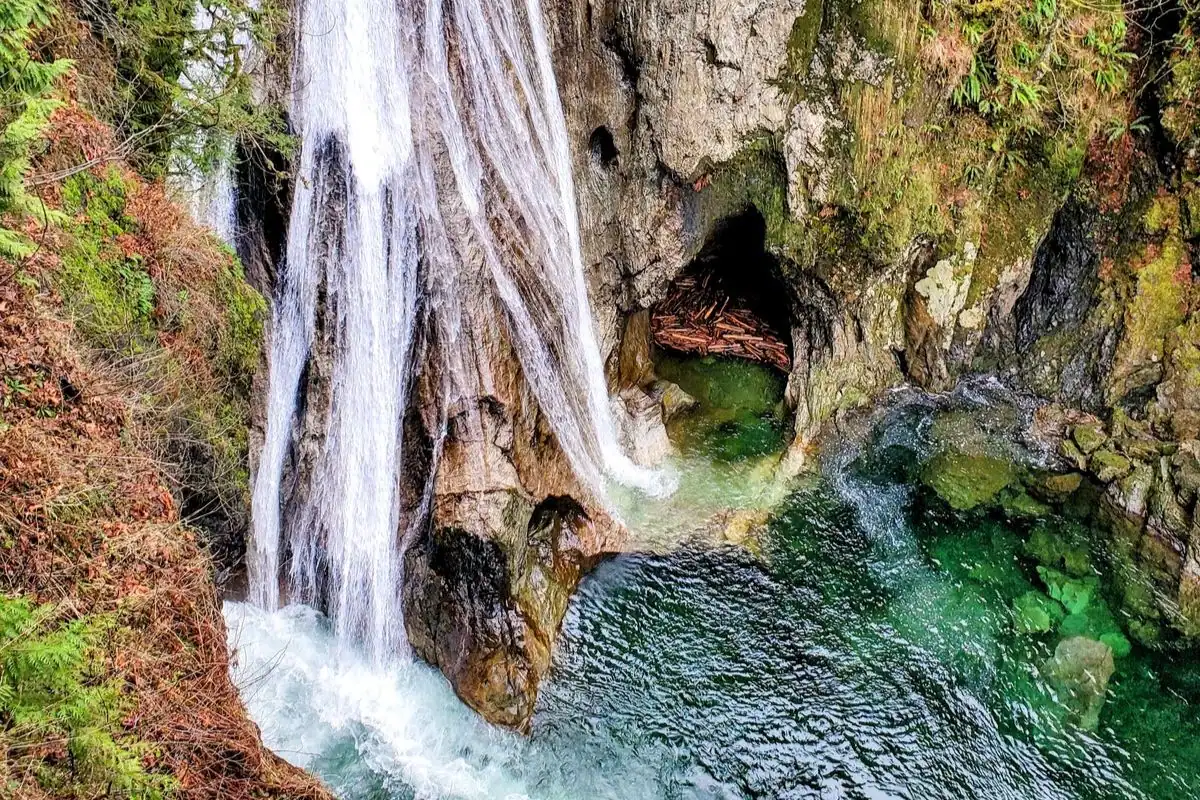
Twin Falls is actually a little misleading as a name because the waterfall system includes three distinct cascades.
The South Fork Snoqualmie River squeezes through a rocky gorge here, creating a series of dramatic drops rather than one simple waterfall.
Depending on where you are along the trail, you’ll see different portions of the falls.
And you’ll work a little for those views.
Twin Falls Trail Stairs: Yes, There Are a Lot of Them
If you have strong feelings about stairs on hiking trails, Twin Falls is about to test your resolve.
Reaching some of the waterfall viewpoints involves more than 100 steps, plus additional stairs around the bridge and the upper portions of the falls.
Just remember… for every step down, you’ll be walking back up. Gravity is not your friend here.
Take your time.
This is another reason I think the “2.4 miles” description can make Twin Falls sound easier than it feels. The mileage is short, but the rolling terrain, switchbacks, and stairs give your legs a harder workout than a flat 2.4-mile walk would.
Crossing the Bridge at Twin Falls
One of the best parts of the hike is reaching the bridge over the gorge.
Here, you’re surrounded by steep forested slopes with the river rushing through the narrow canyon below.
From around the bridge area, you can see portions of the upper cascades and get a much better sense of how the river has carved its way through the landscape.
This is also where I’d slow down rather than treating the bridge as another checkpoint.
Listen to the water.
Look up into the trees.
And look down into the gorge.
This hike is as much about the environment surrounding the waterfall as the waterfall itself.
The Sensory Experience of Hiking Twin Falls Trail
One reason I keep coming back to Twin Falls is that this trail never feels quite the same twice.
The sensory experience changes with the seasons, the weather, the time of day, and, honestly, how many other people had the same idea you did.
For me, fall might be Twin Falls at its best.
The air is crisp and cool, the forest smells damp and earthy, and fallen leaves crunch underfoot as you walk. The river is still there in the background, but instead of competing with the noise of a busy summer trail, its steady sound becomes part of the experience.
You hear birds in the trees, water moving over rocks, leaves shifting in the breeze, and sometimes not much else.
Those are the mornings when Twin Falls can feel like a reset button.
Summer has a completely different energy.
There is something pretty wonderful about feeling warm sun on your face as you walk beneath the trees. When the light breaks through the forest canopy, it creates those gorgeous rays of sunshine that somehow make an already-green Pacific Northwest forest look even more magical.
You also notice more movement around you. Squirrels dart across the forest floor, chipmunks appear and disappear between rocks and roots, and birds are busy overhead.
But summer also comes with more human noise.
Twin Falls is a popular trail, and on a busy day you may hear conversations, excited kids, barking dogs, hikers passing from both directions, and groups gathering around the waterfall viewpoints and bridge.
If you’re someone who becomes overstimulated by many layers of sound, that can change the experience pretty quickly.
I’ve learned that I don’t necessarily need an empty trail to enjoy being here. I just need enough space and enough calm moments between the busy ones.
Sometimes that means hiking early. Sometimes it means stopping beside the trail for a minute and allowing a faster group to move ahead. Sometimes it means standing near the river long enough that the sound of the water becomes louder in my attention than everything happening around me.
That is one of the things I love about slow hiking.
You don’t have to experience every part of the trail at the same intensity.
You can pause. You can let people pass. You can listen to the river. You can notice sunlight moving through the trees or watch a squirrel disappear into the ferns.
For neurodivergent hikers, or anyone who feels better in nature with a little less noise and pressure, Twin Falls can be both wonderfully regulating and occasionally overstimulating.
Both things can be true.
The trick, at least for me, is choosing the version of the trail that gives me more of what I came looking for.
And most of the time, that means a slower pace, cooler air, fewer people, and plenty of time to notice what is happening in the forest around me.
How Difficult Is Twin Falls Trail?
I’d consider Twin Falls an easy-to-moderate hike, depending on your hiking experience.
The overall distance is short at approximately 2.4 miles round trip, and the total elevation gain is around 500 feet.
But don’t let that fool you into thinking it’s flat.
There are hills, switchbacks, uneven dirt trail, roots, and a considerable number of stairs around the waterfall viewpoints.
If you’re accustomed to hiking, it will probably feel like a short, manageable outing.
If you’re newer to hiking or just getting back into it, take your time on the uphills. There’s no shame in a few extra pauses.
It’s not a race to the waterfall.
My First Twin Falls Hike Taught Me to Slow Down
I still remember my first time hiking Twin Falls years ago, back when hiking was new to me and peak physical condition was just a rumor.
I went with an old friend.
Determined to look like I knew what I was doing, I started out strong. I even jogged along with the dog for a while, powered by nothing but enthusiasm and a questionable amount of bravado.
That lasted about twenty minutes, which, in hindsight, was about nineteen minutes too long.
Before long, I was off to the side of the trail being sick.
Not exactly my finest moment.
Needless to say, the rest of that hike was not particularly enjoyable.
I stayed away from hiking for a while after that. I decided it was too much work and maybe I just was not cut out for it.
Looking back, the problem was not the trail.
I had simply tried to do too much, too quickly, and completely forgotten to enjoy the experience.
That first hike taught me something I have carried with me ever since: go at your own pace, and do not let pride set your hiking speed.
These days, I am not out there to set records.
I walk at a pace that feels comfortable, stop when I want to look around, and do not push myself just to get somewhere faster.
And you know what?
I enjoy hiking so much more now, even if my pace is somewhere between leisurely and “are we there yet?”
Slowing down means I notice things I might otherwise walk right past.
A squirrel hiding its treasures.
A woodpecker tapping somewhere in the trees.
An eagle soaring overhead.
The sound of water moving through the forest.
That is one of my favorite things about hiking in the Pacific Northwest. So much is happening around you if you give yourself time to notice it.
So whether you are new to hiking, getting back into it after some time away, or simply having one of those days when your legs are not cooperating, listen to your body.
Take a break.
Catch your breath.
Enjoy the forest.
The waterfall is not going anywhere.
Finding Early Morning Solitude at Twin Falls, Washington
Because this trail is so close to Seattle, it can get crowded fast.
For a midlife woman looking to disconnect from the noise and pressure of daily life, showing up at noon on a Saturday will defeat the purpose.
My secret to reclaiming this space is chasing early-morning solitude in Twin Falls, Washington.
On my last research trip out here, I decided to change up the energy entirely. I didn’t bring a human partner; instead, I brought my friend’s dog, Bud, along with me.
As an eldest daughter who spent a lifetime managing everyone else’s loud feelings, my nervous system desperately craves pure, companionable silence.
A “borrowed dog” is the ultimate sensory-friendly hiking partner.
They don’t ask you how you’re feeling, they don’t complain about your pace, and they never force you into exhausting small talk. They offer a grounded, protective presence that lets you drop your guard.
Is Twin Falls Trail Good for Solo Female Hikers?
Personally, I find Twin Falls incredibly peaceful, and I would have no problem hiking it alone.
That said, I completely understand why some women feel uneasy about heading deep into the woods by themselves.
There is a big difference between knowing a trail is popular and actually feeling comfortable once the trees close in around you.
My rule is simple… go with what feels right for you.
If your gut is telling you that you are not comfortable hiking alone that day, listen to it. There is no prize for forcing yourself through an experience that does not feel good.
If you do choose to hike solo, a little preparation can make a big difference.
I always recommend letting someone know where you are going and when you expect to be back.
Download your trail map before you arrive so you are not depending on cell service, and make sure your phone is fully charged.
I also like having a simple personal alert system with me.
I carry a keychain alarm that makes an incredibly loud noise when the pin is pulled. It is small, easy to reach, and gives me one more layer of confidence when I am out by myself.
Some women also choose to carry pepper spray where it is legal and appropriate. Whatever you carry, the most important thing is that you know how to use it and can access it quickly if needed.
And, when possible, bring a furry hiking buddy... like Bud.
There is something about having a dog beside you that can make a solo hike feel a little less solo.
Twin Falls is also a well-known trail, so depending on when you go, you will likely encounter other hikers along the way.
For some women, that feels reassuring.
For others, too many people can be overstimulating, which is why I still prefer quieter times of day.
Solo hiking should not be about proving anything.
It should feel peaceful, grounding, and empowering.
If Twin Falls gives you that feeling, it can be a beautiful place to spend a few hours on your own.
If it does not, bring a friend, go with a group, or save it for another day.
There is no wrong way to enjoy the trail.
Is Twin Falls Good for Kids?
Twin Falls is a family-friendly hike, and its relatively short distance makes it a good introduction to hiking for kids comfortable walking a few miles.
There’s also a lot happening along the way to keep things interesting… the river, giant trees, bridges, rocks, forest, and eventually the waterfalls.
That said, parents should keep children close around steep slopes, the river, bridges, and waterfall viewpoints.
Dogs are also allowed but must be kept on a leash.
When Is the Best Time to Hike Twin Falls?
One reason I keep returning to Twin Falls is that the trail changes so much throughout the year.
I’ve hiked it in different seasons, and each one has its own personality.
Spring: When the Forest Wakes Up
Spring is when Twin Falls really comes alive.
Rain and melting mountain snow send water rushing down the falls, while new buds appear on the trees and birds chatter as though they have stories to tell.
The forest seems to stretch awake after winter, and it’s hard not to feel a little of that energy yourself.
The trail can still be muddy and slippery in places, so good shoes are a must. But if you want to see the waterfalls at their most impressive, spring is a wonderful time to visit.
Summer: Sunshine, Crowds and a Good Workout
On hot summer days, Twin Falls buzzes with hikers.
The trail is generally drier, the river often runs lower, and the waterfalls may be quieter than they are in spring.
Even with the forest providing plenty of shade, the heat can make those uphill sections feel like a bigger workout than they really are.
And you’re unlikely to have the trail to yourself.
If you’re visiting during summer, I’d recommend going early, bringing plenty of water, and taking your time on the climbs.
Fall: Cooler Air and Quieter Trails
Fall might be one of my favorite times to hike Twin Falls.
The leaves begin turning, the air grows crisp, and the summer crowds start thinning out.
The ground can be damp in places, but there’s something about walking through the forest in fall that just feels right.
The cooler temperatures make the uphill sections more comfortable, and the quieter trail gives you more time to appreciate everything around you.
Winter: A Different Kind of Beauty
During the quieter off-season, rain soaks the forest, the river swells, and the entire landscape takes on a different mood.
The air is cold and damp, the trails are often much quieter, and the forest feels as though it’s resting between storms.
Sometimes the chill encourages you to pick up your pace just to stay warm.
Other times, the quiet makes you want to slow down.
It’s a completely different experience from the busy summer months.
Winter hiking does require a bit more preparation. Mud, ice, fallen trees, and changing trail conditions can make things interesting… so always check current trail reports before heading out, and maybe pack an extra layer just in case.
What to bring On The Twin Falls Trail
For a relatively short hike, you don’t need anything elaborate.
I’d bring:
- Hiking shoes or trail shoes with decent traction
- Water
- A snack
- Rain jacket or light layer
- The 10 Essentials
- Camera or phone for waterfall photos
- Discover Pass
- Trekking poles if stairs and uneven terrain are easier on your knees with them
During wetter months, shoes you don’t mind getting muddy are a very good idea.
Can You Visit Twin Falls Trail and Rattlesnake Lake In One Day?
Yes, and honestly, it makes for a fantastic North Bend day trip… especially if you like variety and don’t mind a little dirt under your nails.
Twin Falls and Rattlesnake Lake are only a short drive apart, but they offer completely different experiences.
At Twin Falls, you’ll walk through dense forest beside a rushing river toward the waterfalls.
At Rattlesnake Lake, you can picnic beside the water, paddle, swim, explore the area’s history, or hike up to Rattlesnake Ledge.
If you don’t want to do two substantial hikes in one day, I’d hike Twin Falls and then head to Rattlesnake Lake afterward for a picnic or relaxing afternoon beside the water.
Planning to visit Rattlesnake Lake too? Read my complete guide to Rattlesnake Lake and Rattlesnake Ledge here.
Things to Do Near Twin Falls Trail
Twin Falls is surrounded by some of the best easy-to-reach outdoor destinations in the North Bend area.
You could also visit:
Rattlesnake Lake and Rattlesnake Ledge for hiking, kayaking, swimming, picnicking, and mountain views.
Weeks Falls for another waterfall inside Olallie State Park with a much shorter walk.
Palouse to Cascades State Park Trail for an easy walk or bike ride along the historic Milwaukee Road railroad corridor.
Downtown North Bend for lunch or coffee after your hike.
Snoqualmie Falls if you’re turning your hike into a full waterfall day.
Why Twin Falls Is One of My Favorite Slow-Paced Hikes in Washington
I’ve returned to Twin Falls many times since that first, rather humbling adventure. Sometimes I hike alone, sometimes with my partner, and every visit reminds me why I love being out in the forest.
It’s not the longest hike, the hardest climb, or the most remote waterfall in Washington. But it doesn’t need to be. Sometimes, good enough is exactly right.
Something about following the Snoqualmie River through the trees, listening to the birds, and watching the forest change with the seasons keeps bringing me back.
And somewhere along the way, I stopped worrying about whether I was a “real hiker.” I realized I didn’t have anything to prove. I just needed to enjoy the journey. And after all these years, that’s exactly what I keep coming back to Twin Falls to do.