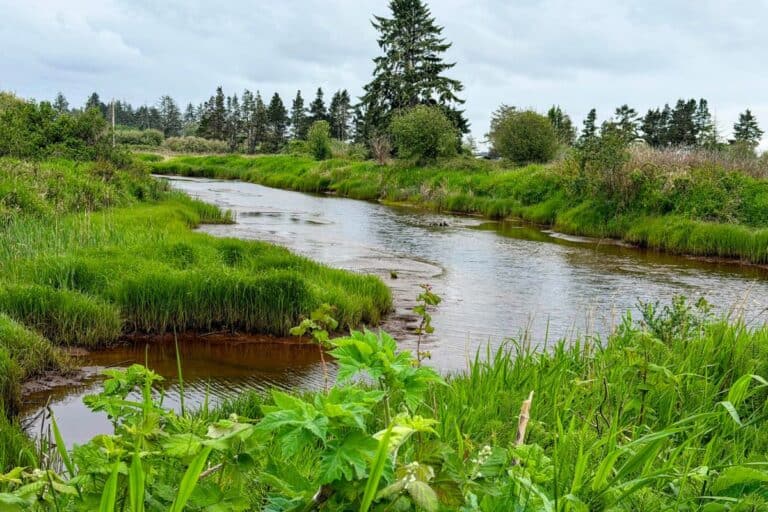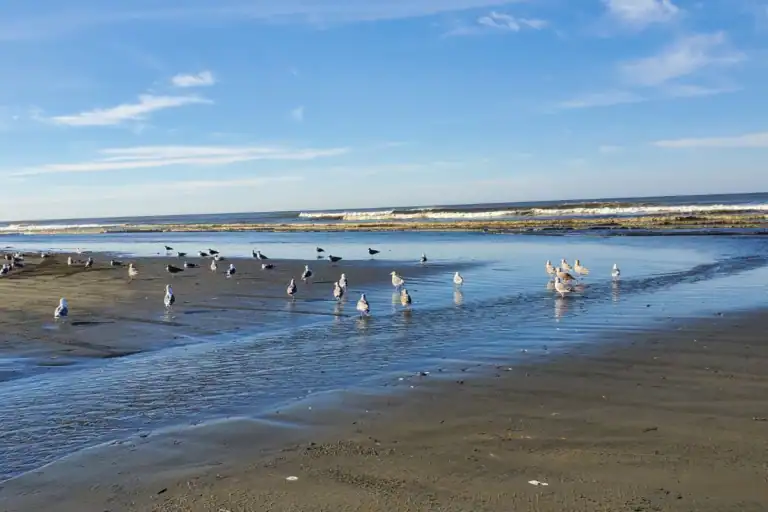
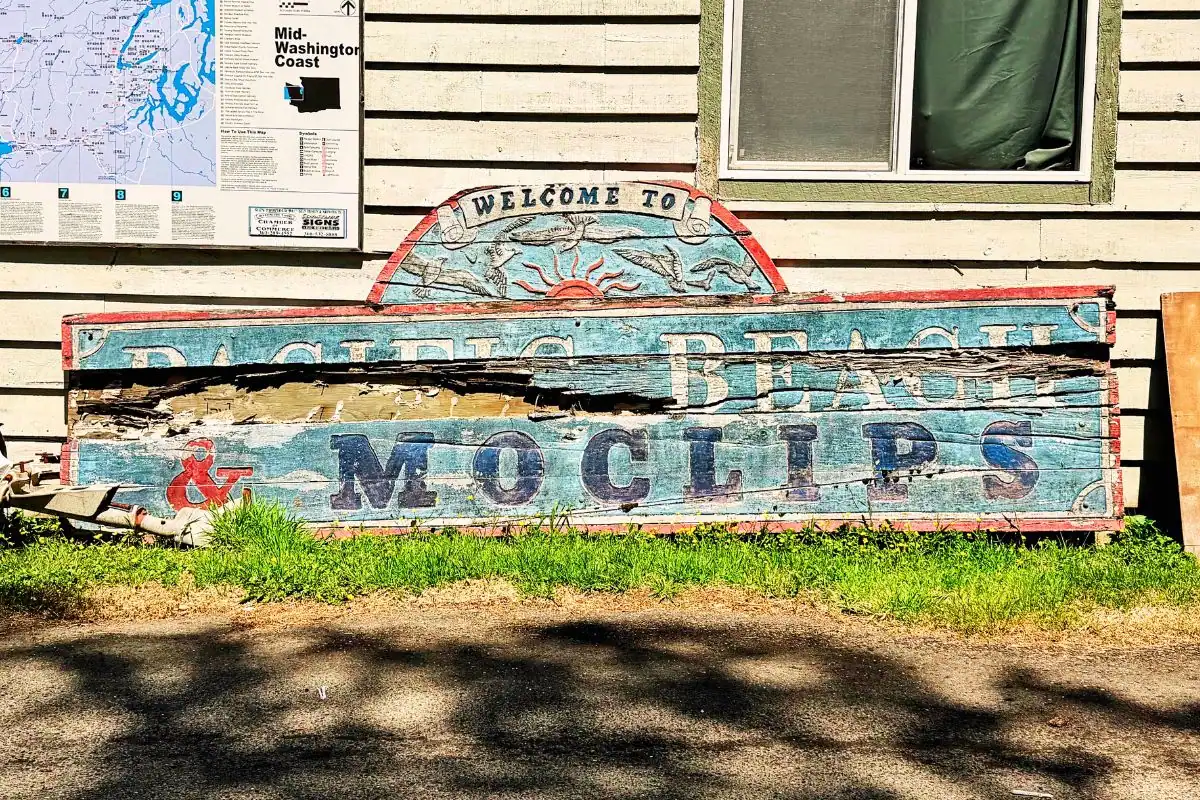
Every year, my family packs up the car and heads straight to the beach for the 4th of July. Most years, we end up in Moclips, Washington.
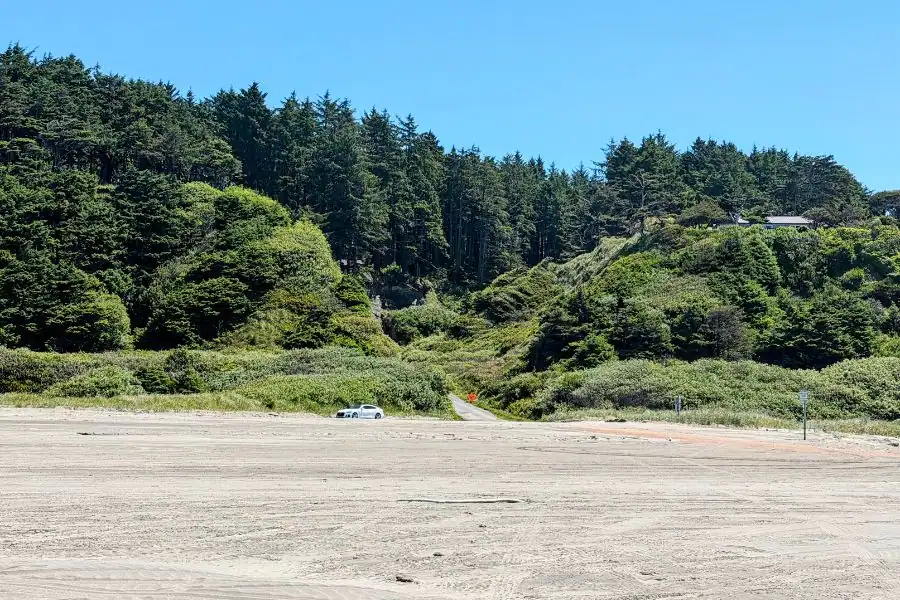
To anyone passing through today, it feels like a wonderfully overlooked, almost liminal beach town…a place where the moody coastal forest crashes right into a quiet, misty shoreline, and the chaos of the modern world just sort of fades away.
But after so many summers here, I got a little obsessed with Moclips, Washington history.
I always want to know the history behind old abandoned buildings and run down houses, and Moclips has quite a few.
I had to start poking around for the stories hiding under the sand.
It’s wild to think that if you’re standing on that wide, flat beach right now, you’re basically on top of what used to be a bustling resort town…complete with a train station, fancy hotels, boardwalks, and thousands of summer weekend visitors.
Moclips has a vibe that’s entirely its own right now.
Those grand, turn-of-the-century resort days are ancient history, leaving behind a town in a beautifully gritty transition… a mix of weathered, run-down local spots and sleek, up-and-coming vacation rentals. But beneath this modern surface lies a wild past…
Moclips, Washington History at a Glance
- The railroad transformed Moclips into a booming coastal resort town in the early 1900s.
- The grand Moclips Beach Hotel became the centerpiece of the town’s tourism era.
- Beach races, busy boardwalks, mills, and canneries made Moclips livelier than it feels today.
- Powerful winter storms destroyed much of the beachfront town and damaged the hotel beyond recovery.
- Remnants of old Moclips still survive along Railroad Avenue and around the former school campus.
- The Museum of the North Beach continues working to preserve the town’s history.
The Train That Sparked a Coastal Gold Rush
Try to picture what a road trip looked like out here before 1905.
There weren’t any roads carving through the thick coastal jungle, meaning the only way to get to Moclips was to use the shoreline as a highway.
Visitors had to load into horse-drawn wagons for a bumpy, wet, and, I could only imagine, incredibly stressful trek right along the surf.
You had to pray your driver knew how to read a tide chart, because a single mistake meant getting caught by high tide and pinned against the cliffs by the mighty Pacific Ocean.
However, that all changed when the Northern Pacific Railway extended its tracks to the coast, making Moclips its westernmost terminus.
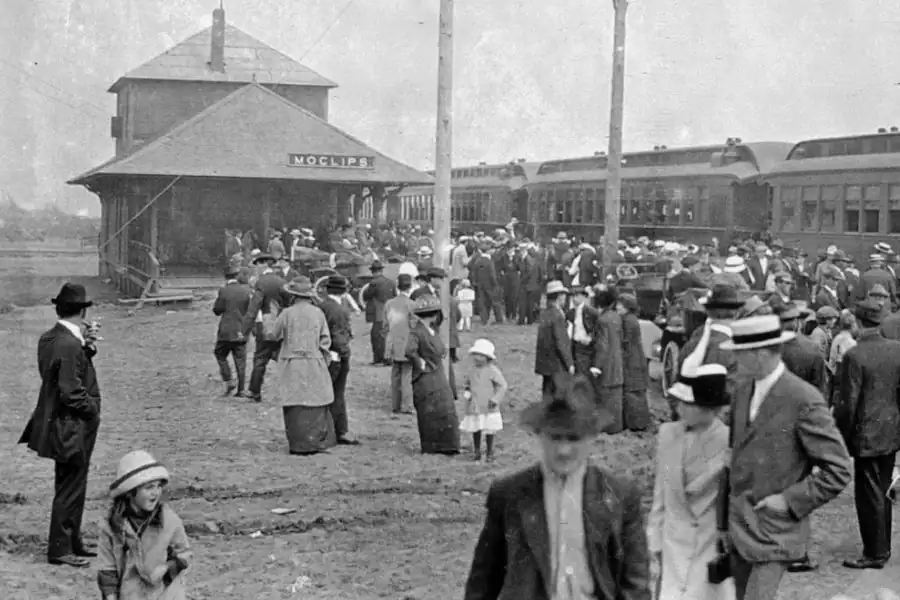
Almost overnight, the town erupted with life. Steam trains from Seattle and Tacoma rolled in daily, brimming with wealthy vacationers chasing the “healthful benefits” of the salty sea air.
But the town wasn’t just a playground for the rich.
It was a rugged, working-class community built on the backs of shingle weavers, loggers, and cannery workers.
While tourists paraded the boardwalks in their finest clothes, locals kept the massive M.R. Smith Lumber and Shingle Mill humming or hauled razor clams at the cannery just down the road.
The town grew so quickly that four schools sprang up just to keep pace with all the local kids…and yes, class schedules really did follow the clamming tides so families could dig together.
Dr. Lycan’s “Impossible” Beach Resort
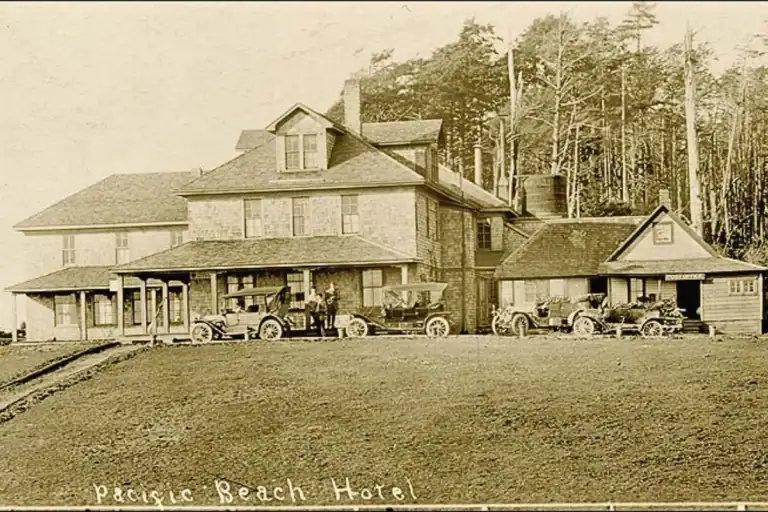
The true showpiece of the boom years was the Moclips Beach Hotel, the brainchild of Dr. Edward Lycan, a Seattle doctor with grand ambitions. When his first 150-room hotel burned down just months after opening in 1905, he simply rebuilt…this time, even bigger.
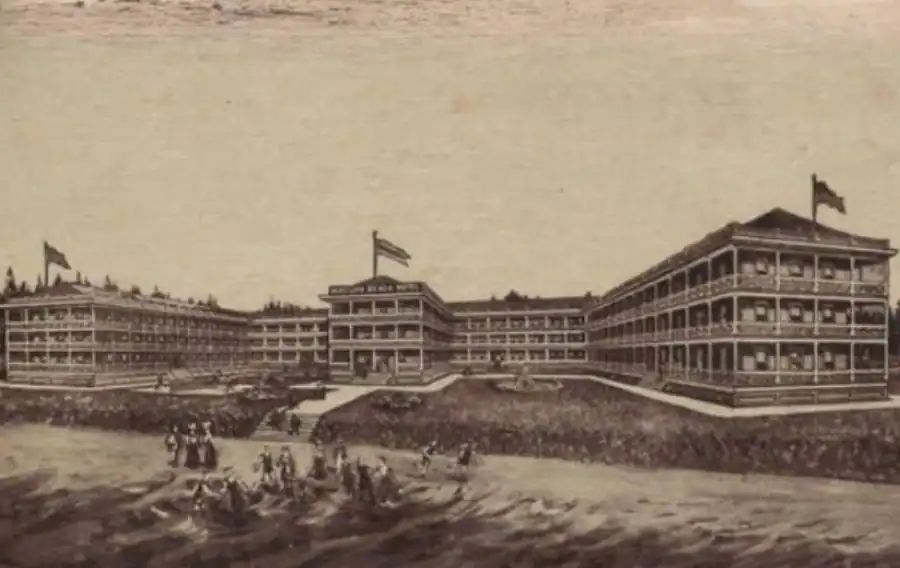
Photo from the Museum of North Beach
The new Moclips Beach Hotel opened in 1907, and it was a marvel of the Pacific Northwest:
- It stood three stories tall and stretched for an entire city block.
- It offered 270 luxurious “outside” rooms, each promising fresh ocean breezes.
- A 2,000-foot covered veranda stretched along the sand, inviting guests to linger above the surf.
But the hotel’s fatal flaw was its daring location.
Dr. Lycan built his masterpiece right on the shifting dunes… sometimes just a dozen feet from the high-tide line.
What could possibly go wrong?
In the summer, it was paradise… with up to 5,000 tourists packed in every weekend.
But when winter hit, the place was completely unprepared for the raw power of a Washington coastal winter.
The Interior Splendor of a “Secular Temple”
To truly grasp what was lost, you have to imagine walking into the 1907 hotel at its peak.
Dr. Lycan wasn’t just after size… he wanted the kind of over-the-top luxury you’d find in the fanciest Seattle hotels.
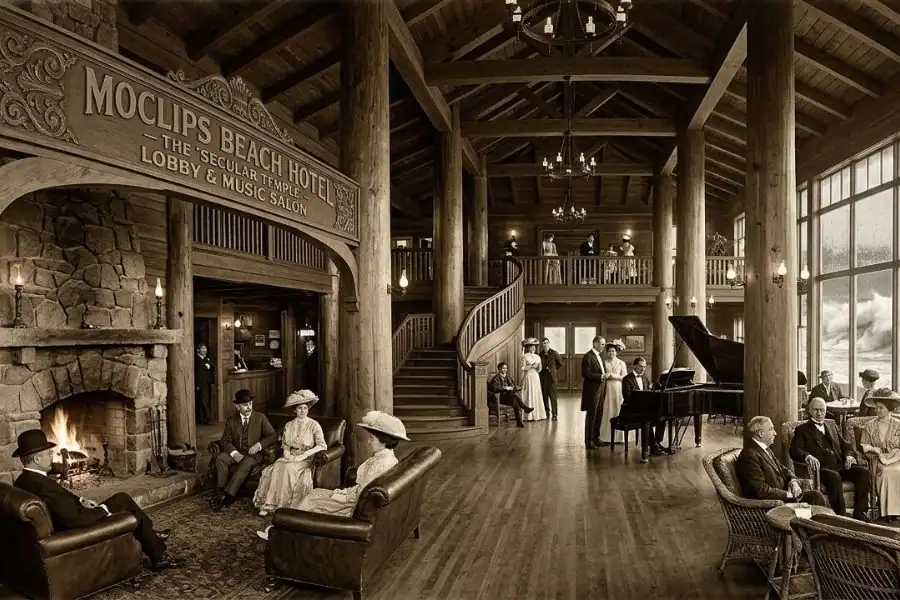
Inside, the hotel glowed with the natural riches of the Pacific Northwest, finished almost entirely in deep, local old-growth fir, hemlock, and spruce.
- The Lobby: Guests stepped off the train platforms into a massive, grand lobby featuring towering cedar columns and magnificent stone fireplaces crackling with driftwood fires.
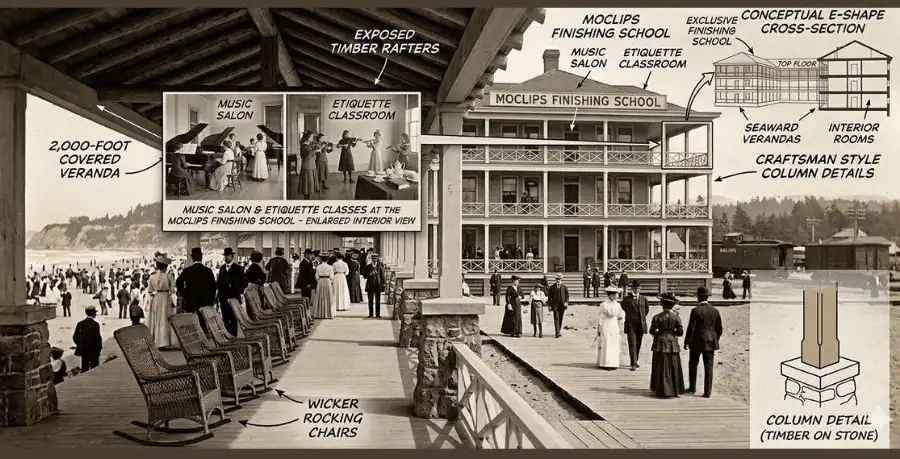
- The Promenade: The crown jewel was the 2,000-foot covered veranda along the seaward side, with deep-set Craftsman details and exposed rafters. Here, socialites in long dresses and wool suits rocked in wicker chairs, sheltered from the wind as they gazed at the endless ocean.
- The Finishing School: The hotel’s top floor in the north wing became home to the exclusive Moclips Finishing School. Daughters of wealthy families practiced classical music and etiquette on grand pianos, their adagios echoing as the Pacific crashed just outside the windows.
The Race They Weren’t Prepared For
During the height of the boom, Moclips hosted massive, highly publicized automobile races right on the wide, flat beach.
It sounded like a marketer’s dream…roaring engines tearing down the edge of the Pacific.
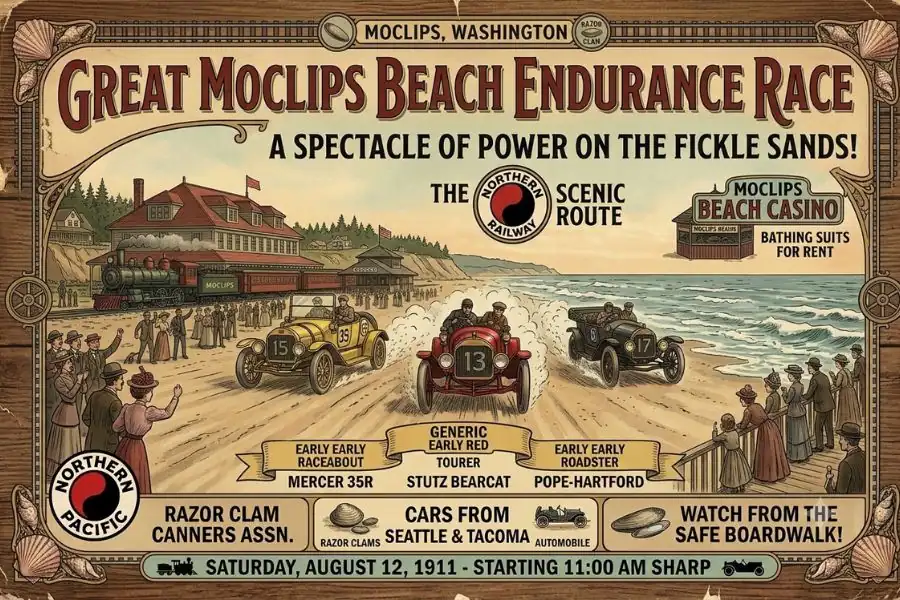
But the reality of beach racing caught everyone off guard.
Unlike the hard, predictable clay of Daytona, the shifting sands of the Pacific Northwest are notoriously fickle.
Cars got stuck in random soft spots, engines choked on salty mist, and the tides would just roll in and end the whole thing… cue drivers scrambling to save their cars before the sea swallowed them.
It was a chaotic, beautiful mess… basically the perfect snapshot of that wild era.
The Night the Ocean Ate the Town
Moclips’ glory days ended in true Pacific Northwest fashion… with a disaster.
In late 1911, a string of brutal winter storms slammed the coast harder than anyone had seen before.
High winds and monstrous swells caused the Moclips River to crest and rush toward the ocean at an insane 30 miles per hour.
The ocean quite literally devoured the beach beneath the town.
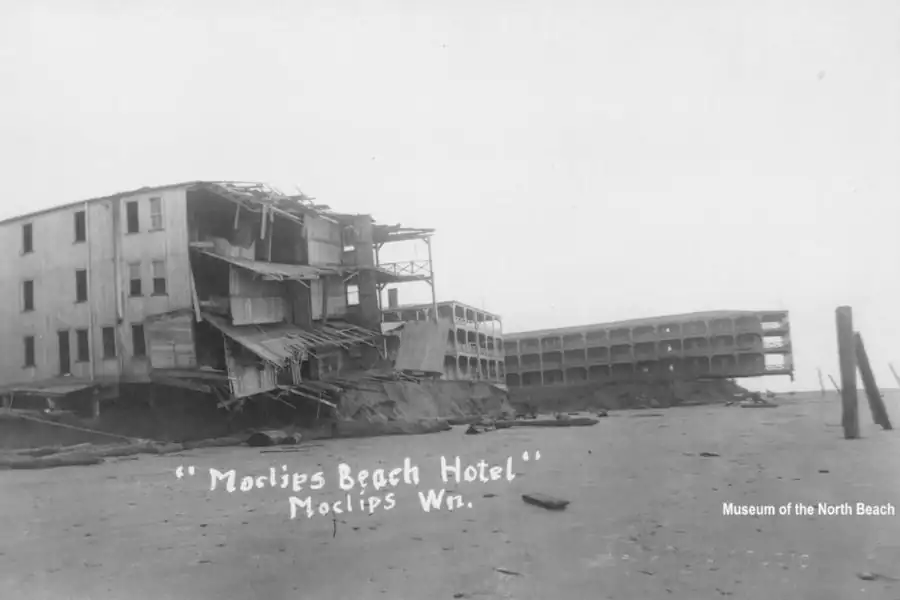
Raging water swept away the local school, erased downtown businesses, and tore the northern half of Dr. Lycan’s grand hotel into splinters.
Historical photographs from that winter show the massive building snapped completely in half, its luxury rooms exposed and hanging over the edge of the bluffs.
The Hotel’s Last Stand
When the 1911 ocean storms tore the northern wing of the Moclips Beach Hotel to splinters and left it hanging over the eroded bluffs, the entire structure didn’t fall at once.
The southern half of the block-long building actually survived the initial onslaught.
Rather than abandon it, locals boarded up the jagged break, salvaged what remained, and reopened it as the Pacific Hotel.
For two more years, tourists stayed in this half-eaten survivor perched on the edge…until the storms of 1913 swept the last of it away.
What is Left to See Today: A Real-Life Map of the Ghosts
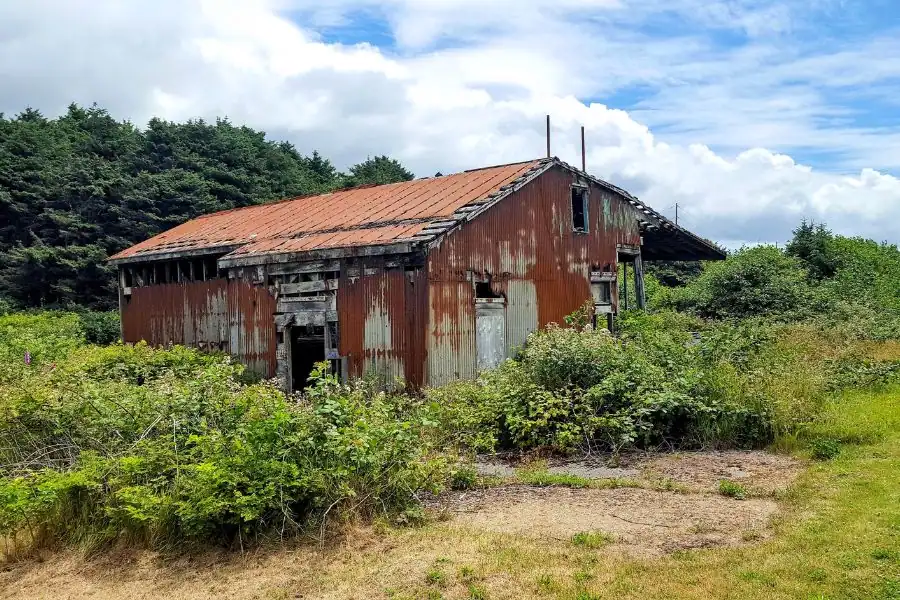
When the tourism boom faded, Moclips went back to its industrial roots… until a massive welding fire in 1948 wiped out most of what remained of the old town center.
Eventually, the trains stopped running, and the tracks were pulled up in the 1980s.
Yet if you know where to look, the bones of that vanished era still hide in plain sight.
Railroad Avenue
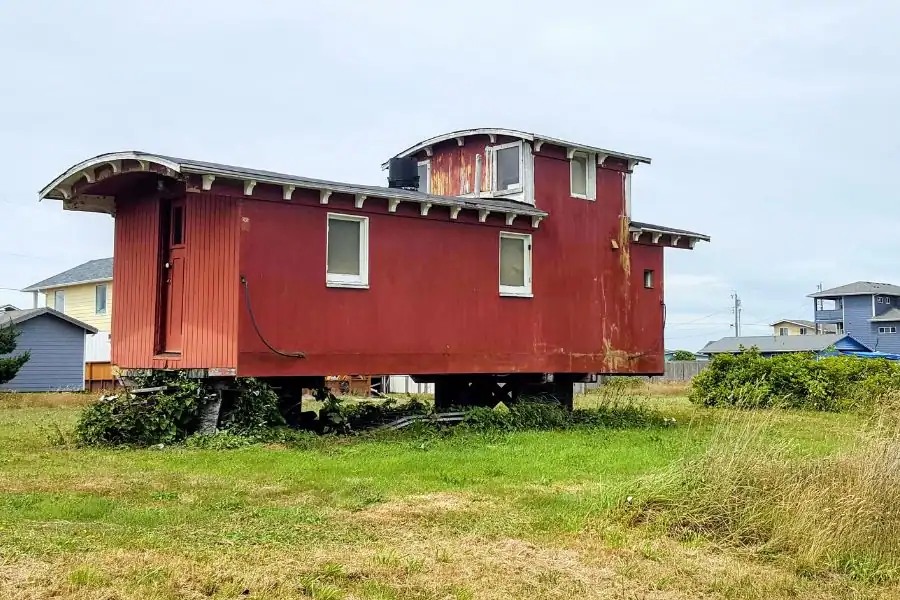
If you drive down Railroad Avenue today, you’re literally following the path where the old steam engines rolled into town.
The mills are long gone, but you can still spot original shingle-clad homes tucked along this road and the nearby numbered streets.
These are the real houses where railroad and mill workers lived over a century ago… quiet survivors from the town’s wild past.
The Concrete Ghost: The Abandoned Campus
If you head just outside the town center toward the edge of the Quinault Reservation, you’ll stumble across one of the most haunting pieces of local history: the old, abandoned Moclips High School campus.
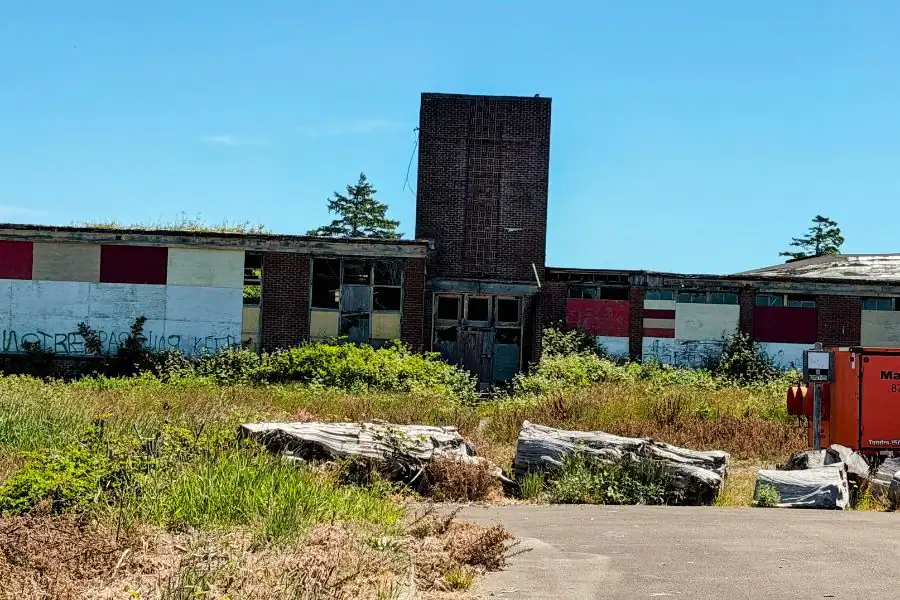
Built in 1950, it was only used for 40 years before being permanently shut down and left to the elements in 1990.
Today, it stands desolate and dilapidated… a massive concrete ghost slowly being reclaimed by the coastal brush.
The official reason given for the sudden closure was severe asbestos contamination in the ceilings, which became too hazardous and financially draining for the small district to abate.
But the school’s true downfall began underground, thanks to a stubborn piece of infrastructure that still stands today.
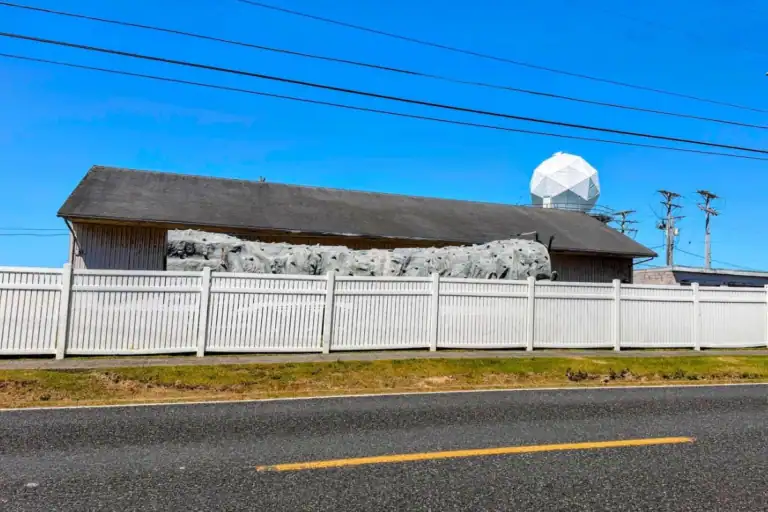
Wander the edge of the overgrown campus, and you’ll spot a very cool stucco building with a dramatic concrete tower behind it.
From everything I was able to dig up, this white building was likely the central boiler house and heating plant for the old Moclips School, although I haven’t found a source that confirms it outright.
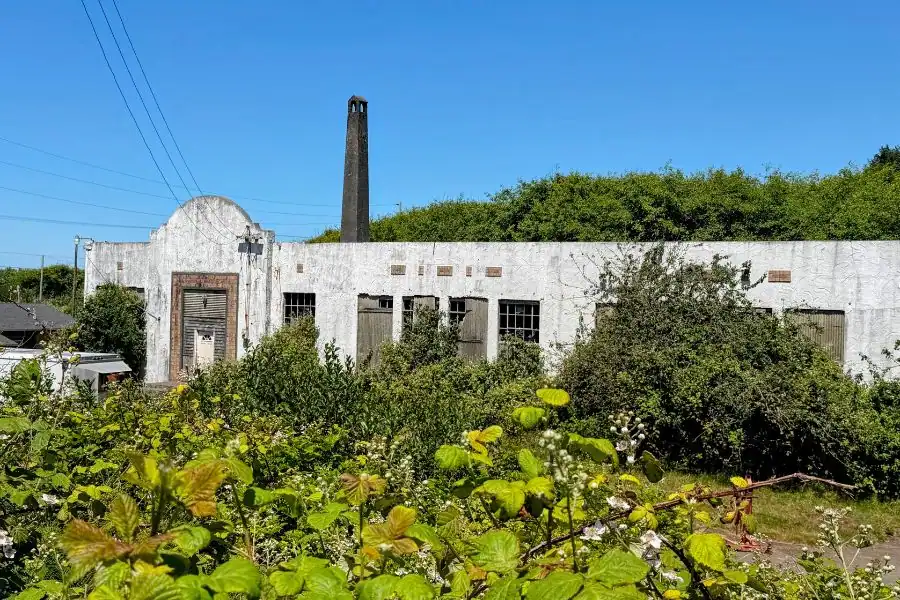
From the basement of this building, an intricate network of underground tunnels ran beneath the earth, piping steam heat out to the main high school building and gym.
Unfortunately, building a sprawling underground heating system on a soggy coastal plain had one fatal flaw…the boiler room flooded. A lot.
By the end of the 1989–1990 school year, water had drowned the furnaces and ruined the entire system.
The district couldn’t afford repairs, so teachers had to finish out the year using temporary plug-in space heaters in freezing classrooms before abandoning the entire property for good.
A History of Shifting Boundaries and Racial Tension
While asbestos and busted boilers are the official story, locals will tell you the closure was really about the social and racial divides of the time.
For decades, the Moclips school served both the local white kids from the logging and beach communities and Native American kids from the Quinault Reservation next door.
As the mid-20th century wore on, deep-seated racial tensions and a push from some in the community to separate Native children from white students began to fracture the student body.
When the old Moclips school closed in 1990, it basically split the communities for good.
Instead of building a new unified school, they went their separate ways… a new high school for the towns was built in nearby Ocean Shores, and Taholah High School was built on the reservation for Quinault students.
It’s a heavy, complicated chapter of coastal history… and it gives those crumbling school walls a much deeper, more somber meaning when you pass by today.
The 208 Otis Avenue Tavern
Just down the road from the Moclips Country Store, another relic waits for its next chapter.
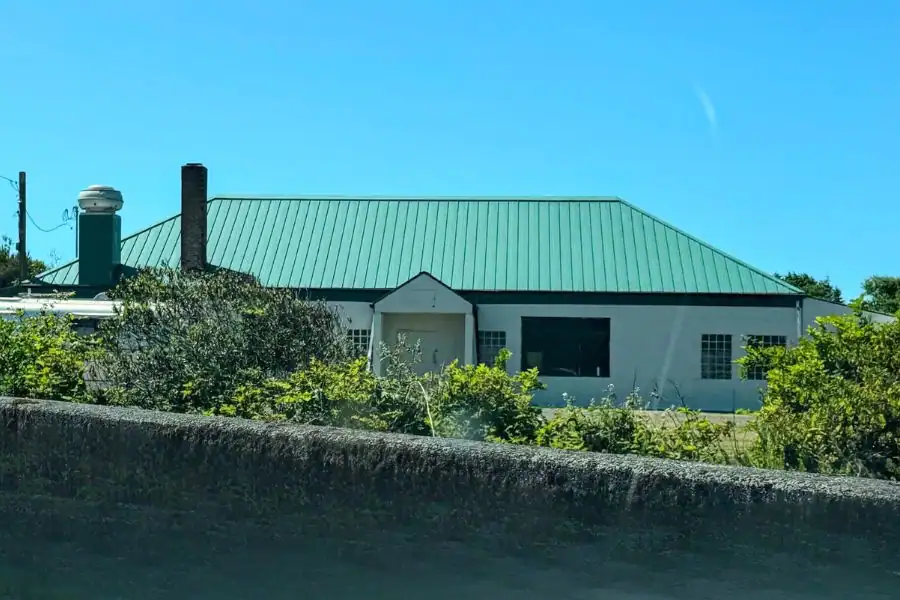
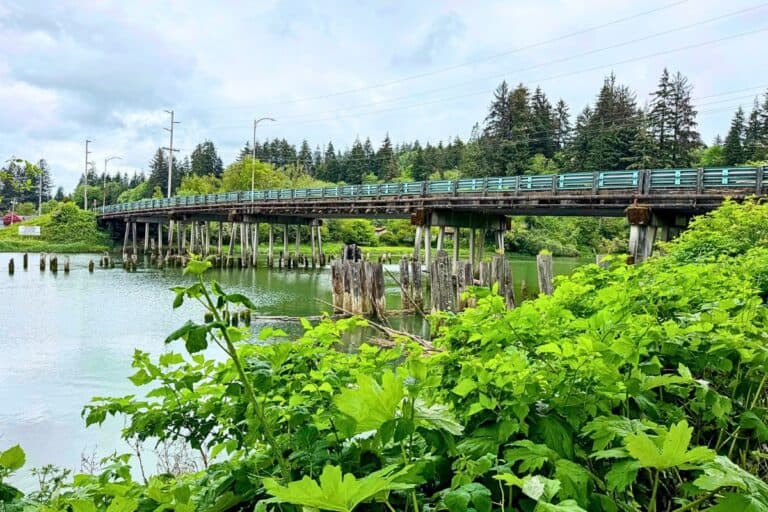
It sits at the corner of State Route 109 and Otis Avenue, a 1950s brick-and-wood tavern perched along the Moclips River estuary.
Once a lively local watering hole, the building is an architectural survivor, with its original brick fireplace, distinctive chimney, and sprawling 2,820-square-foot open floor plan.
Today, it sits behind a heavy metal fence with an “Open House / Historic Tavern for Sale” banner draped across the front.
What makes this property so tempting is the location.
It includes roughly three-quarters of an acre, with 189 feet of highway frontage on one side and more than 150 feet of riverfront on the other.
I recently had the chance to tour the property and talk with the current owner, who has owned it for the past 14 years.
It really is a beautiful piece of land, with direct access to the river where salmon, otters, and beavers still make their home.
The tavern itself, however, will need a lot of work before it can reopen.
When the current owner purchased the property, squatters had caused extensive damage.
He has spent years working on renovations, but he is now ready to retire and pass the property on to someone else.
Personally, I would love to see it revived as a casual bar and grill.
Moclips could really use a welcoming place where locals and visitors can gather for a meal.
The property also includes space for a three-story duplex beside the tavern.
Plans were previously approved, although the permits have since lapsed and would need to be revisited.
It is easy to imagine vacation rentals here, with guests walking next door for breakfast, dinner, or a drink overlooking the river.
With Seabrook’s tourism boom just a few miles south, places like this feel primed for a thoughtful revival.
The tavern is basically the perfect symbol for Moclips: gritty, weathered, and packed with resilient history, just waiting for someone to bring it back to life.
I was so busy talking with the owner and taking in the property that I completely forgot to take interior photos.
The Museum of the North Beach – A New Chapter:
If you want to connect the dots between “then” and “now,” you have to visit the Museum of the North Beach.
For years, they’ve preserved an incredible trove of artifacts, old photos, and real pieces rescued from the original 1907 Moclips Beach Hotel before the tides swept it away.
However, if you try to visit right now, you will find the doors to their historic building locked.
The museum is currently closed to the public…but for a very exciting reason.
It is about to get a whole new lease on life.
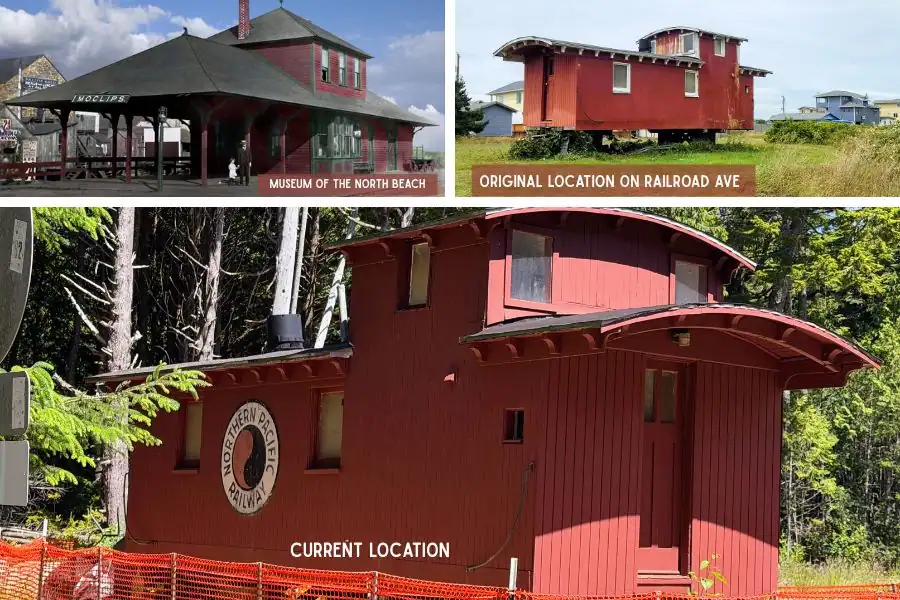
The sign for the museum’s future home even features a replica of the old Northern Pacific railway depot.
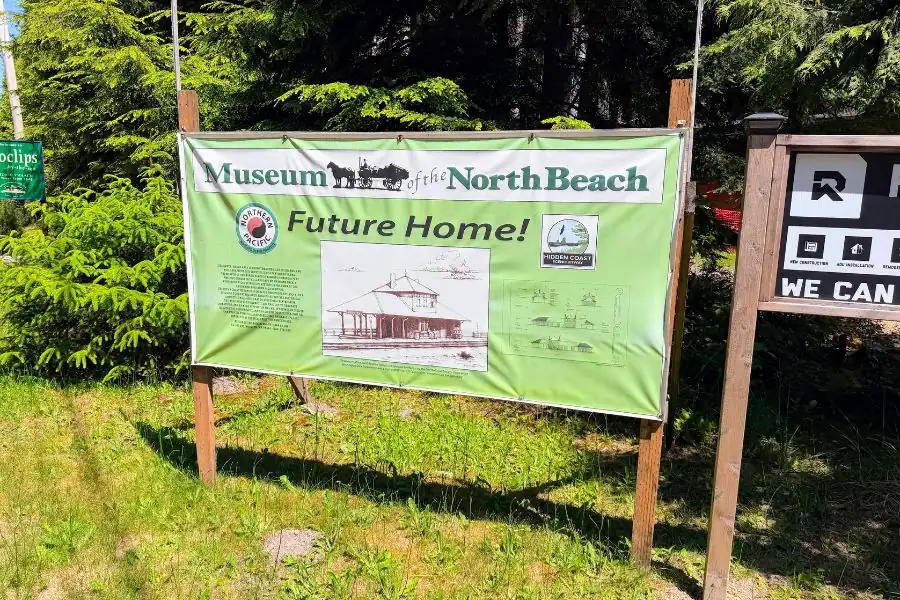
The Ocean Crest Resort generously donated a plot of land just down the road, and the historical society is currently in the midst of building a brand-new facility.
The new building is to be a beautiful tribute to Moclips’ early 1900s gold rush, designed to replicate the look of a landmark Northern Pacific railway depot.
That bright red caboose that used to sit on Railroad Avenue?
It’s now at its permanent home at the new museum.
The museum is currently operating at minimal capacity from the historic Dorothy Anderson cabin in Seabrook.
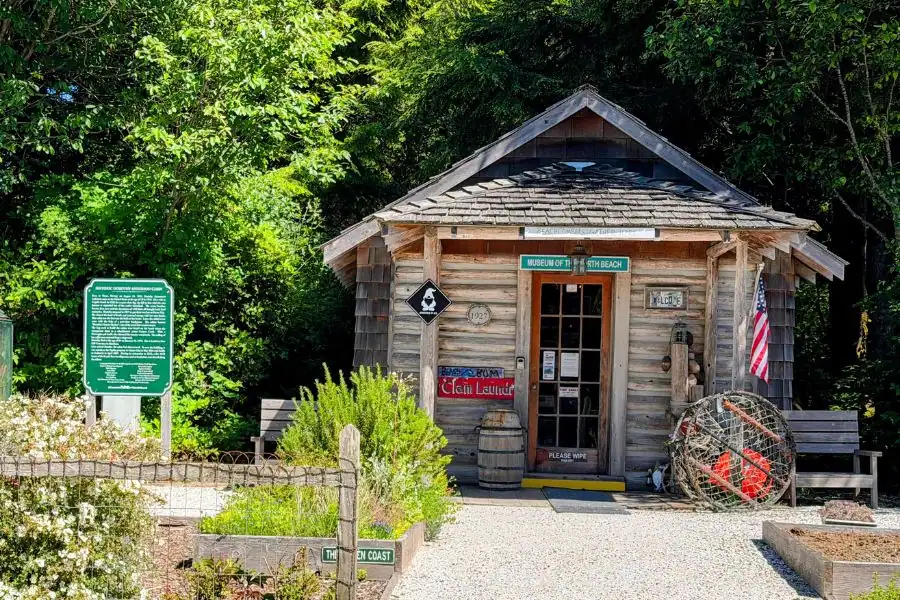
The cabin itself (and the storybook town of Seabrook) is worth visiting with or without the museum operations.
Saving the Ghosts of the North Beach
While it’s a little disappointing that we can’t explore the full archives and exhibits inside the museum right now (as of June 2026), watching this tiny coastal community refuse to let their history wash away is incredibly inspiring.
I can’t wait to see the new depot building completed.
When my family arrives in Moclips this Fourth of July, I know I’ll see these shores in a new way.
Standing on the quiet, misty sand today and listening to the waves crash on the empty shore feels surreal.
It’s hard to imagine that a hundred years ago, huge steam engines crossed the tides, race cars sped through the surf, and wealthy visitors enjoyed cocktails on a grand 2,000-foot veranda right where you walk.
Moclips is quieter and slower-paced now, but its wild, resilient spirit is still here.
Thanks to local historians, the memories of those old resort days won’t be lost to the sea.