Reflections from a forgotten town on the Washington coast.
Certain places stay with you long after you leave them.
Bottle Beach State Park was one of those places for me.
What This Story Is About
Some places stay with you long after you leave them…
This story is about one of those places.
It’s about wandering through the remains of a forgotten town on the Washington Coast while the tide rolled in, the birds called overhead, and the sky changed to that coastal gray.
It’s about solitude.
And resilience.
And finding beauty in places that quietly faded away.
The first visit
The first time I stopped there was almost accidental.
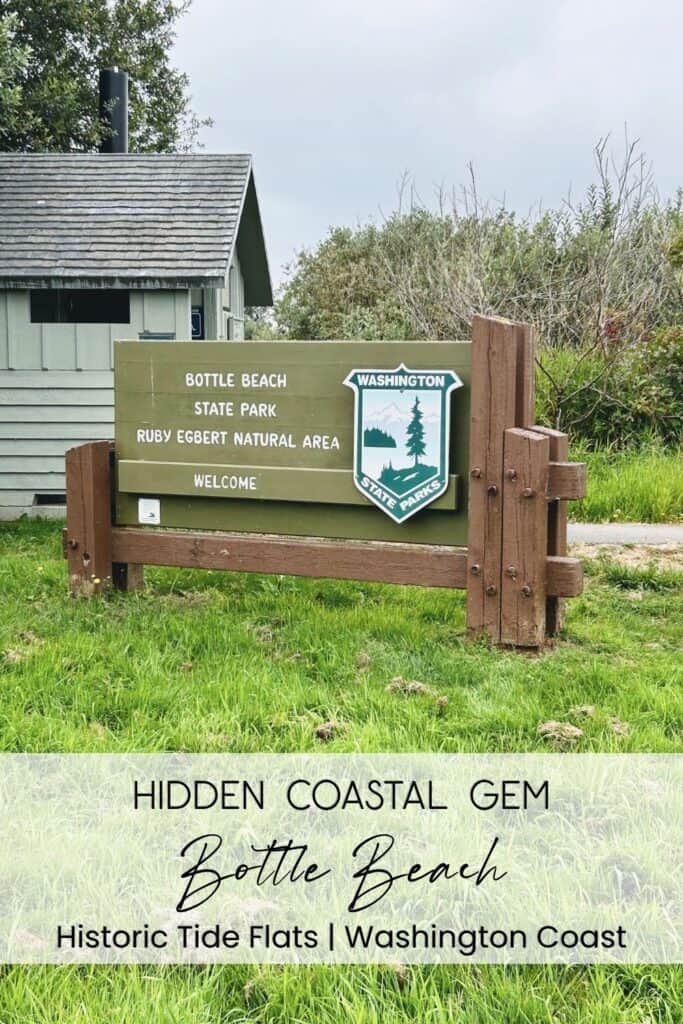
My partner and I were driving through on our way to Westport a couple of years ago when I noticed the sign along the highway.
I had probably passed it dozens of times before without thinking much about it, but that day, curiosity got the better of me.
“Let’s pull in and check it out,” I told him.
At first, the park seemed unremarkable.
Just a gravel lot, a lone restroom near the marsh’s edge. Quiet and modest, the sort of place most people pause at briefly before moving on.
But then we noticed the boardwalk.
Boardwalks have always pulled at my sense of nostalgia, as if each step carries me into another era.
Maybe that’s why history fascinates me so much.
I love picturing what places looked like before time, weather, and progress transformed them.
Partway down the boardwalk, I stopped in front of an informational sign about the lost town of Ocosta-by-the-Sea.
And just like that, I was hooked.
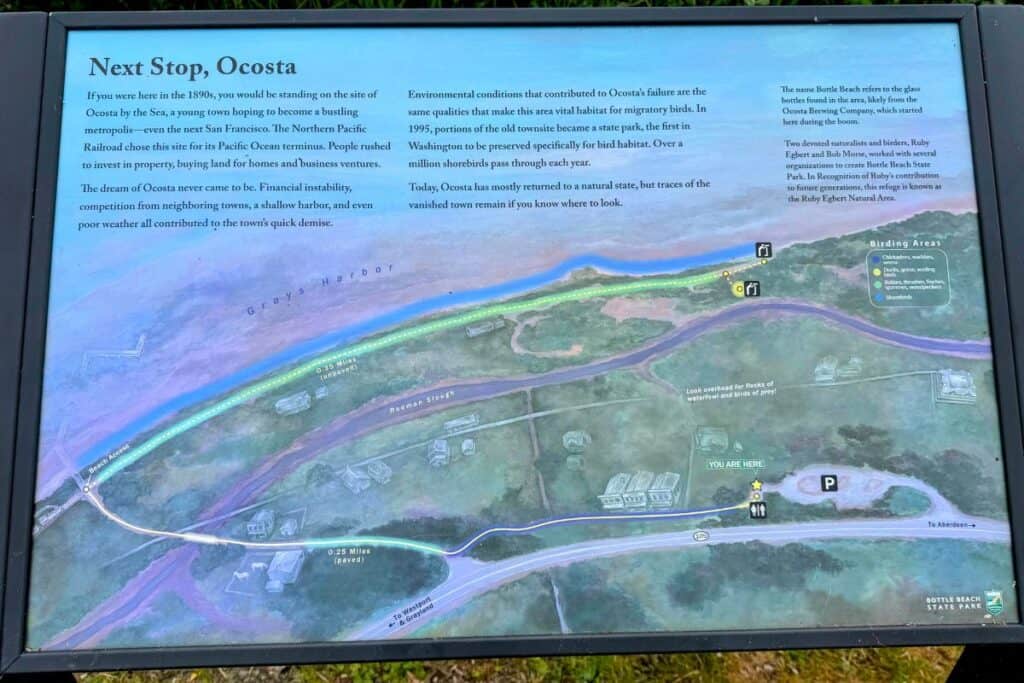
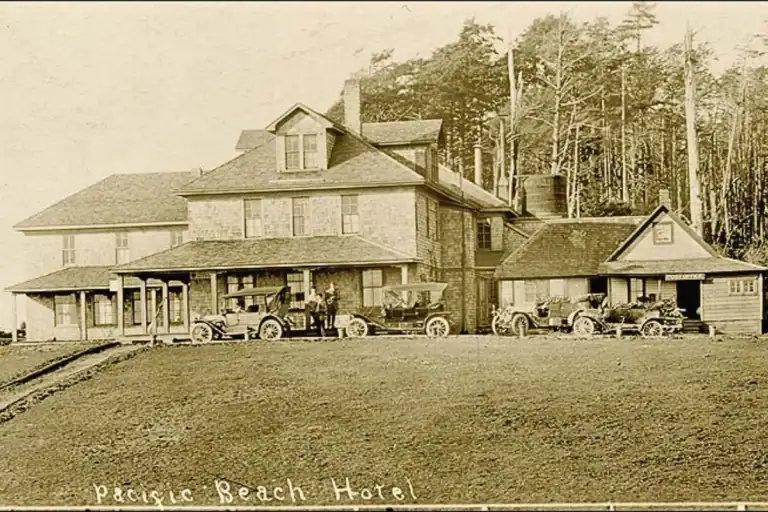
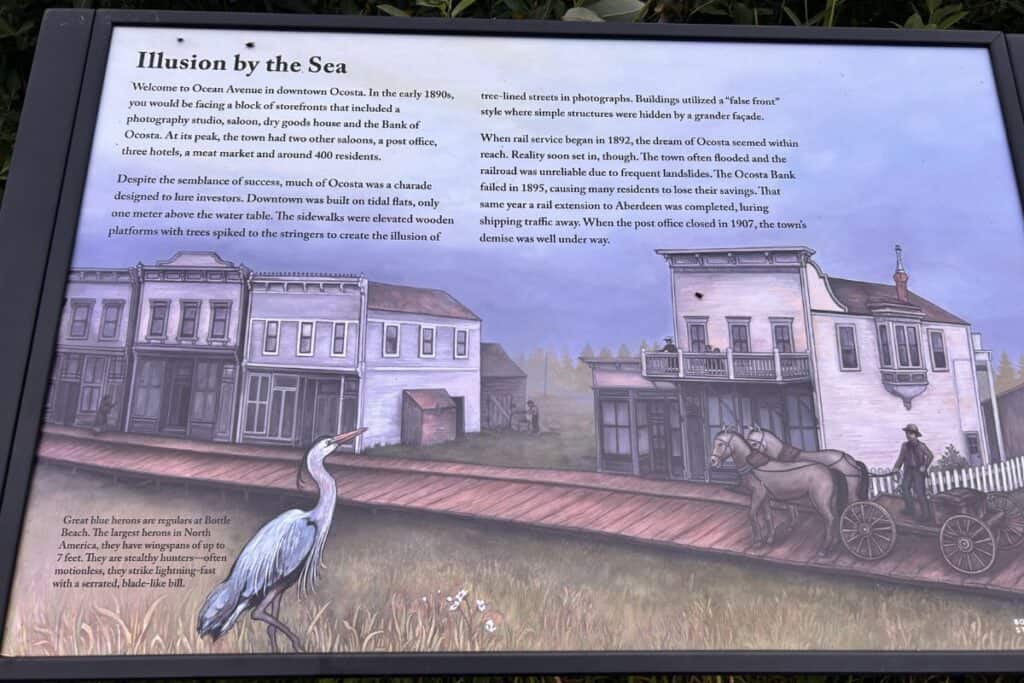
I gazed across the marsh, trying to conjure what once stood here: homes, elevated walkways, hotels, businesses, horse-drawn carriages gliding through what is now only wetlands and tide flats.
It felt almost impossible to imagine.
We wandered farther along the trail, crossing a slender slough alive with shorebirds darting through the shallows.
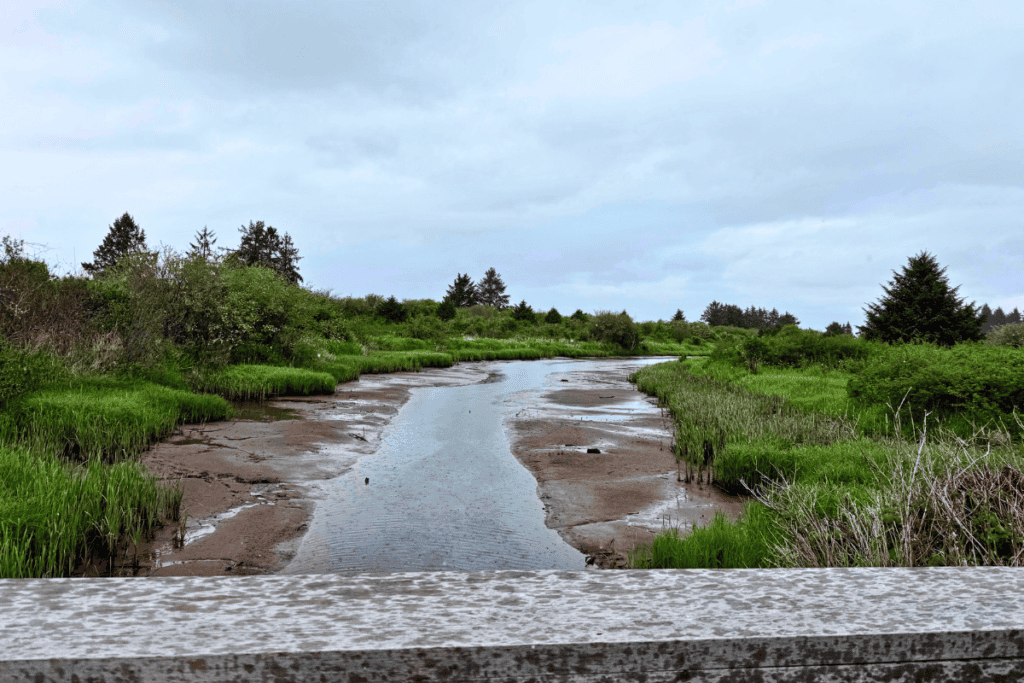
Their calls echoed over the marsh grass as the distant tide shifted. The peace here seeped into your bones almost instantly.
And yet I couldn’t stop thinking:
Why here?
Why build an entire town on unstable tideflats beside the unpredictable edge of Grays Harbor?
That question stayed with me long after we left.
Some Places Keep Calling You Back
Back at home, I found myself digging through archives, reading old newspaper clippings, and searching for photographs of Ocosta during its brief boom years.
The deeper I went, the more fascinated I became.
There wasn’t much information online about the town, which honestly surprised me.
Surely I couldn’t be the only person captivated by forgotten places like this.
Eventually, I wrote a historical piece about the rise and fall of Ocosta-by-the-Sea.
But even after publishing it, I still felt pulled back to the landscape itself.
This time, I wanted to experience it alone.
So yesterday morning, I headed toward the coast.
A solo Trip To Ocosta
Living on the Key Peninsula puts the Washington coast within easy reach, though my drives are rarely direct.
What should have been two hours stretched into four, thanks to irresistible roadside stops and detours.
That’s one of the things I love most about solo travel.
I love traveling with my partner and family, but there’s something deeply satisfying about following your own curiosity without explanation or compromise. You can stop when something catches your attention. Stay longer than planned. Wander slowly. Change directions completely.
The day belongs entirely to you.
Before heading to the park, I stopped to photograph the Grossman House sitting high on the hill above Ocosta.
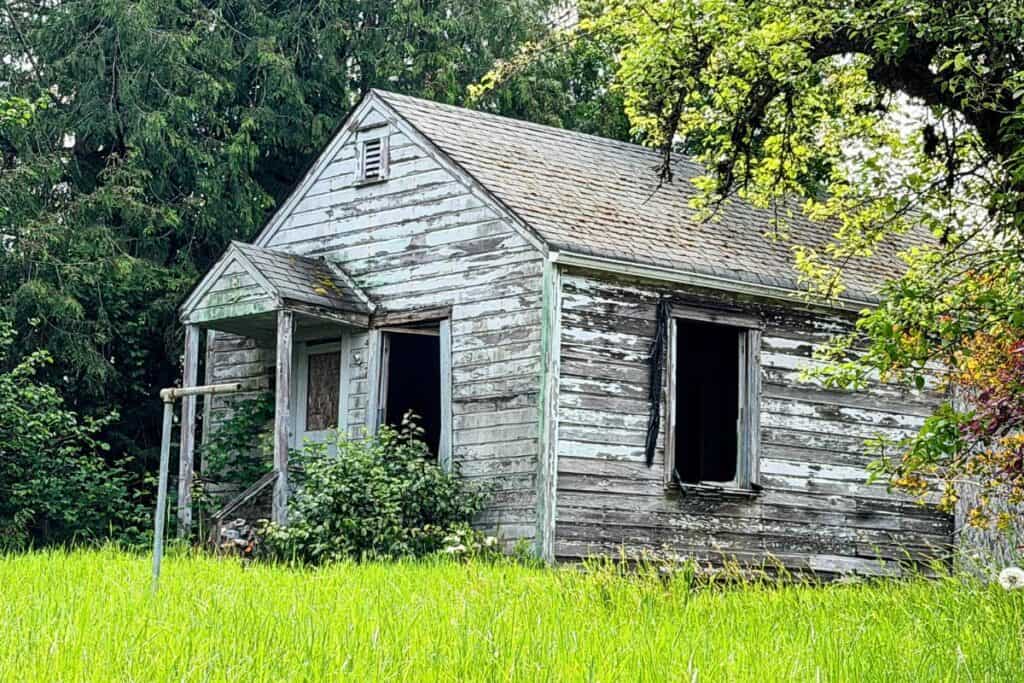
The old white Victorian home rises unexpectedly from the landscape, overlooking the surrounding marshlands like the final surviving witness to another era. Most of the nearby homes are modest, weathered, and worn hard by coastal life. Some appear abandoned altogether, slowly surrendering to time and salt air.
But the Grossman House still stands tall.
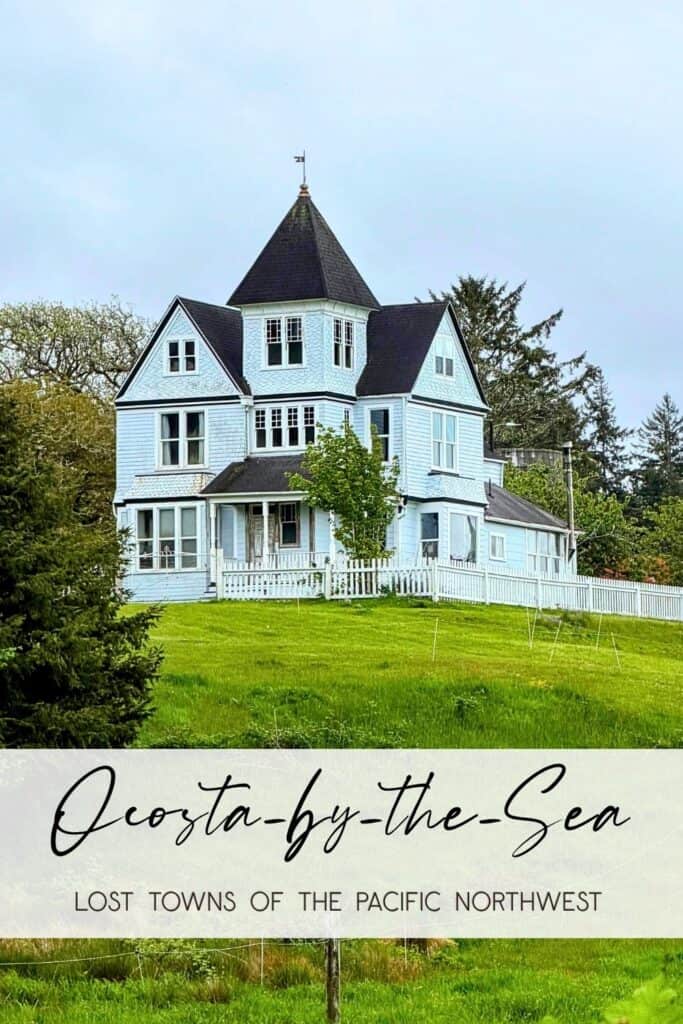
Its pale exterior and turreted silhouette feel strangely elegant against the muted greens and grays of the harbor landscape below.
Standing there beside it, I tried to imagine what Robert Boyle, the real estate developer behind Ocosta’s ambitious beginnings, must have seen from this very hill more than a century ago.
Below him would have been the noise and movement of a growing town.
Trees falling beneath saw blades. Lumber hauled across muddy ground. Smoke drifting from mills into the damp coastal air.
Workers building homes, businesses, hotels, and miles of elevated boardwalks across the tideflats.
And beyond it all, the restless waters of Grays Harbor.
I imagine there must have been enormous optimism here once.
The kind of optimism people carry when they believe they are building the future.
By the time I reached Bottle Beach State Park, the weather had shifted.
The bright morning skies had faded into low clouds and light rain, the kind of weather the Pacific Northwest seems to produce without warning.
The weather here changes constantly, something I always mention when people ask what it’s like traveling around Washington.
Sunshine in the morning can turn to wind and rain by afternoon, with little warning.
Instead of feeling disappointed, though, I welcomed it. The grayness somehow suited the landscape.
The parking lot was empty.
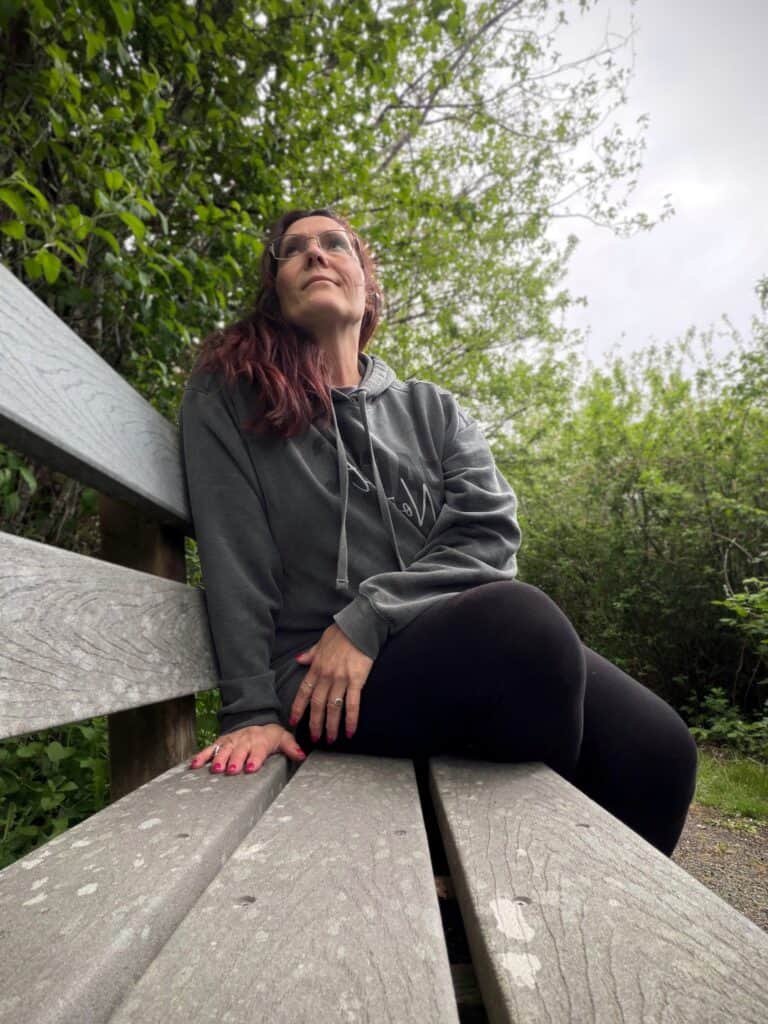
I pulled on my hoodie and started down the boardwalk alone, the damp wood creaking softly beneath my steps.
The Quiet Left Behind
The marsh stretched outward in every direction, wide and quiet beneath the overcast sky.
There were no birds this time, which surprised me considering Bottle Beach is known for them.
But their absence created a different kind of stillness, one that left more room for thought.
As I walked farther into the marsh, my imagination began filling in the empty spaces again.
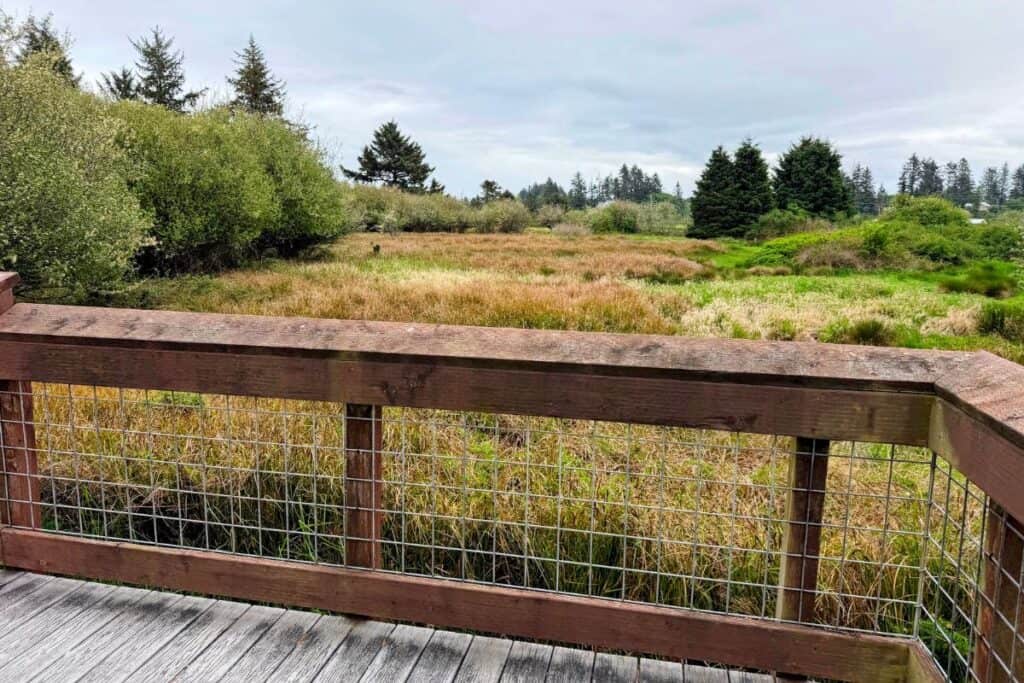
I thought about how dramatically this landscape has changed over time.
Long before mills and railroads arrived, this area was part of a rich coastal ecosystem stewarded by Native communities who lived alongside the tides, forests, and waterways for generations.
Then came industry.
The forests were cut.
The land was cleared.
Elevated walkways stretched across the tide flats.
Hotels, mercantiles, homes, and businesses rose from the muddy ground as people chased the promise of prosperity along the harbor.
And then, just as quickly, it faded.
Standing there now, it’s hard to reconcile those two versions of the same place.
The bustling Victorian town and the quiet marshland feel almost impossible to connect to one another.
Nature has softened the edges of it all.
The old railroad grade is now a peaceful walking trail.
Marsh grasses sway where businesses once stood.
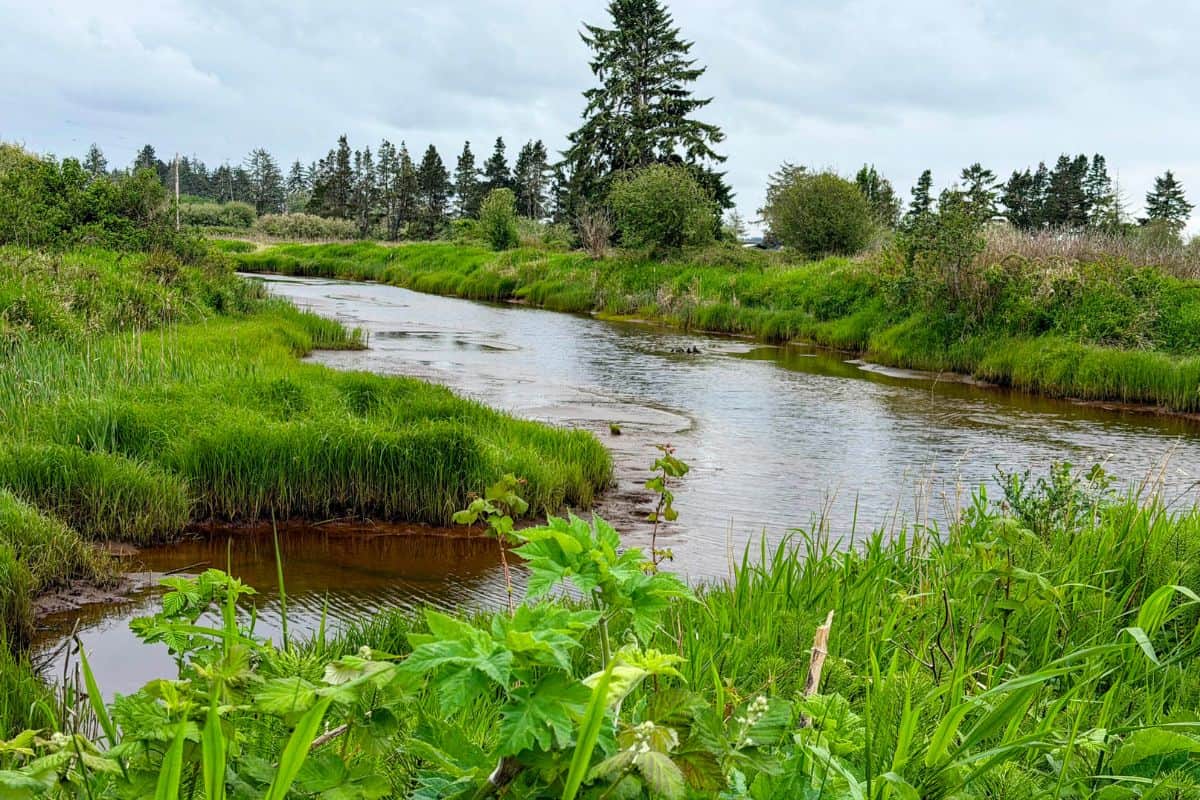
Rainwater gathers in shallow channels winding through the tide flats while the harbor slowly breathes in and out beyond the shoreline.
There’s something deeply calming about it now.
I continued toward the beach, breathing in the cool salt air as light rain drifted across the open landscape.
The air was fresh and crisp, filling my lungs and my soul at the same time.
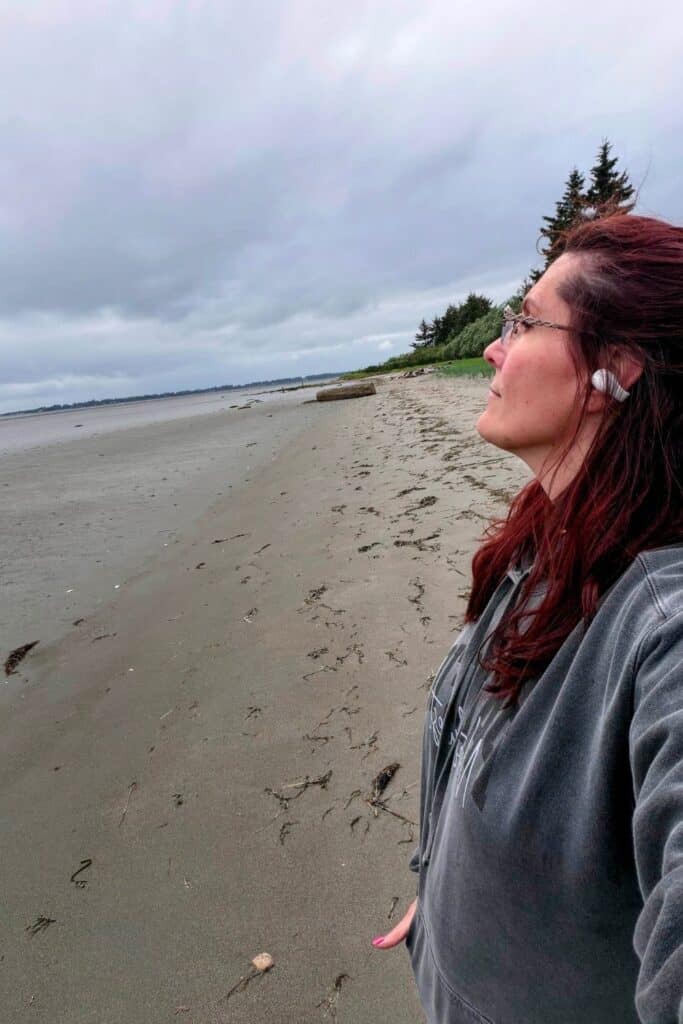
Everything smelled damp and earthy, like seaweed, mud, and wet grass. The kind of scent that instantly tells you you’re on the Washington coast.
Low tide had pulled the water far into the harbor, exposing long rows of old pilings scattered across the mudflats.
They fascinated me.
Unlike the tall weathered pilings you often see along piers and shorelines, these sat low against the mud, thick with barnacles and seaweed, stretching outward in rows like forgotten runways disappearing into the tide.
Quiet remnants of enormous ambition.
This was supposed to be a thriving port town.
A place where rail lines and ships would meet.
Where lumber and goods would move out across the Pacific, while visitors arrived to experience the coast.
Now the remains sit quietly in the mud, like a graveyard covered by the tide and time.
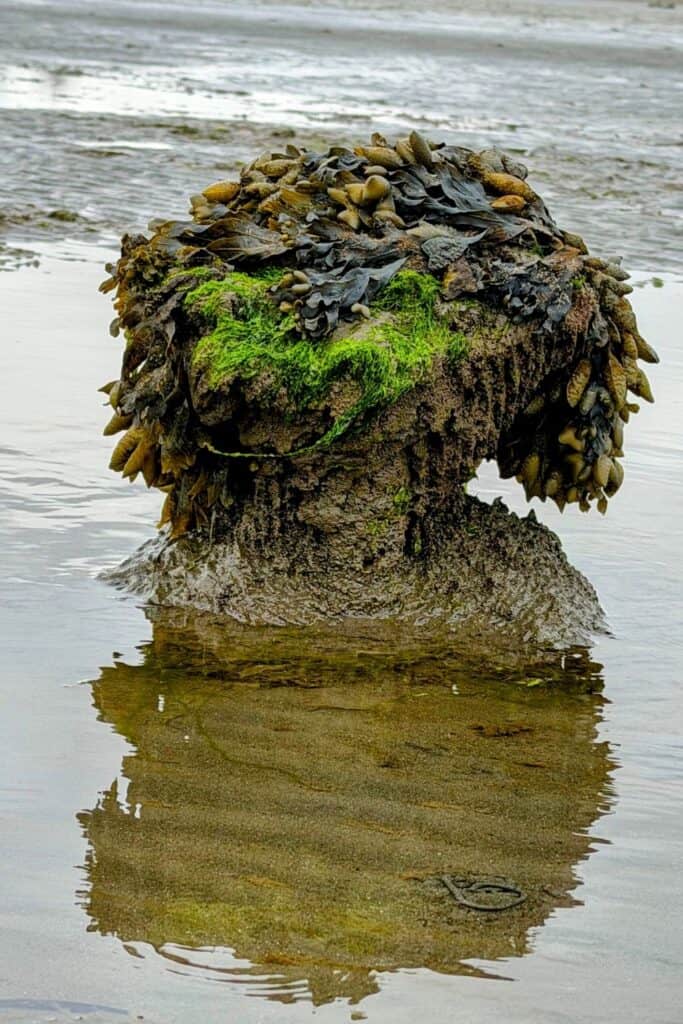
And somehow, it feels more beautiful because of it.
I walked carefully across the wet sand toward the pilings, my shoes quickly soaking through in the mud.
Thankfully, I’ve learned over the years to always keep extra shoes and socks in the car. Solo travel teaches you practical little lessons like that.
Out there alone near the remnants of the old wharf, the silence felt almost suspended.
Not empty.
Just still.
The kind of stillness that allows you to notice things you might otherwise miss.
The distant sound of water shifting through the harbor.
The soft patter of rain.
Wind moving through marsh grass farther inland.
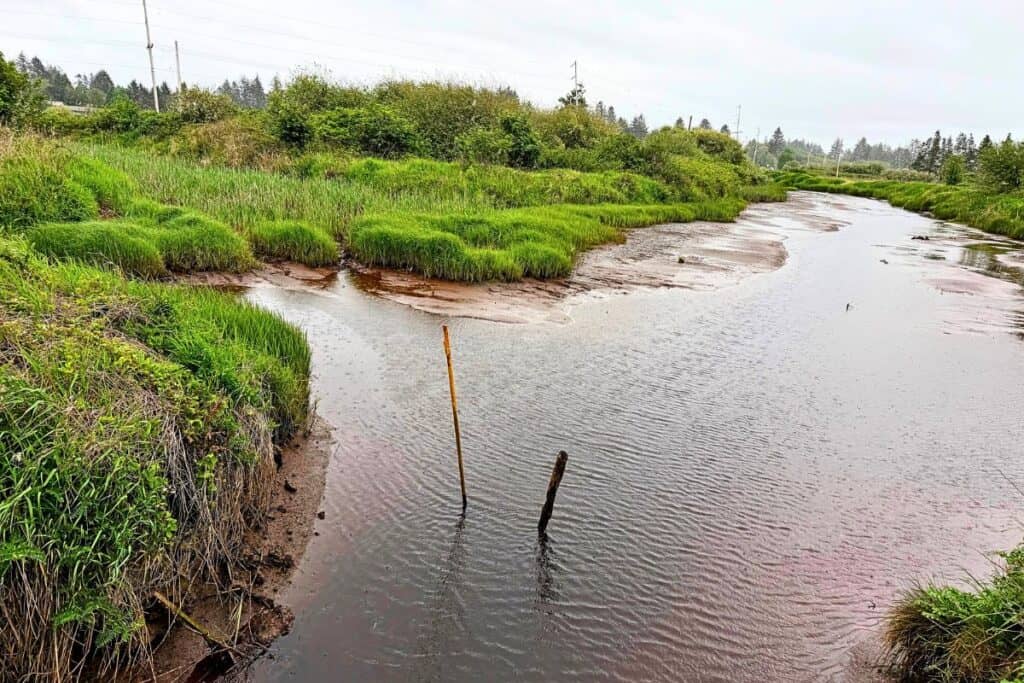
Even without the birds, the landscape felt alive.
On my way back toward shore, I found myself scanning the sand for old glass bottles or bits of history washed in by the tide.
Apparently, Bottle Beach earned its name from bottles once commonly found along the shoreline, possibly from the brewery that operated nearby years ago.
I didn’t find any.
But honestly, it didn’t matter.
The experience itself already felt like discovering something.
Not just a forgotten town, but a quieter way of moving through the world.
The Cost Of Progress
I’ve always been fascinated by the Victorian era.
For all the destruction and environmental damage caused by industrial expansion, there was also an undeniable boldness to those communities.
People arrived in harsh landscapes with enormous dreams and an almost unbelievable willingness to build something from nothing.
Sometimes successfully.
Sometimes not.
Standing in Ocosta, I couldn’t stop thinking about how much the landscape has endured.
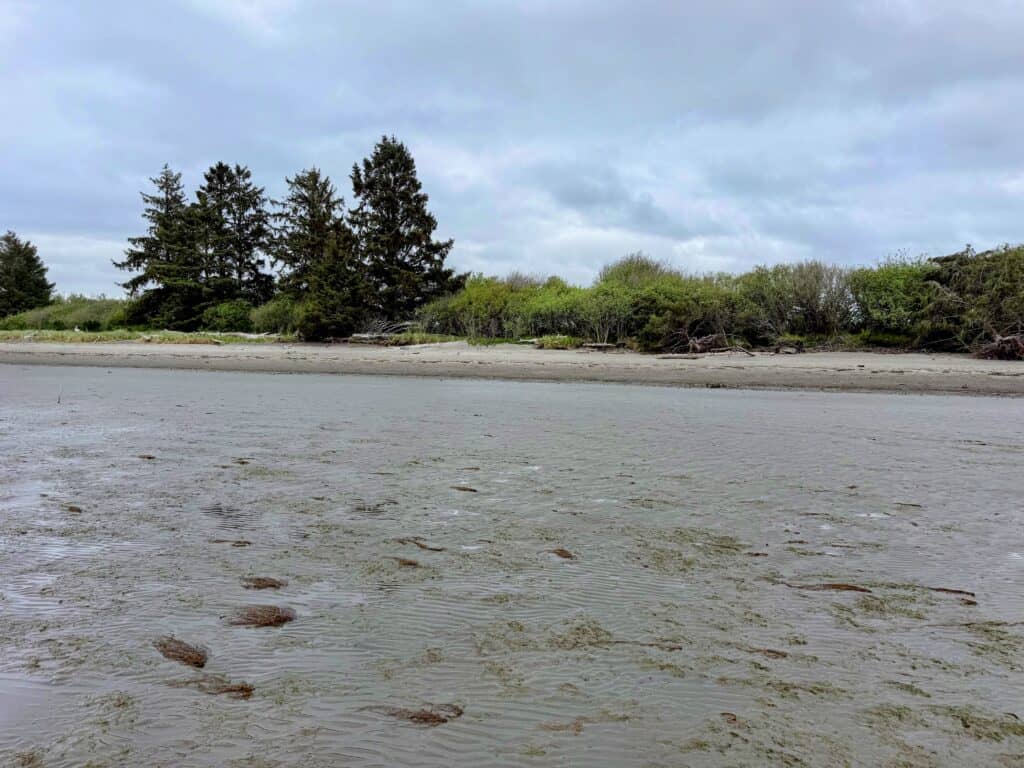
I tried imagining what this area must have looked like before the logging industry arrived.
Before railroads and mills.
Before entire hillsides of old-growth forest disappeared beneath saw blades.
Washington is still beautiful, of course.
But there’s a difference between a forest and an ancient forest.
Those old trees must have carried a kind of presence that’s difficult for us to fully comprehend now.
And yet people looked at them and saw opportunity.
Profit.
Expansion.
Progress.
In many ways, we still do the same thing today.
We flatten hillsides for roads.
Clear forests for subdivisions.
Replace open farmland with endless development.
Progress almost always asks something from the landscape in return.
I understand that contradiction more as I get older.
Final reflection
I’m grateful for the life I have….
For modern comforts.
For the ability to drive across the state alone on a quiet rainy morning, chasing a story that captured my imagination.
But I also find myself longing more and more for quieter places.
Slower places.
Places where nature still feels bigger than we are.
And maybe that’s part of why Ocosta stayed with me all this time.
Not because of what remains there…
But because of what disappeared.
By the time I drove away from Ocosta, the rain had started falling harder across the marshlands again.
The tide was slowly returning…
covering the mudflats and old pilings one more time.