If you care about music…
really care about it…
You can’t come to the Pacific Northwest and skip Aberdeen.
Seattle has the big museums and the polished tributes, but Aberdeen is where grunge was born. This is where Nirvana’s sound took shape, where the rawness and isolation seeped into every chord.
To really understand the music, you must stand where it started.
Walk the same cracked sidewalks.
Breathe the same damp, briny air.
This isn’t just a tour…
It’s a chance to trace Kurt Cobain’s path from his childhood streets to the muddy riverbanks that shaped a revolution.
Entering the Grunge Epicenter | The Drive Into Aberdeen
The drive to Aberdeen sets the mood before you even reach the city limits.
Highway 12 winds through dense stands of evergreen, the air laden with mist.
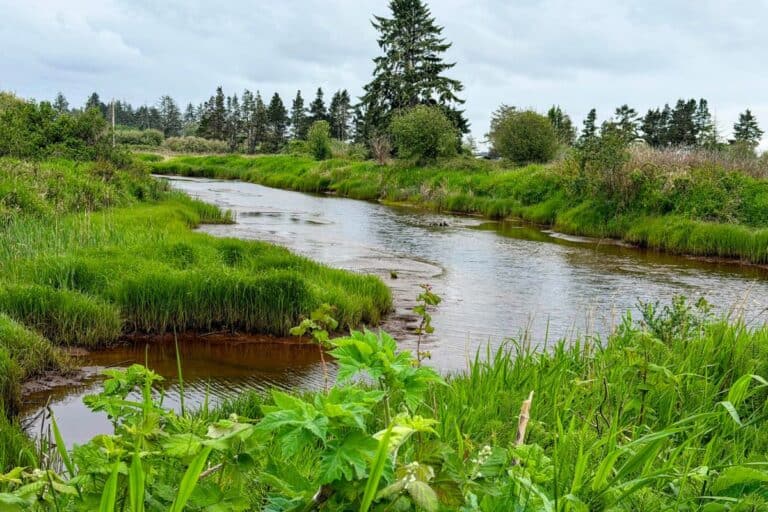
River valleys appear and disappear in the fog, everything washed in grey and green.
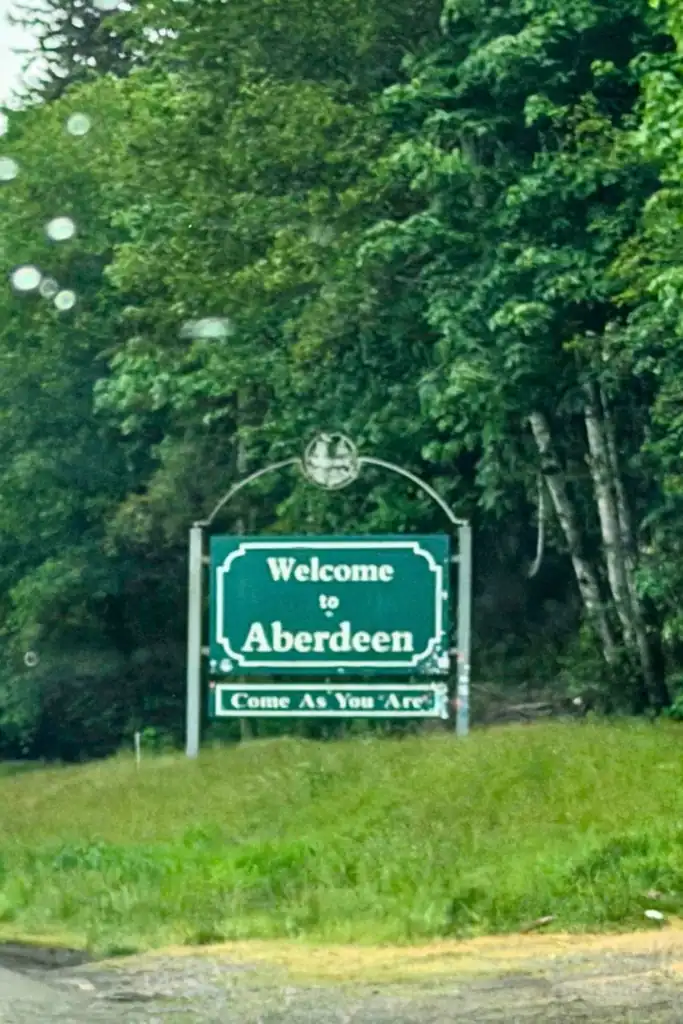
As you cross the city limits, you are greeted by one of the most famous roadside landmarks in rock history… the official city welcome sign that reads,
“Aberdeen: Come As You Are.”
That sign marks the border of a town that doesn’t bother to hide its imperfections.
Aberdeen is pure Pacific Northwest timber country…
tough
battered
honest
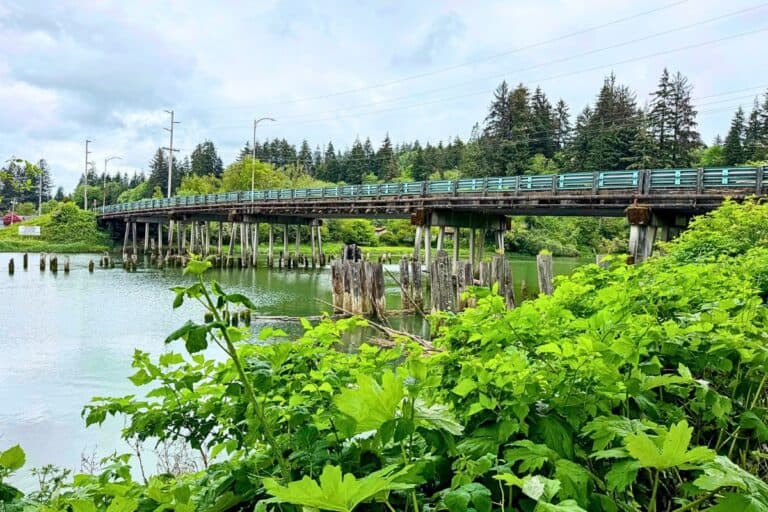
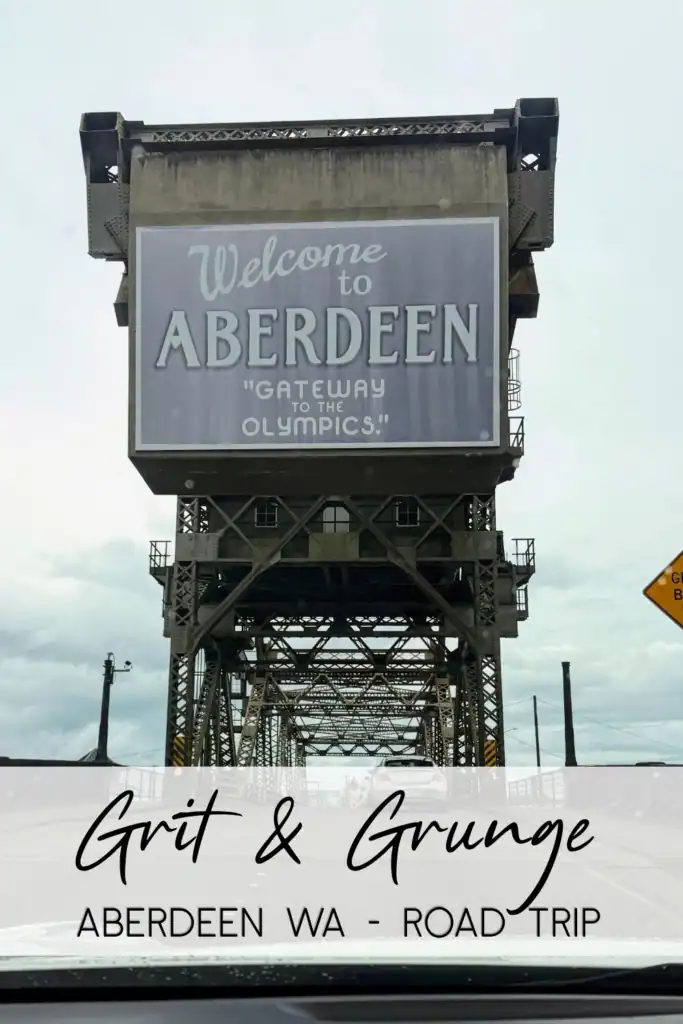
Corroded iron bridges cross over slow gray water.
Old company houses line the streets with their paint chipping, roofs mossy, windows clouded by years of rain.
The air has the smell of salt, river mud, and something faintly sulfurous.
This is the landscape that shaped grunge…
melancholy
isolated
restless
You can feel the rebellion in the air, the distortion humming just beneath the surface.
The Footsteps Route | From the Childhood Home to the Wishkah River
If you want to see Aberdeen the way Kurt did, leave the car behind.
Walk the neighborhood streets where he spent those restless, searching years.
Step 1: The Childhood Home and The Historical Plaque
Start in the neighborhood where Kurt grew up. Park along the curb near 1210 East First Street.
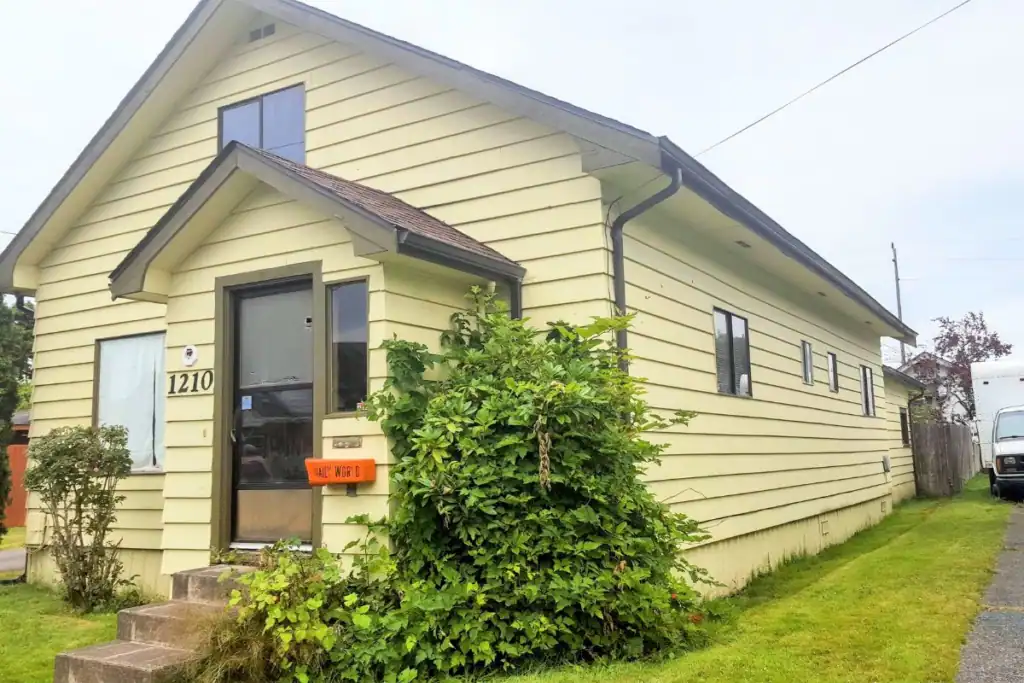
The house is small, yellow, and quiet…
just a story and a half, sitting on the corner of East First St. and Chicago Ave. in a neighborhood of Aberdeen, Washington that used to be called Felony Flats.
The front porch is simple, the black chain-link fence still neat.
After years of careful restoration, the place looks much like it did when the Cobains lived here.
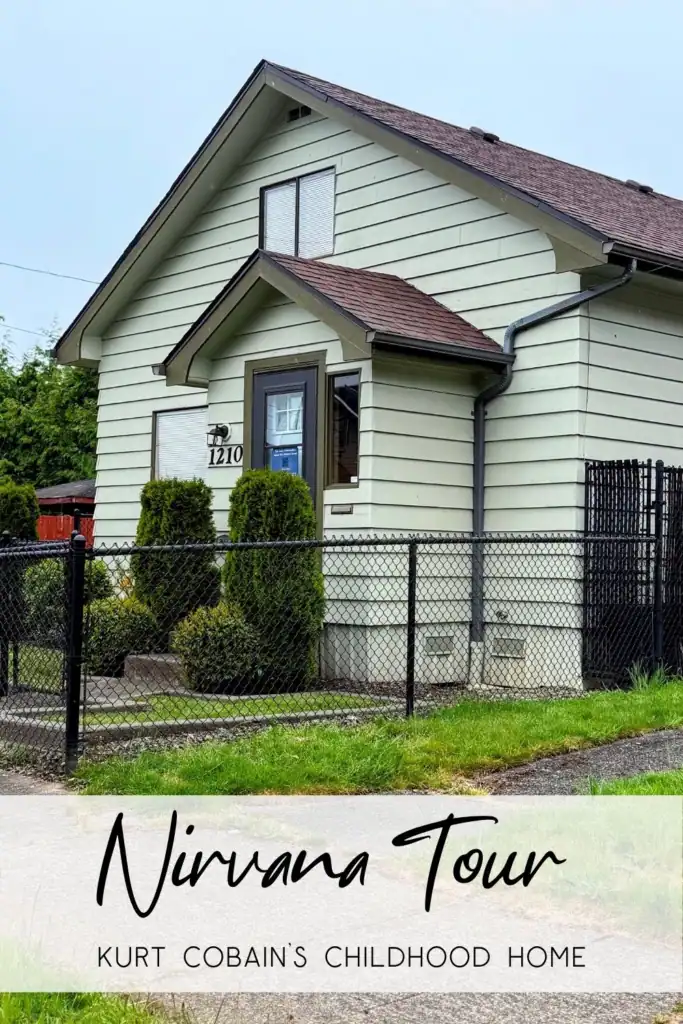
Now it’s on the state’s Heritage Register.
Walk up to the fence and you’ll see the historic plaque, a quiet nod to the neighborhood’s place in music history.
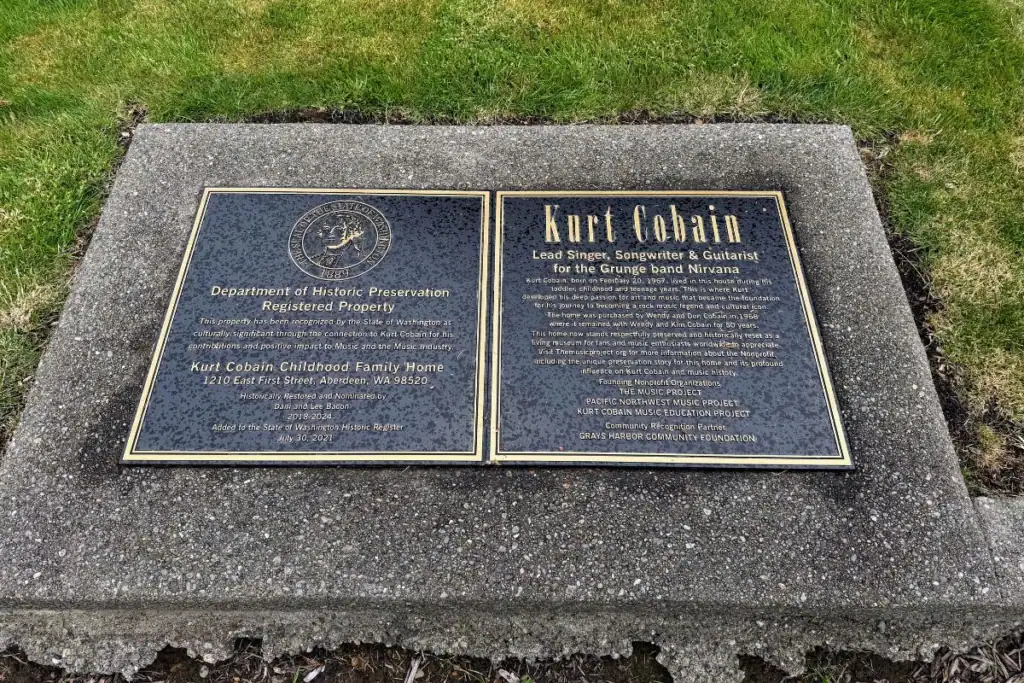
This is where Kurt first picked up a guitar, where he began to form the sound that might echo far beyond Aberdeen.
Note: The home is privately owned, and the interior is accessible only through special private tour arrangements…
so please admire and photograph it respectfully from the sidewalk.
Step 2: Walk the Teen Path to the Wishkah River
From here, head east. Follow the cracked sidewalks toward the end of the street.
This is the same short walk Kurt made again and again, notebook in hand, looking for a place to disappear.
Picture the sky low and gray, drizzle soaking into your jacket.
For Kurt, this walk was an escape.
Out of the house, notebook with him, possibly a guitar slung over his shoulder, heading for the riverbanks where he could disappear, scribble lyrics, and let the music take shape.
Inside Kurt Cobain Memorial Park
The street dead-ends at Kurt Cobain Memorial Park…
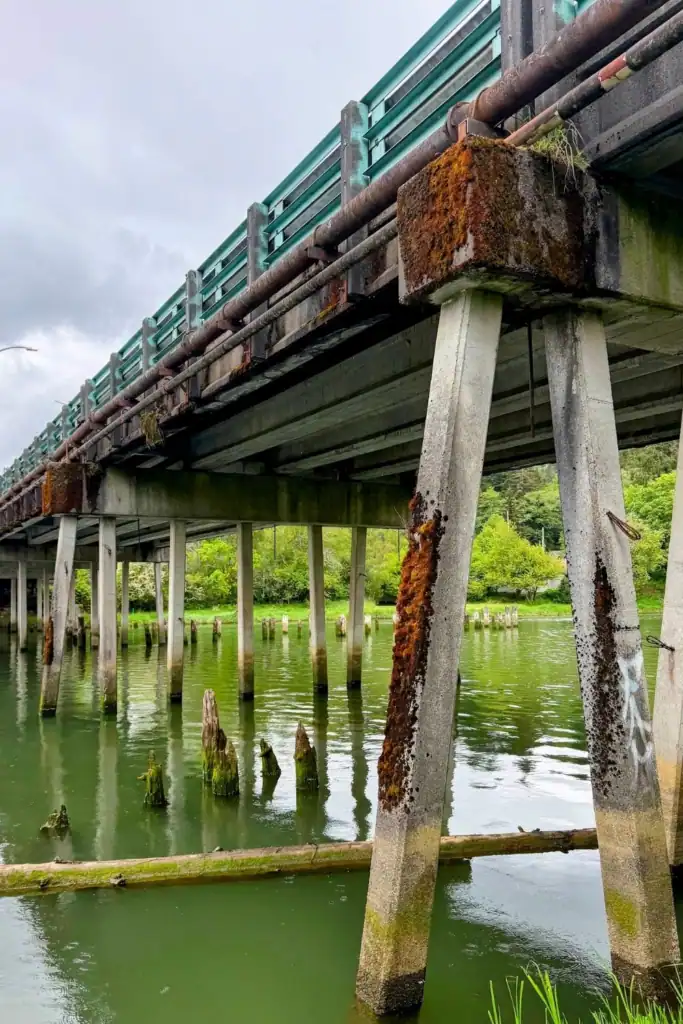
a sliver of land squeezed between the last house and the concrete bones of the Young Street Bridge.
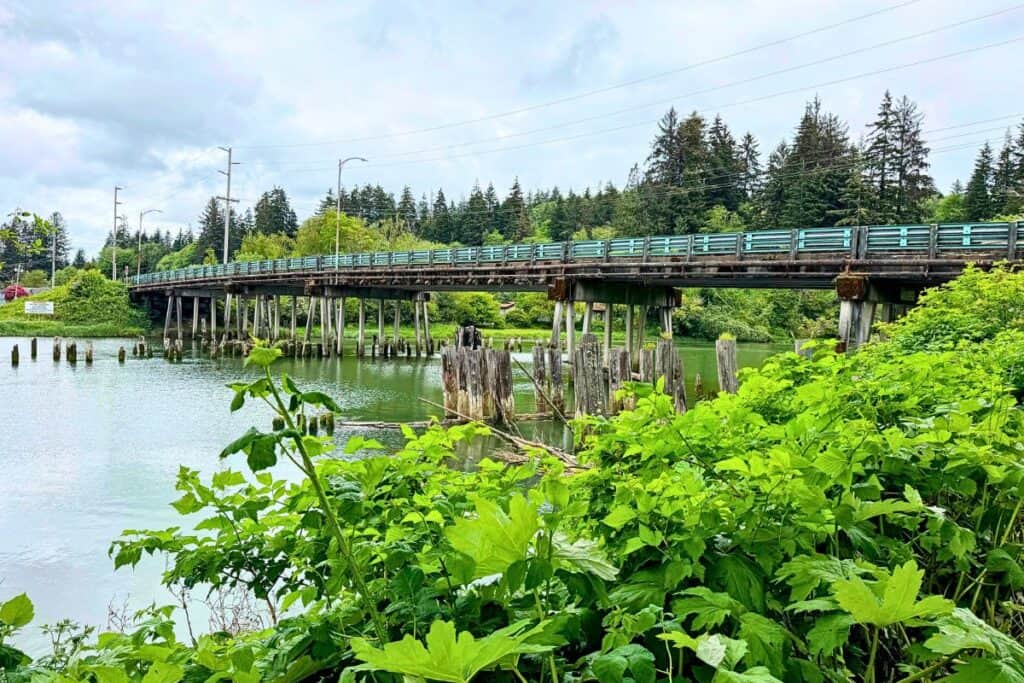
Locals call it Riverfront Park or just Kurt Cobain Landing.
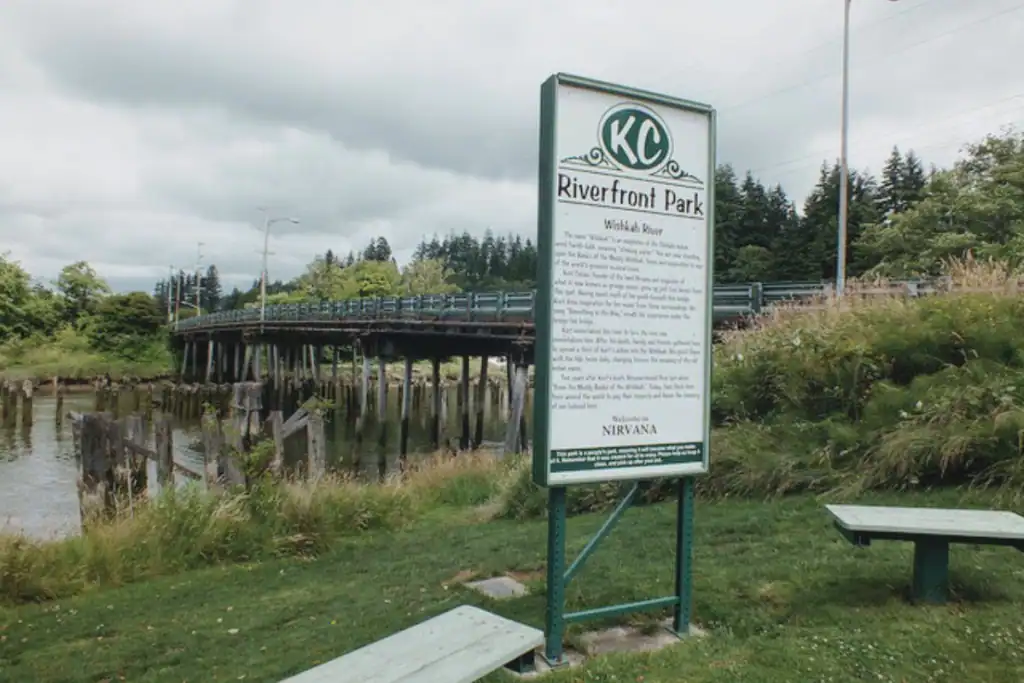
What You Will Find at the Park
For a long time, this was just a muddy patch under the bridge…
a place for fans to gather, nothing official about it.
Now it’s a public park, but it still feels raw…
Handmade.
No manicured landscape…
No polished stone…
Just a small, gritty space filled with personal tributes.
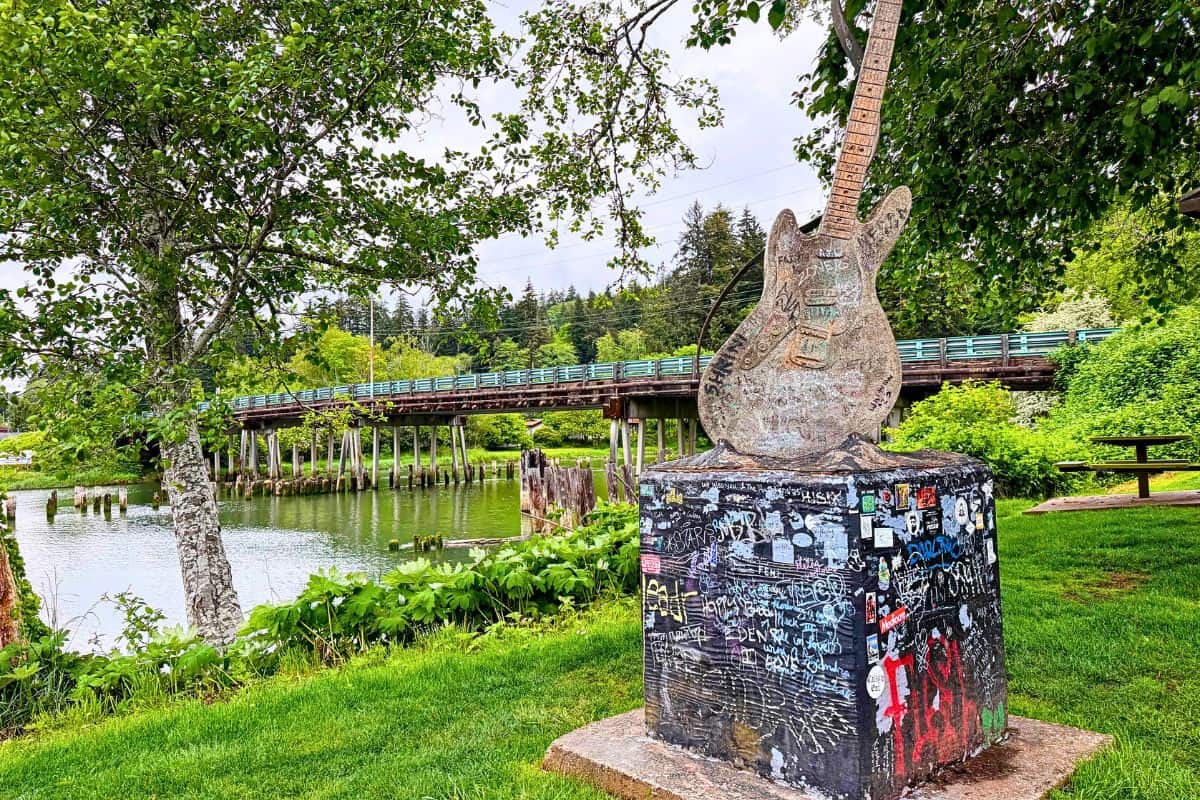
A concrete and metal sculpture of Kurt’s Jag-Stang guitar stands at the center. Lyrics from “On A Plain” are bolted to the base.
Dark granite plaques line the park, etched with Kurt’s words, pieces of his story, and lyrics from “Something in the Way.”
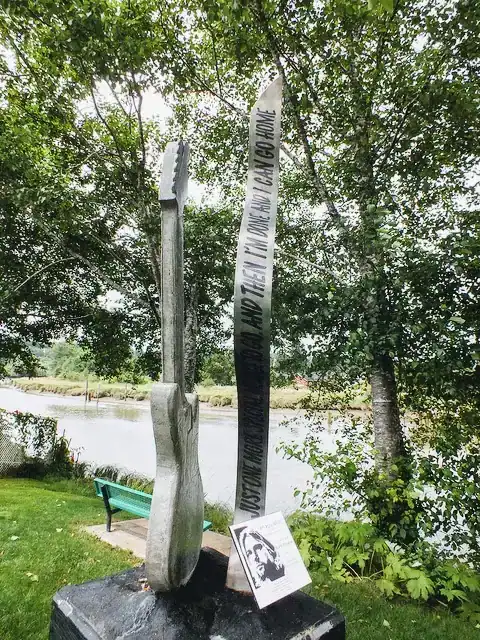
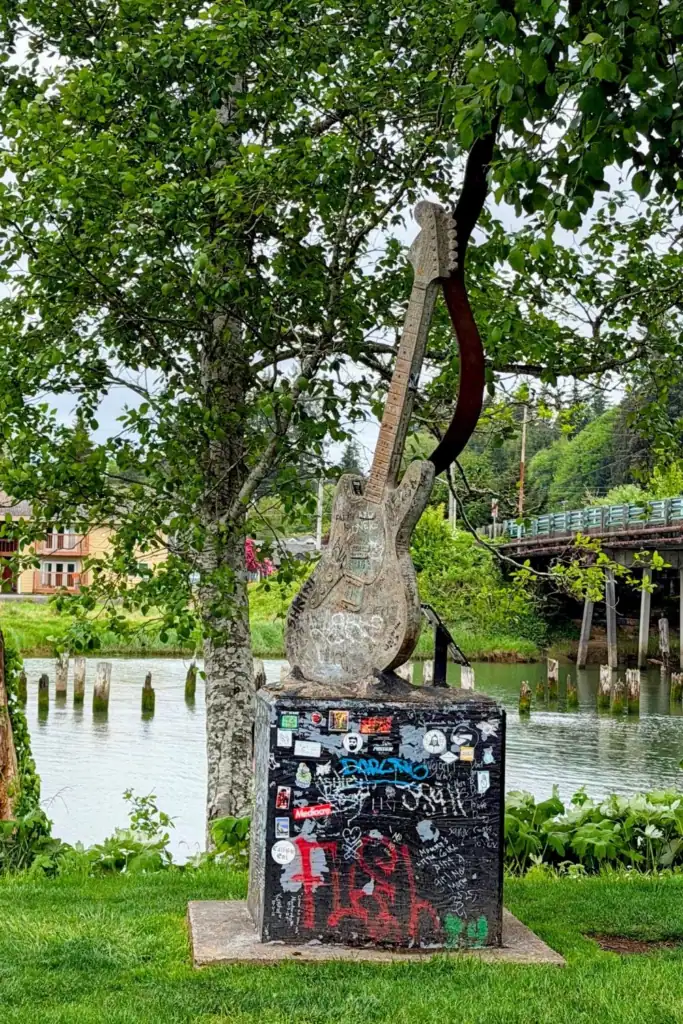
There’s a purple metal stand labeled “Kurt’s Air Guitar,” complete with tongue-in-cheek instructions.
There’s a battered green bench nearby, and a wooden sign with a hand-drawn map of the neighborhood as Kurt might have seen it.
Tucked next to the park’s entrance, you will also spot a dead tree trunk absolutely covered in hand-painted wooden planks.
A message from the immediate neighbors, the signpost serves as a hilariously blunt, gritty reality check for arriving tourists.
In stacked, weathered lettering, the signs warn visitors:
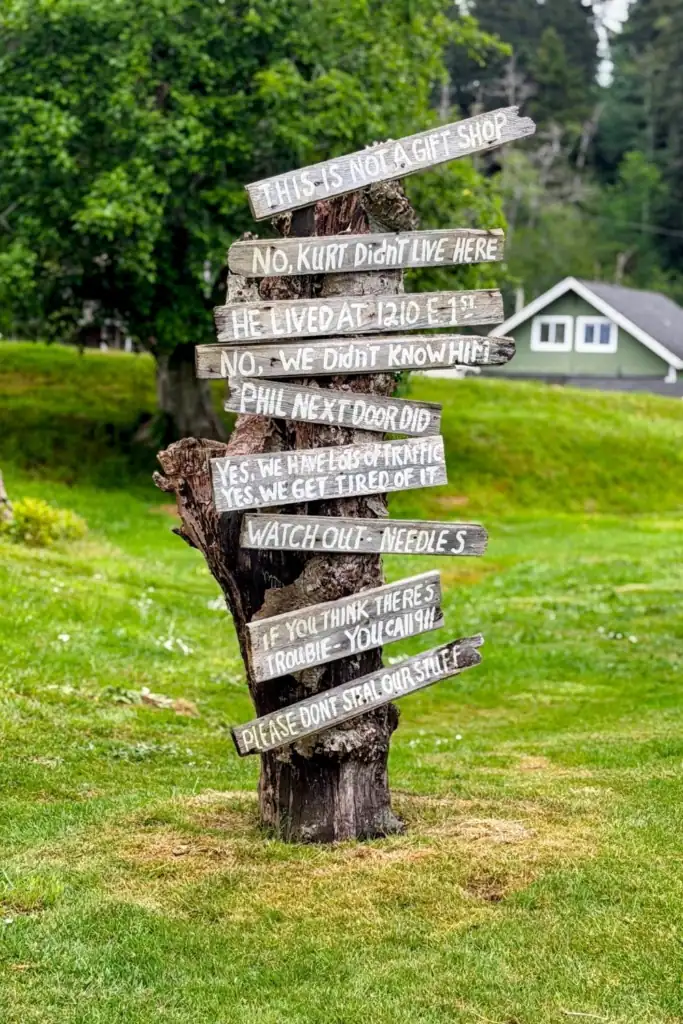
“This is Not a Gift Shop,” “No, Kurt Didn’t Live Here—He Lived at 1210 E. 1st,” and more.
It is a humorous, fiercely protective slice of local life that reminds you this isn’t a manicured, corporate theme park…
it is a real neighborhood with real residents who have watched decades of music history unfold right outside their windows.
So, while you’re channeling your inner rock star and snapping your photos, remember to keep the volume down and be respectful…
unless you want to become the inspiration for their next hand-painted warning sign.
The Significance of the Bridge and the Water
But the real heart of the park is under the Young Street Bridge.
This is the spot that inspired “Something in the Way” and gave a name to the live album, From the Muddy Banks of the Wishkah.
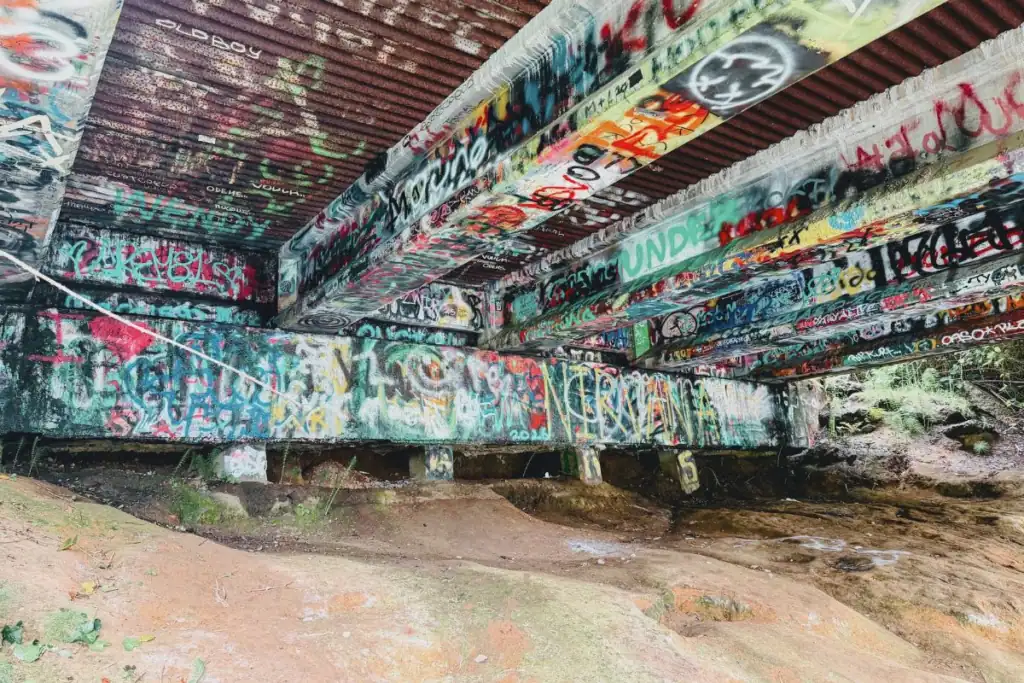
Step down to the muddy banks of the Wishkah.
The overhead bridge blocks the rain, but it’s the quiet that matters most.
Stand still and listen…
cars rumble above
water laps against old timber
brush rustles in the damp air
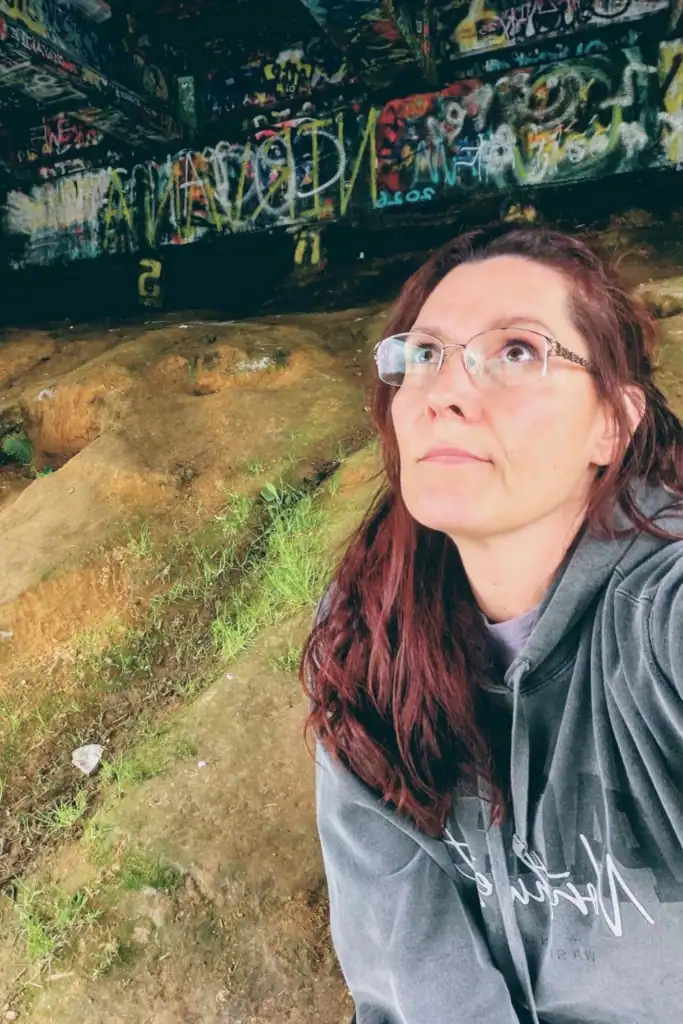
Look up at the bridge supports…
covered in layers of handwriting, song titles, and messages from fans who made the trip.
It doesn’t feel like a tourist spot.
It feels alive, a gritty place where people come to leave something behind.
The Grand Finale | A Tour of the New Downtown Museum
When you’ve had your fill of the river’s quiet, head back downtown.
The Music Project’s museum, run by the local historical society, is the last stop.
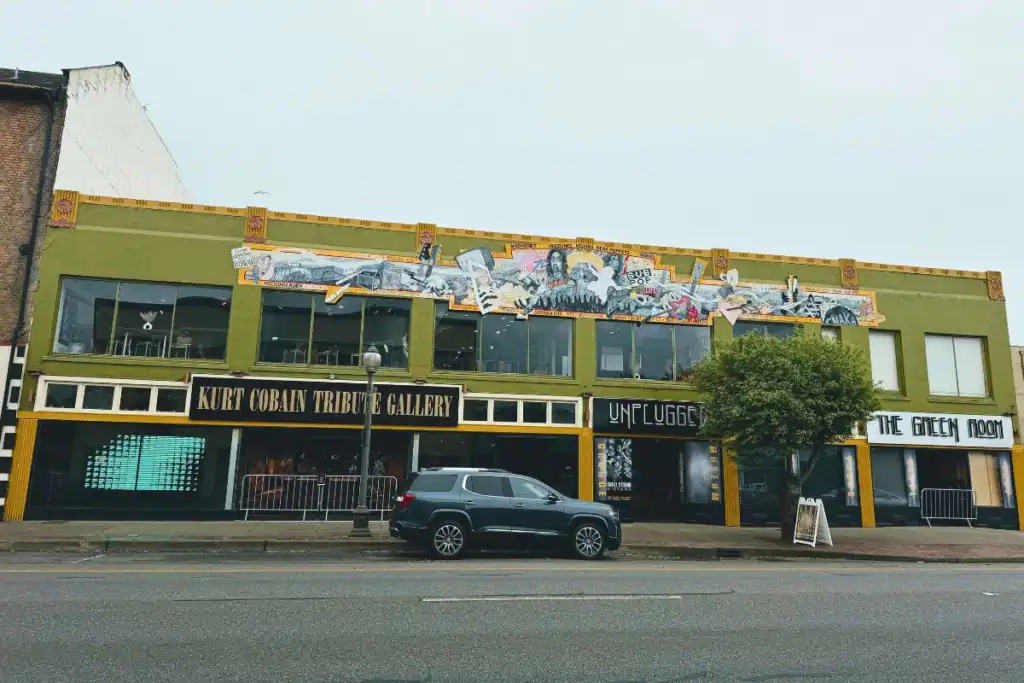
The old museum burned down years ago, but Aberdeen was rebuilt.
There is now a new exhibition space downtown. Before you enter, stop and take in the huge brick mural outside…
a tribute to the rough history and stubborn spirit of the town.
Inside, music takes over.
The museum’s music wing is packed with Nirvana and Northwest memorabilia… an immersive way to end the day.
The Early Years exhibit has rare, unguarded photos of Kurt, Krist, and the rest… back when they were just kids in Grays Harbor, playing in garages and dreaming big.
You’ll see old concert flyers from house shows, yellowed newspaper clippings about the rise of the Grays Harbor sound, and personal keepsakes from people who knew the band before the world did.
Other exhibits fill in the story…
drawings, oral histories, and displays that show how Aberdeen went from a wild lumber town to a place where something new could grow.
Walking these halls connects the quiet, rain-soaked streets outside with the music that eventually shook the world.
Practical Travel Tips for Your Aberdeen Nirvana Tour
You can do this tour any time of year, but if you want the real grunge mood, come on a gray, misty afternoon in autumn or spring.
The walk from Kurt’s old house to the park is less than half a mile… flat, easy, and open to anyone.
The house sits in a quiet neighborhood. Park where it’s allowed, and keep your distance when snapping photos… this is still someone’s home.
If you’re planning a road trip through Grays Harbor or want a travel plan that fits your style, reach out. I’ll help you map it out… or check out the shop for some Pacific Northwest gear before you