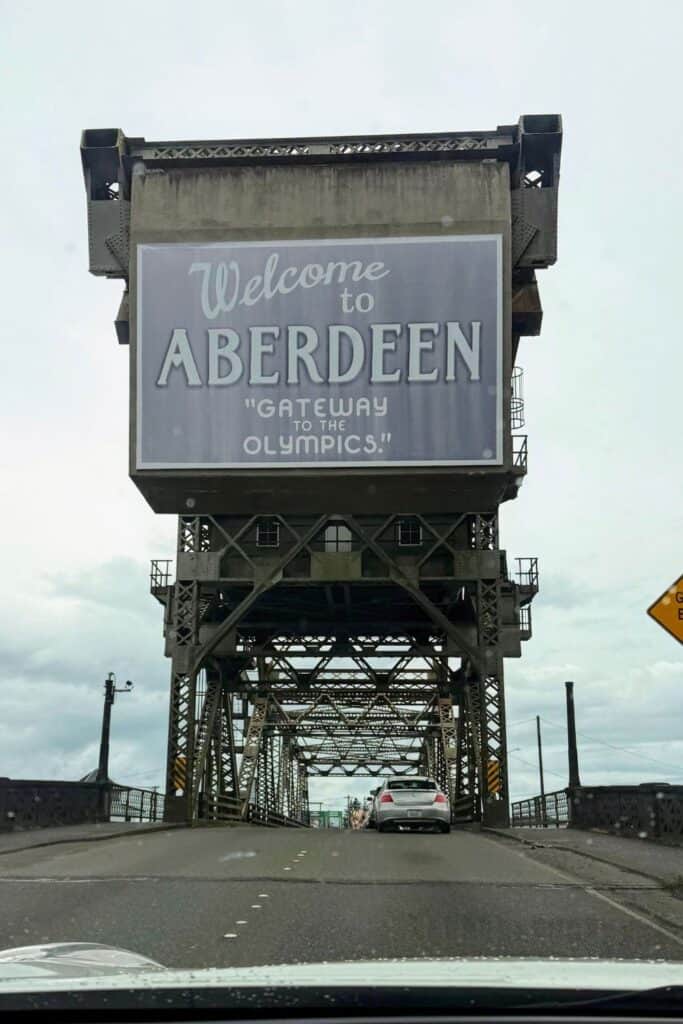
Aberdeen, Washington, is considered the “Gateway to the Olympics.”
To me, it has always been the gateway to the coast.
Every trip to Ocean Shores, Pacific Beach, or Moclips seems to funnel through Aberdeen first. It’s the town you pass through on the way to somewhere else.
The place where the highway bends and zig-zags through old industrial streets before finally releasing you toward the open coastline and crashing Pacific waves beyond.
For years, that was all Aberdeen ever meant to me.
Just a pass-through town.
But the longer I traveled the Washington coast, the more I found myself paying attention to the places in between.
To the places that carry layers of history beneath weathered buildings, faded signs, and tired streets.
Aberdeen, WA, was one of those places.
What This Story Is About
Aberdeen, WA, is often treated as a place people simply drive through on the way to the Washington coast.
But beneath the aging homes, rusted waterfronts, and gray river skies is a town still carrying the weight of its history.
This story is about ambition, decline, resilience, and the emotional atmosphere places can hold long after their glory days have faded.
Echoes Along The Waterfront
The first time I passed through Aberdeen, Washington, I sensed the town’s heaviness long before I learned its story.
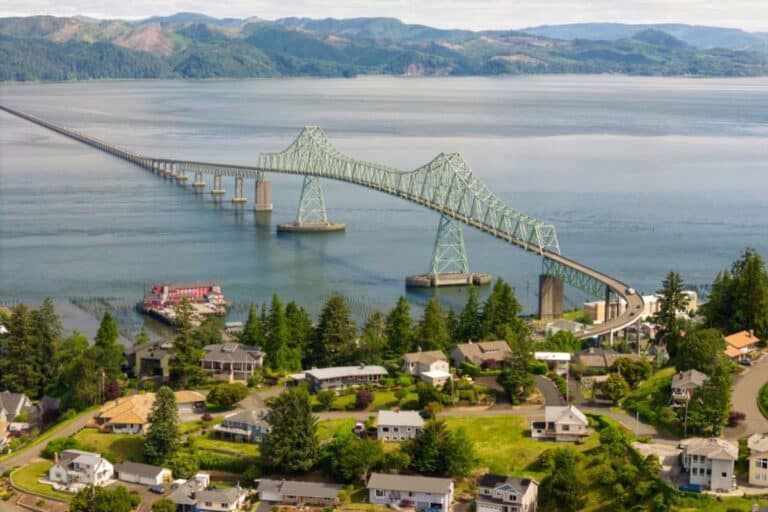
Crossing the bridge into town beneath low gray skies, I immediately noticed rows of aging homes lined shoulder to shoulder along the streets.
Some looked like old company houses built quickly for mill workers generations ago.
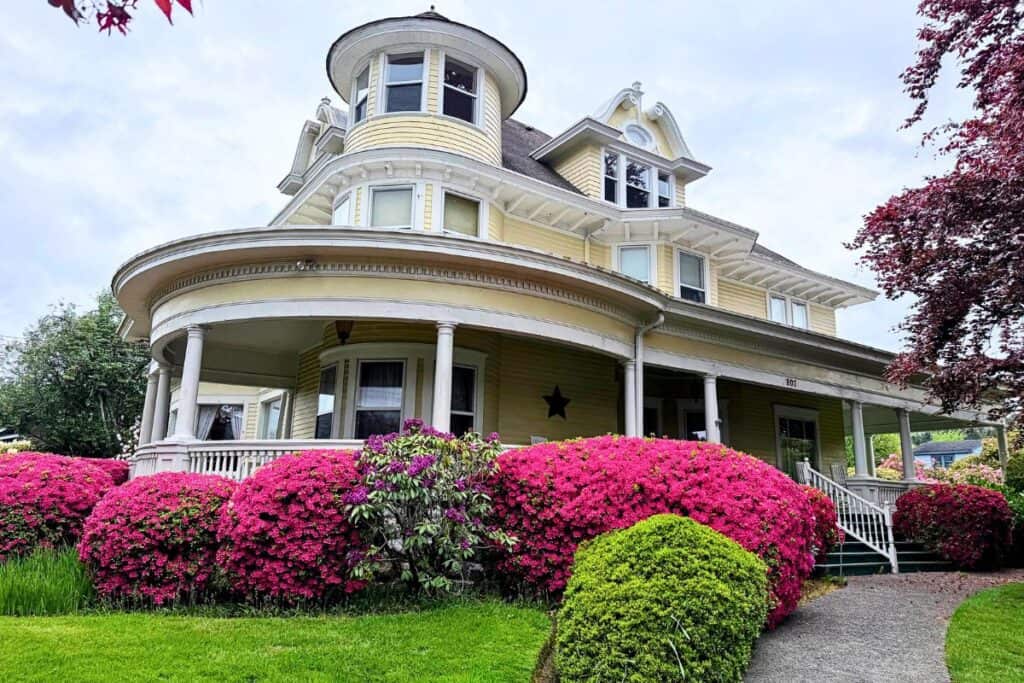
Others were grand Victorian homes perched on the hillsides, their ornate trim and towering windows hinting at wealth that once flowed through the town during the logging boom years.
Some homes were beautifully cared for…
Many were not…
Others sagged beneath years of relentless coastal rain, peeling paint, moss-covered roofs, and boarded windows quietly revealing how much time and hardship had passed through these neighborhoods.
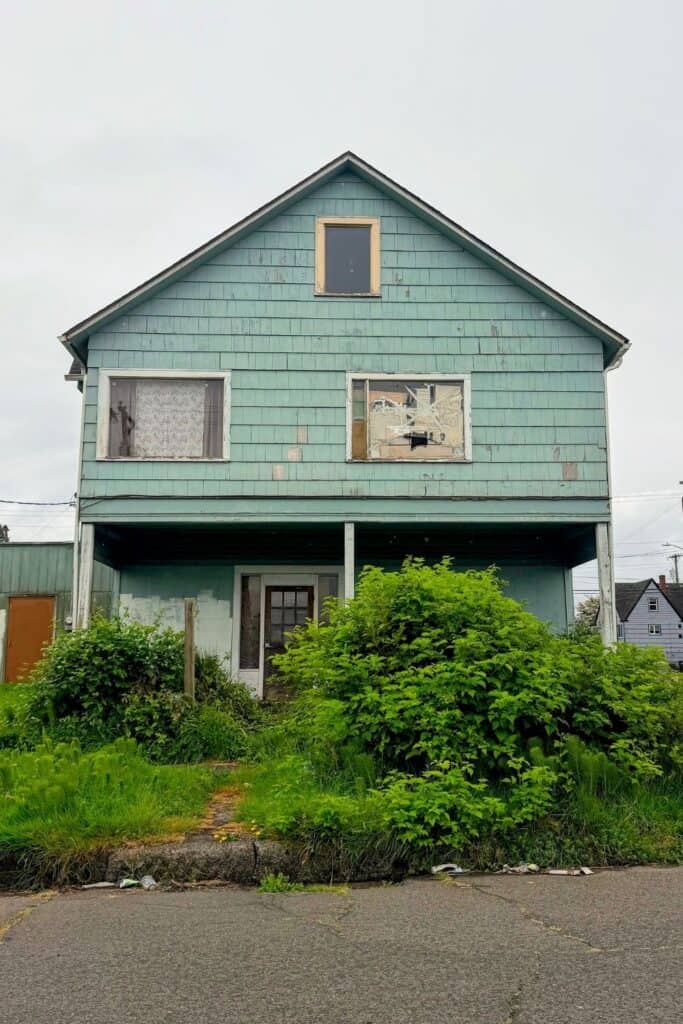
There was something deeply raw about it.
Aberdeen didn’t feel forgotten, exactly…
It just felt… left behind.
Like a town that once carried enormous ambition and industry, only to slowly fade into something quieter and more worn with time.
Echoes Along the Waterfront
As I drove farther through town, I began noticing the remnants of industry everywhere. Rusted metal structures stood along the riverbanks.
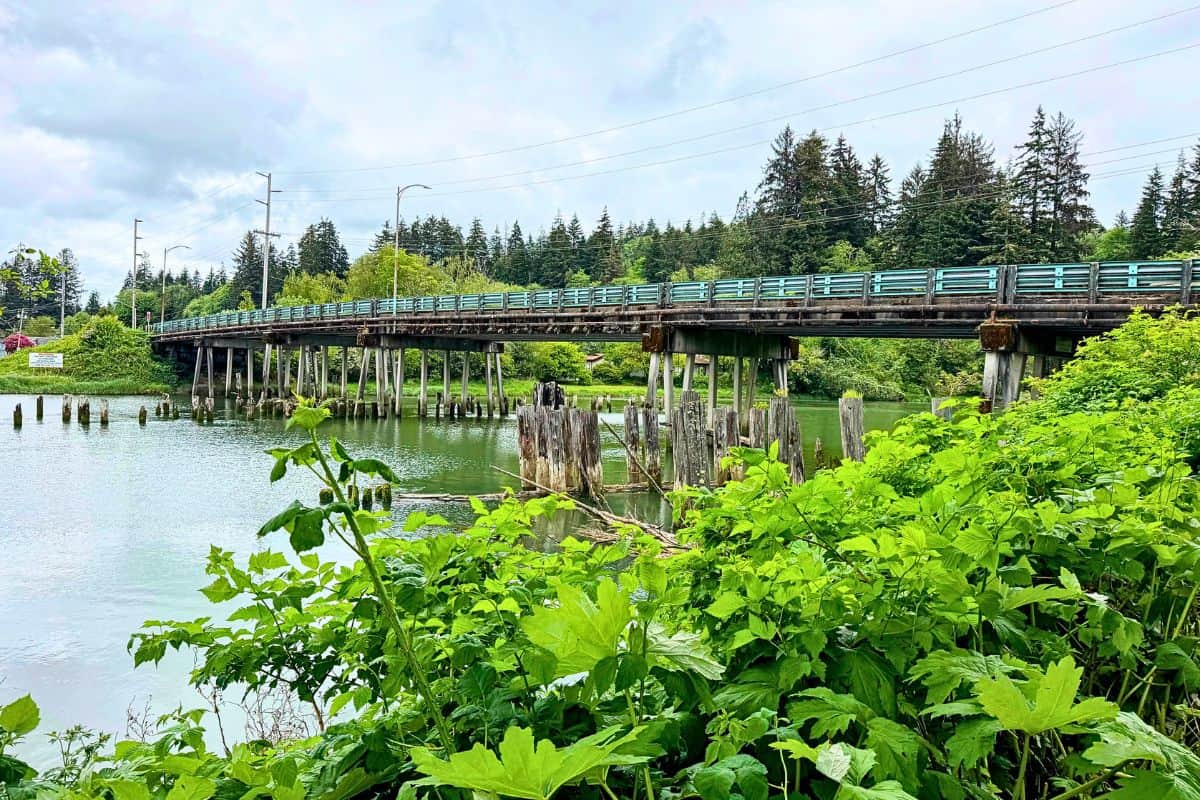
Old weathered pilings jutted from the dark water and muddy shoreline like beacons from another era, silently insisting they still had stories left to tell.
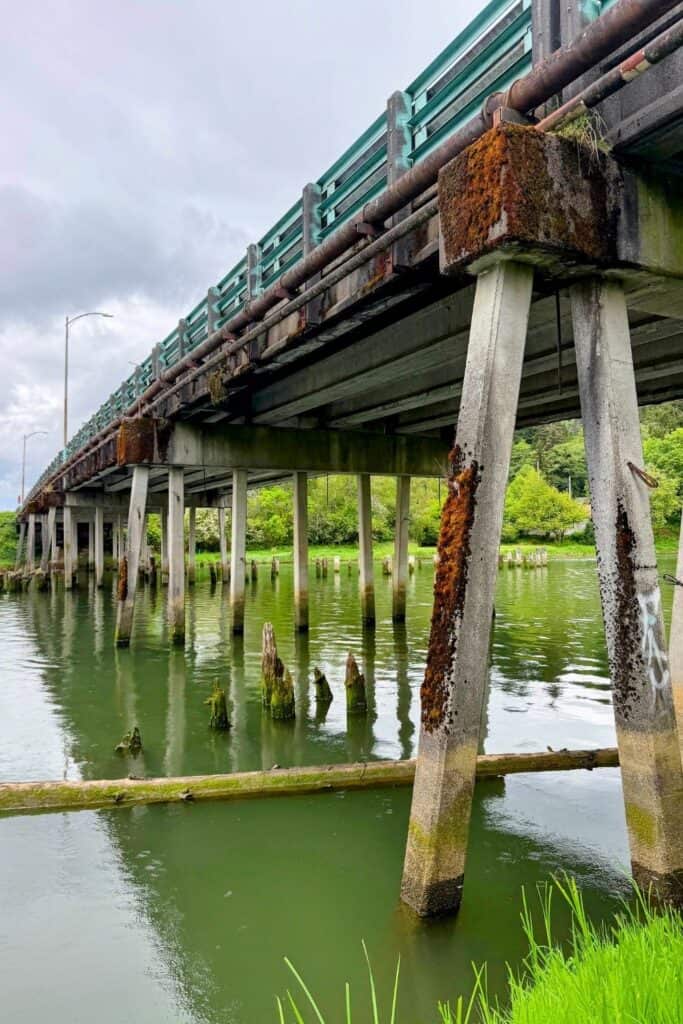
The Wishkah and Chehalis Rivers still wind through town the same way they did during Aberdeen’s rise, but now the waterfront feels…
Quieter.
Slower.
As though the echoes of the logging empire still linger in the damp coastal air.
You can feel that history here even before you fully understand it.
Walking through Aberdeen feels a little like flipping through a worn picture book of Pacific Northwest history.
The details linger everywhere if you slow down enough to notice them.
Peeling advertisements remain faintly visible on old brick buildings.
Fading murals stretch across weathered walls.
Cracked sidewalks lead past storefronts that once served thousands of mill workers, sailors, and families who built their lives here during the town’s industrial peak.
It is impossible not to imagine what Aberdeen must have looked like in its prime.
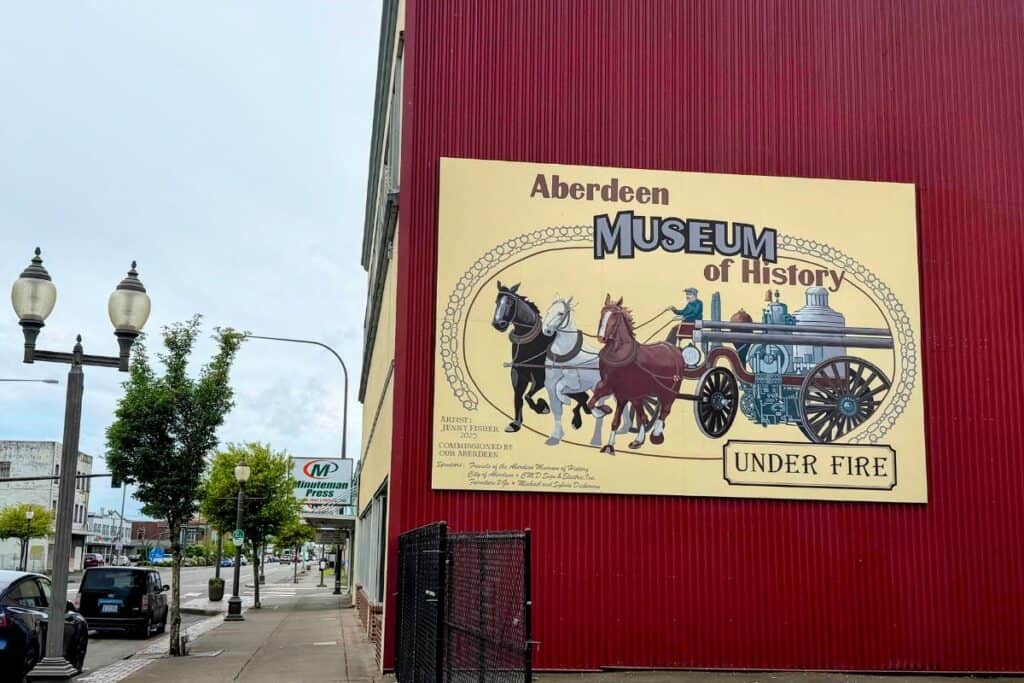
The Boldness of the Lumber Capital
To understand the sadness woven through modern-day Aberdeen, it helps to understand just how powerful this town once was.
Established in the late 1800s, Aberdeen wasn’t built for beauty or tourism…It was built for timber, industry, and extraction.
By the early 1900s, Grays Harbor had become one of the world’s most important lumber-producing regions.
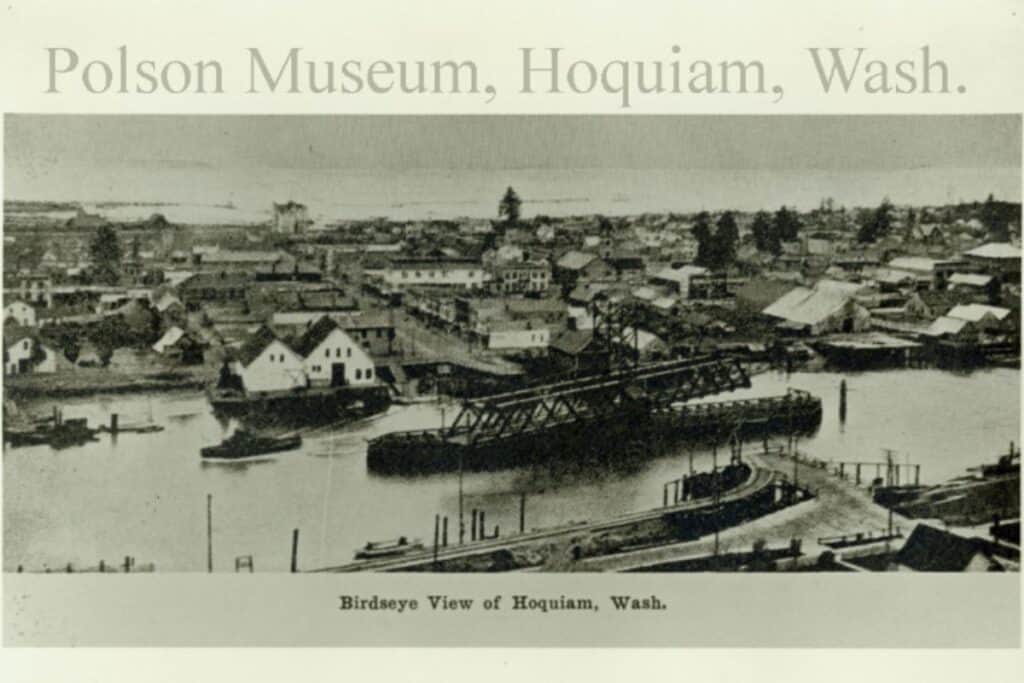
Endless old-growth forests blanketed the hills surrounding town, and massive mills crowded the waterfronts along the harbor.
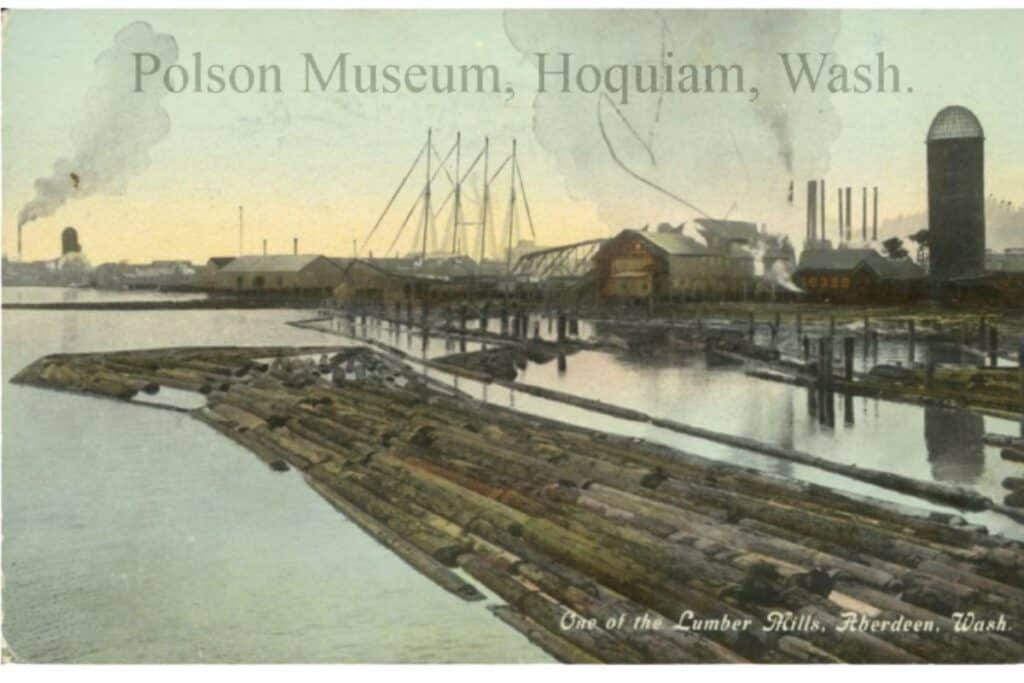
Smoke drifted constantly above the river while enormous log booms floated through the waterways beneath the gray coastal skies.
Looking at old photographs of Aberdeen and Hoquiam during the logging boom years, it becomes easier to imagine the constant noise of mills, steam whistles, and ships moving through the harbor beneath smoke-filled coastal skies.
It was rough, booming, and hyper-masculine.
A town filled with loggers, sailors, immigrants, laborers, gamblers, and entrepreneurs, all chasing opportunity along the harbor.
And wealth.
Lots of it.
Those grand Victorian homes overlooking town belonged to lumber barons who built fortunes from the surrounding forests, while the smaller working-class homes below sheltered thousands of workers risking their lives in dangerous mills and logging camps.
Aberdeen grew quickly and aggressively.
And in many ways, its rise came at the expense of another town entirely.
The Fall of Ocosta-By-The-Sea
While researching Ocosta-by-the-Sea near Bottle Beach State Park, I learned how deeply connected these harbor towns really were.
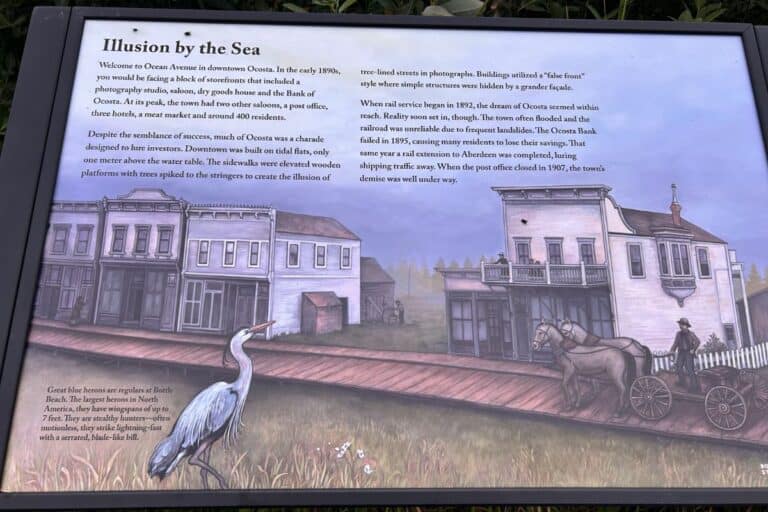
In the early 1890s, Ocosta was expected to become the region’s major railroad terminus. Investors imagined it becoming the “New York of the West,” and enormous plans were made for its future.
But Aberdeen and its neighboring Twin City, Hoquiam, understood exactly what was at stake.
If the railroad bypassed them, their industries would suffer.
Divided by just a single street, the two towns were connected at the hip…sharing the mud, the smoke, and the heavy ambition it took to survive on the harbor.
They realized that if Ocosta won, both of their communities would die.
Political influence, money, and the economic chaos of the Panic of 1893 eventually allowed Aberdeen and Hoquiam to shift the railroad plans toward their side of the bay.
Ocosta’s dreams slowly collapsed into the tide flats, while the Twin Cities surged forward as the dominant industrial forces of Grays Harbor.
Some of the very buildings that gave Aberdeen its early shape were dismantled in Ocosta and shipped across the harbor on barges…including the Ace of Clubs Tavern.
The harbor’s successes and failures were never separate.
Aberdeen thrived on the broken dreams of another town.
Standing along the river in Aberdeen now, knowing that history changes the way the town feels.
Because eventually, Aberdeen faced its own reckoning too.
The Great Downfall
Karma, or perhaps just the brutal reality of resource exhaustion, eventually caught up with the Lumber Capital.
You can only cut down ancient giants for so long before the forest runs out. By the mid-20th century, the old-growth was gone. Then came automation, environmental regulations such as protections for the northern spotted owl, and global competition.
Slowly, the roar of the mills faded into silence.
And when the timber industry declined, Aberdeen didn’t just lose jobs…
It lost its identity.
Aberdeen spiraled into a slow, aching economic decline.
The wealth vanished from the hills, leaving those grand Victorian mansions to battle the relentless coastal moisture without the funds to maintain them.
Bustling downtown shops shuttered their windows as malls and highways lured shoppers away.
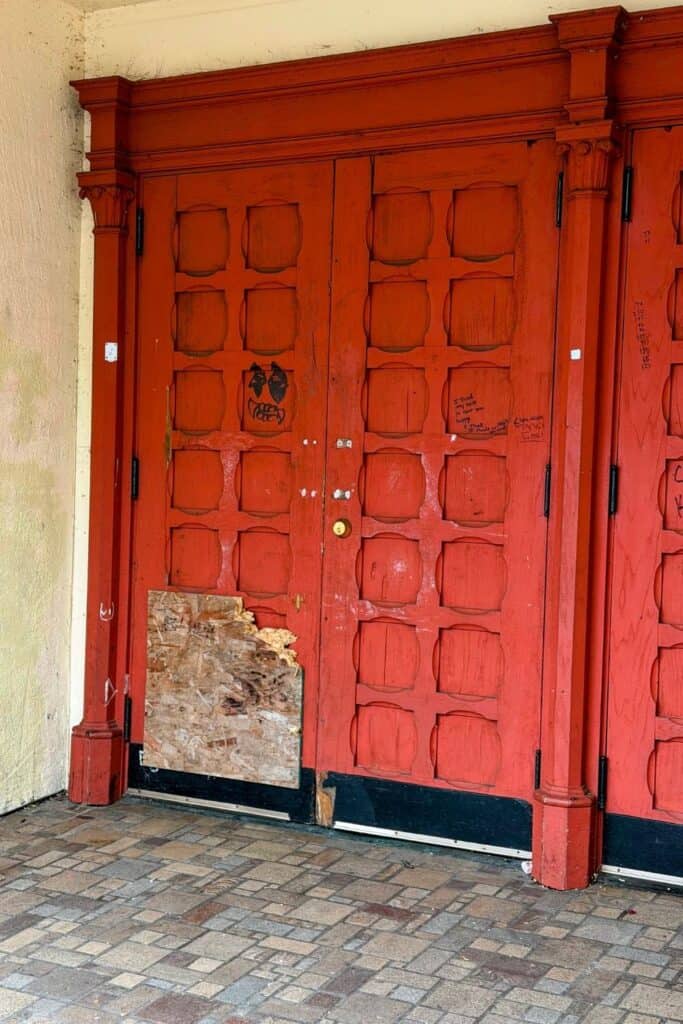
The town became a monument to a broken promise built on a single industry.
That feeling still hangs quietly over the town today.
And suddenly, the connection between Aberdeen and grunge music begins to make sense.
The Mood That Became Grunge
It is impossible to explore Aberdeen on a gray, drizzly afternoon without thinking about Kurt Cobain.
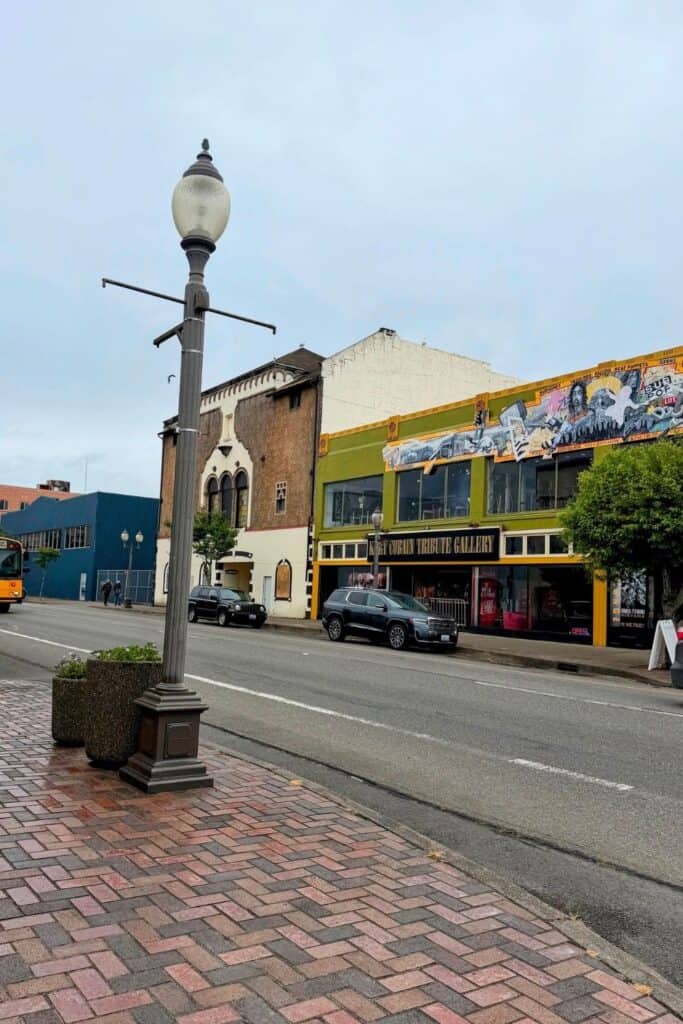
Walking the cracked sidewalks, gazing up at the rusted bridges, passing the weathered company houses, and standing beside the dark, sluggish waters of the Wishkah River, the origins of grunge music suddenly feel inevitable.
Cobain did not conjure those raw, distorted, melancholic melodies out of thin air… he was scoring the soundtrack to Aberdeen’s post-industrial hangover.
In the 1980s, as Nirvana was taking shape, Aberdeen, Washington, was buried in economic hardship and isolation. The roar of the mills had been replaced by a heavy, suffocating quiet.
For a creative, restless teenager who never fit the logging-town mold, the air itself must have felt suffocating.
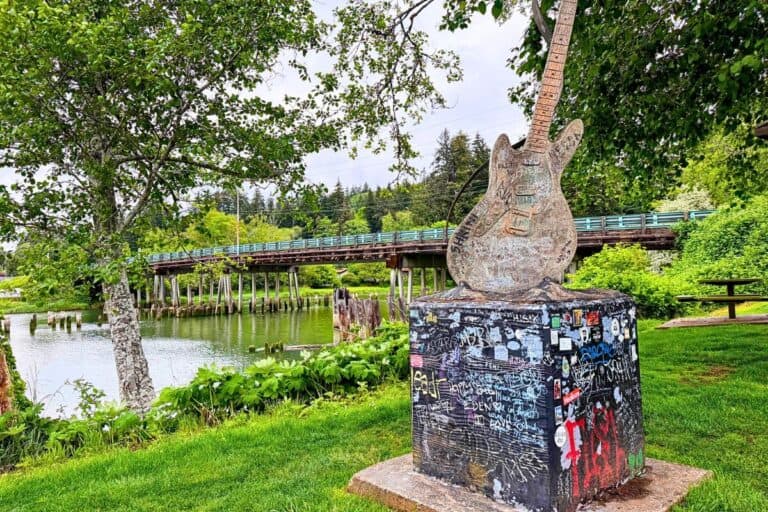
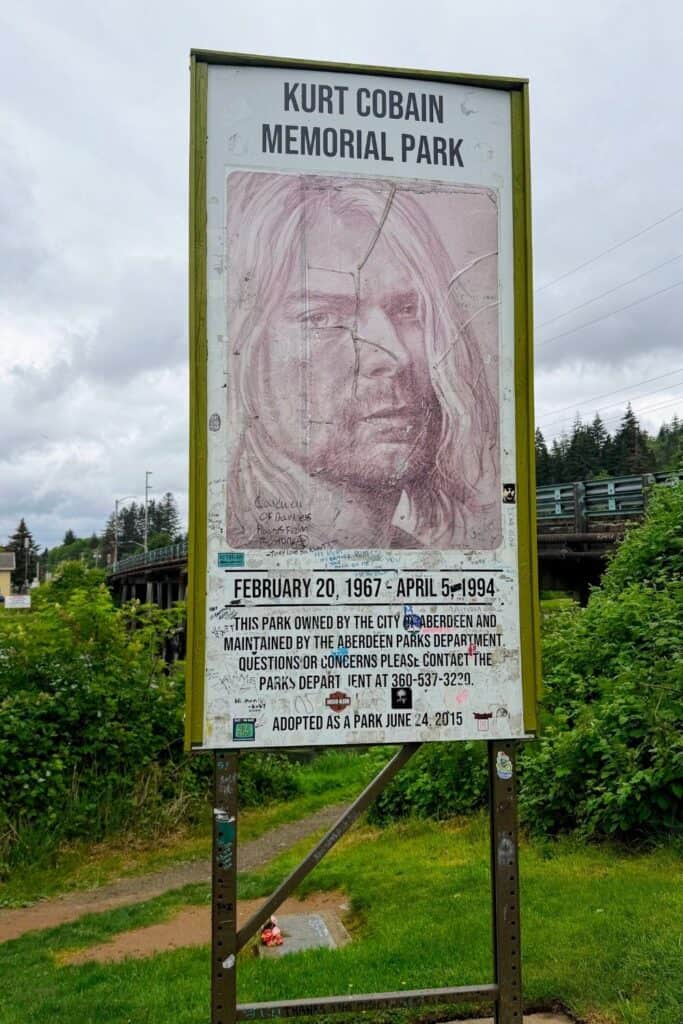
I took some time to wander through the neighborhood around his childhood home and the Kurt Cobain Memorial Park. Standing down there on the muddy bank, you realize grunge music didn’t just happen. It was born of this exact air.
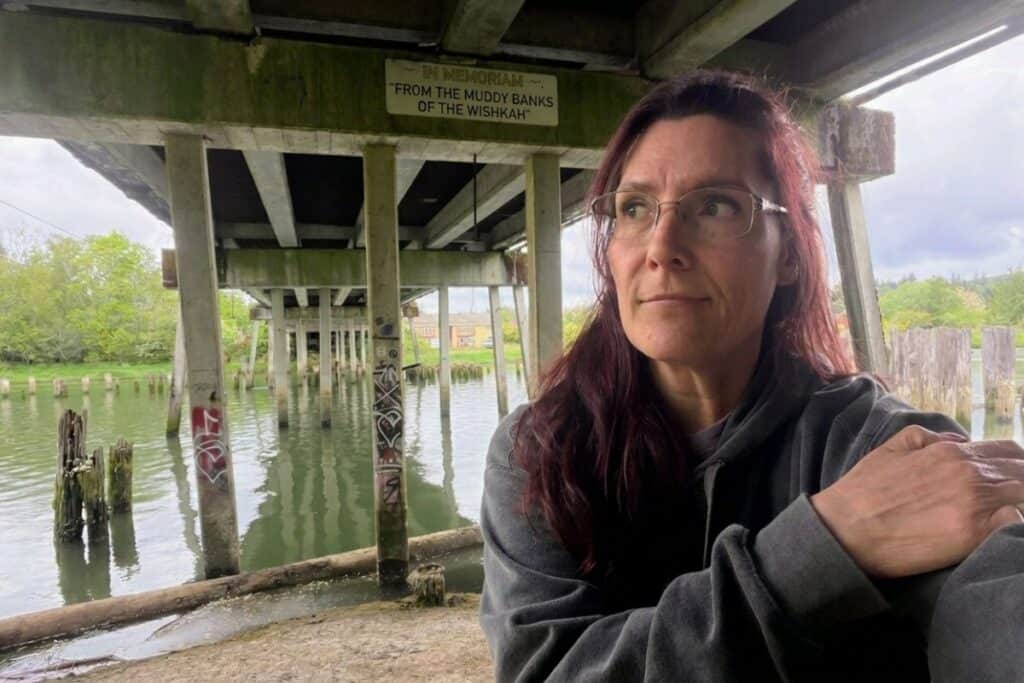
The famous “Come As You Are” sign that welcomes you into town today is a poignant irony.
The town that Kurt desperately wanted to escape now claims him as its most famous son.
If you visit Kurt Cobain Memorial Park under the Young Street Bridge, you can stand by the muddy waters where he wrote music, hung out, and reflected on life, and feel the exact blend of damp cold, isolation, and a heavy gray sky that shaped a musical revolution.
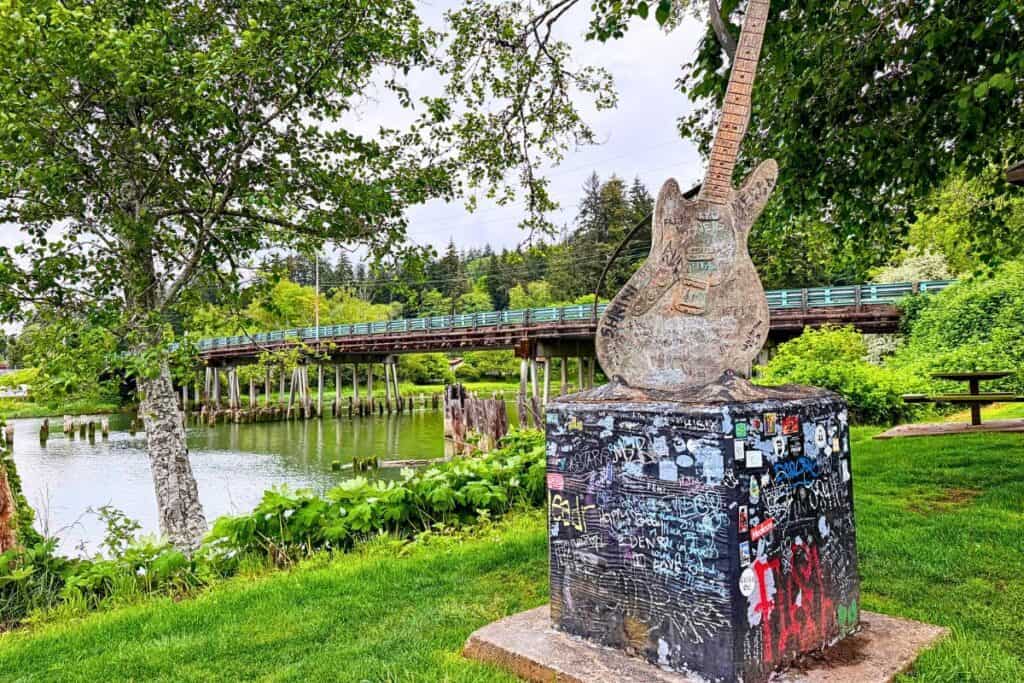
Aberdeen didn’t create grunge…
But it certainly gave it a setting.
Aberdeen, WAshington Today
Today, Aberdeen stands suspended between its rugged past and an uncertain future.
It is still a place of contradictions.
As I drive through, weaving past the old pilings along the river, I glimpse a community that refuses to fold entirely.
New efforts are in place to revitalize the historic downtown.
Local artists splash murals across weathered brick, and travelers like me are starting to linger instead of just passing by.
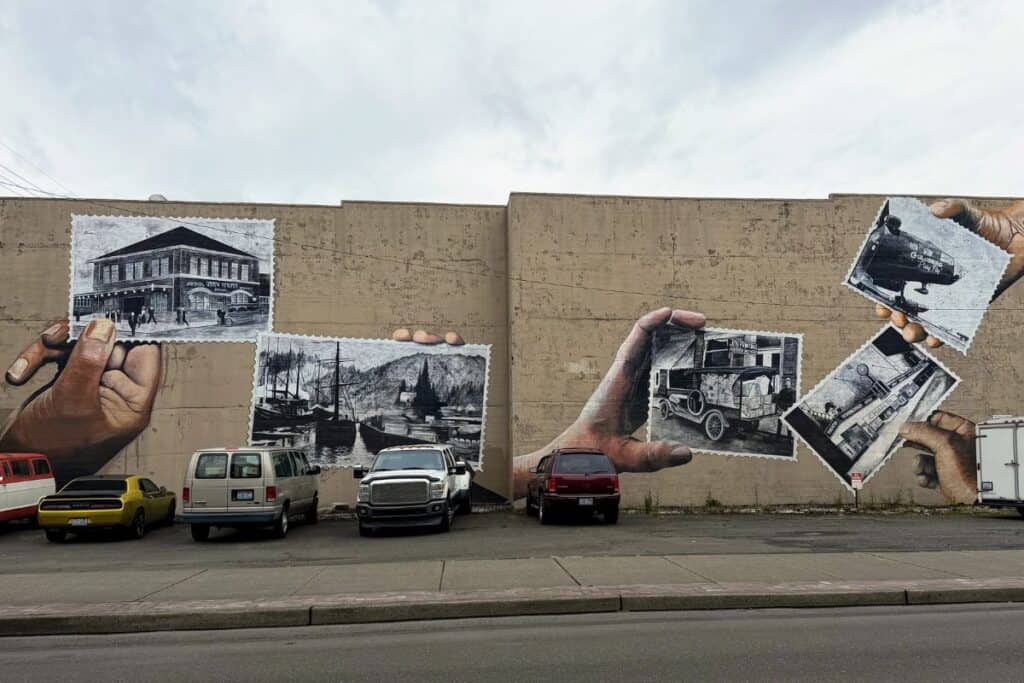
Aberdeen’s scars are still visible…
But so is its resilience.
And maybe that’s why the town has stayed with me over the years.
Not because Aberdeen is polished or traditionally beautiful…
But because it feels honest.
It wears its history openly.
The success.
The collapse.
The sadness.
The survival.
All of it still lingers here beneath the rain, river fog, and weathered coastal skies.
Next time you drive toward the coast, don’t simply hustle through the zig-zagging streets to get to the ocean…
Slow down.
Make a few stops.
Breathe in the history.
Because Aberdeen, Washington, is not just a town you pass through.
Aberdeen reminds us that progress is temporary, communities endure after wealth leaves, and beauty can grow in left-behind places.