Where the tide slowly reclaimed a dream
There is a Washington State Park along the coast that holds a secret… Bottle Beach State Park near Westport, Washington.
Most people come here for the birds…the tiny Western Sandpipers and the stoic Great Blue Herons.
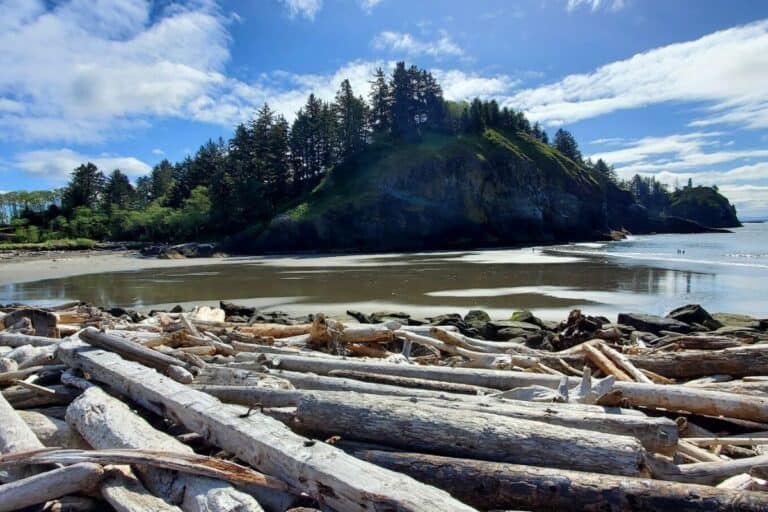
But if you stand on the boardwalk and look out toward the tide flats of Grays Harbor, you’re seeing more than just a wildlife sanctuary.
You’re standing where a dream once stood.
Beneath the salt marsh and shifting mud are the remains of Ocosta-by-the-Sea, a town once called the “Future Great City of the Pacific.”
This city was built on hope, ambition, and plenty of wooden planks.
If you’ve ever felt like your big plans were built on, well, questionable ground… Ocosta’s story is for you.
It’s about a hopeful little town trying to hang on while the Washington Coast did its best to wash it all away.
Ocosta-by-the-Sea: At a Glance
- The Vibe: A quiet and peaceful “ghost town” walk, perfect for bird watchers, nature lovers, and history buffs.
- Location: Inside Bottle Beach State Park, just 15 minutes from Westport, WA.
- The Mystery: A 19th-century “metropolis” built on stilts that vanished when the railroad pulled out.
- What to See: Weathered wood pilings, boardwalk, rare shorebirds, and the quietest stretch of mudflats in Grays Harbor.
- Best Time to Visit: Arrive 2 hours before low tide to see the ruins of the 3,000-foot wharf.
- Solo Reset Factor: High. It’s a perfect spot for reflection on transitions, “shifting ground,” and the resilience of the coast.
The Birth of a “Metropolis” (1890–1893)
In the late 1800s, the Pacific Northwest was a real estate gold rush.
The moment rumors spread that the Northern Pacific Railroad wanted a deep-water port… land developers practically fell over each other to get a piece of the action.
Enter Ocosta.
On paper, it was a dream come true. Perched on the harbor, ready for ships to dock, the Ocosta Land Company began selling lots in 1890.
They weren’t just peddling soggy ground…they were selling a vision.
This was the town that would rival Tacoma and Seattle…or so the story went.
And for a brief, shining moment, it worked. At its height, Ocosta-by-the-Sea could boast:
- Three grand hotels (including the palatial Ocosta Hotel).
- A brewery and a bottling works.
- A weekly newspaper (The Ocosta Pioneer).
- A bank, a school, and a shingle mill.
- A population nearing 500 people, with thousands more expected.
The Global Hype Machine
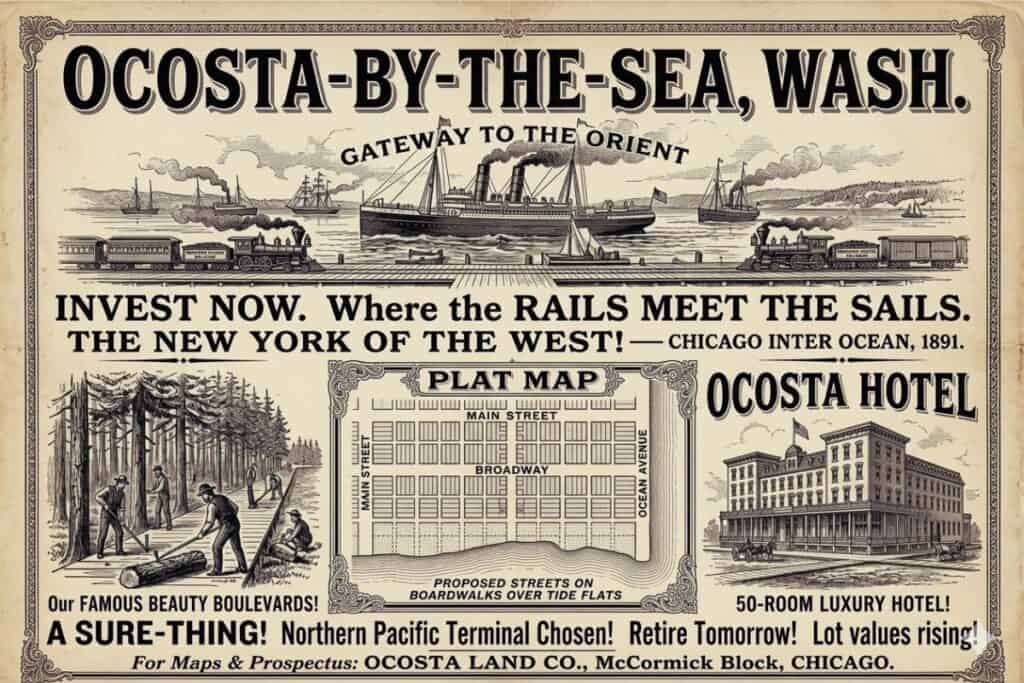
The developers didn’t just dream big; they sold big.
Advertisements for Ocosta-by-the-Sea appeared in newspapers as far away as Chicago and New York, and promotional pamphlets were even distributed in London.
The “New York of the West” quote shown in the recreation image was a real headline from the Chicago Inter Ocean in 1891.
Wealthy investors thousands of miles away were buying up “prime real estate” that was actually just marshland.
They were sold a vision of a “Gateway to the Orient” where steamships from the Pacific would meet the trains of the Atlantic.
It was a masterclass in marketing… and a good reminder that if something sounds too good to be true, it’s probably buried under six feet of tide-flat mud.
Life Above the Mud: The City of Boardwalks
This is where things got sticky… literally.
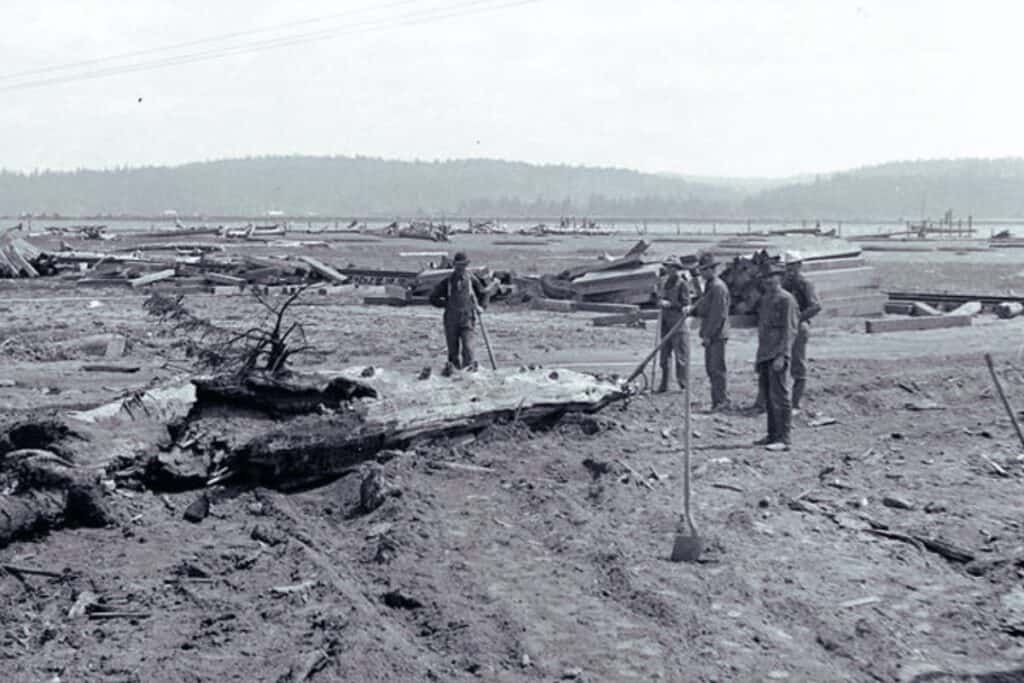
Ocosta wasn’t built on solid ground, but on ever-shifting tide flats.
It didn’t take long for residents to realize their new “land” was more sponge than soil.
With every high tide or Pacific Northwest downpour, mud swallowed boots and dreams alike.
The answer?
Miles of elevated wooden boardwalks, keeping the town above water…quite literally.
These weren’t quaint garden paths. They were the city’s lifelines…the main roads, sidewalks, and gathering places all perched above the muck.
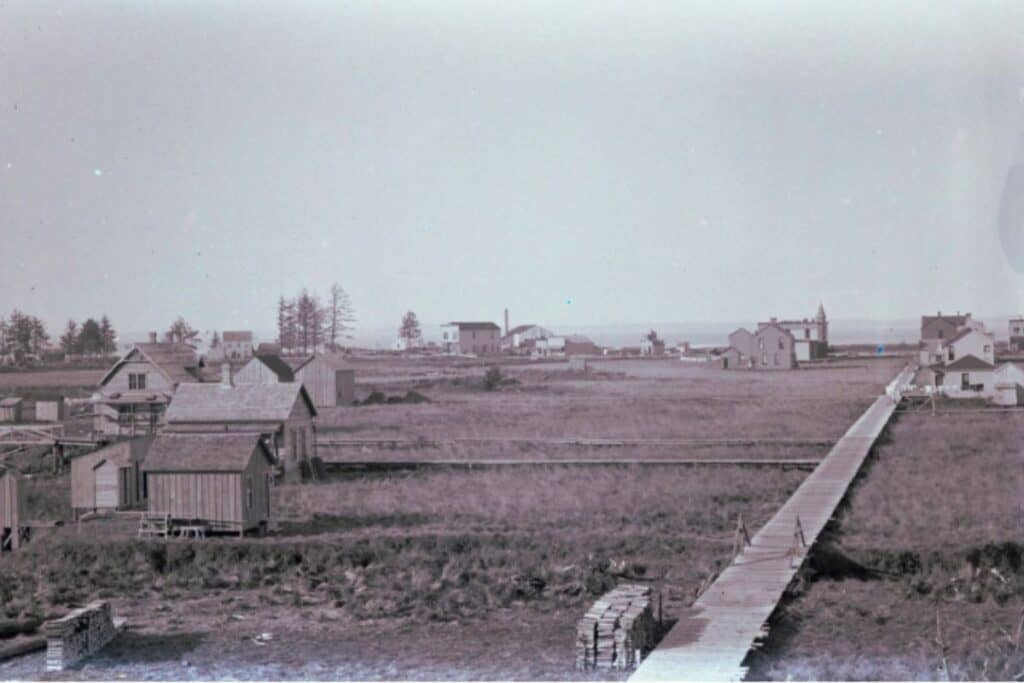
- Sidewalks on Stilts: Picture Victorian women balancing silk skirts and men in gleaming boots, all navigating a city perched six to ten feet above the mud.
- The Sounds of the City: Ocosta’s soundtrack was not the clatter of hooves on stone, but the hollow thunk-thunk-thunk of footsteps and wagon wheels echoing across wooden planks.
- The Vulnerability: Life on stilts meant every storm or high tide threatened disaster. The boardwalks demanded endless repairs.
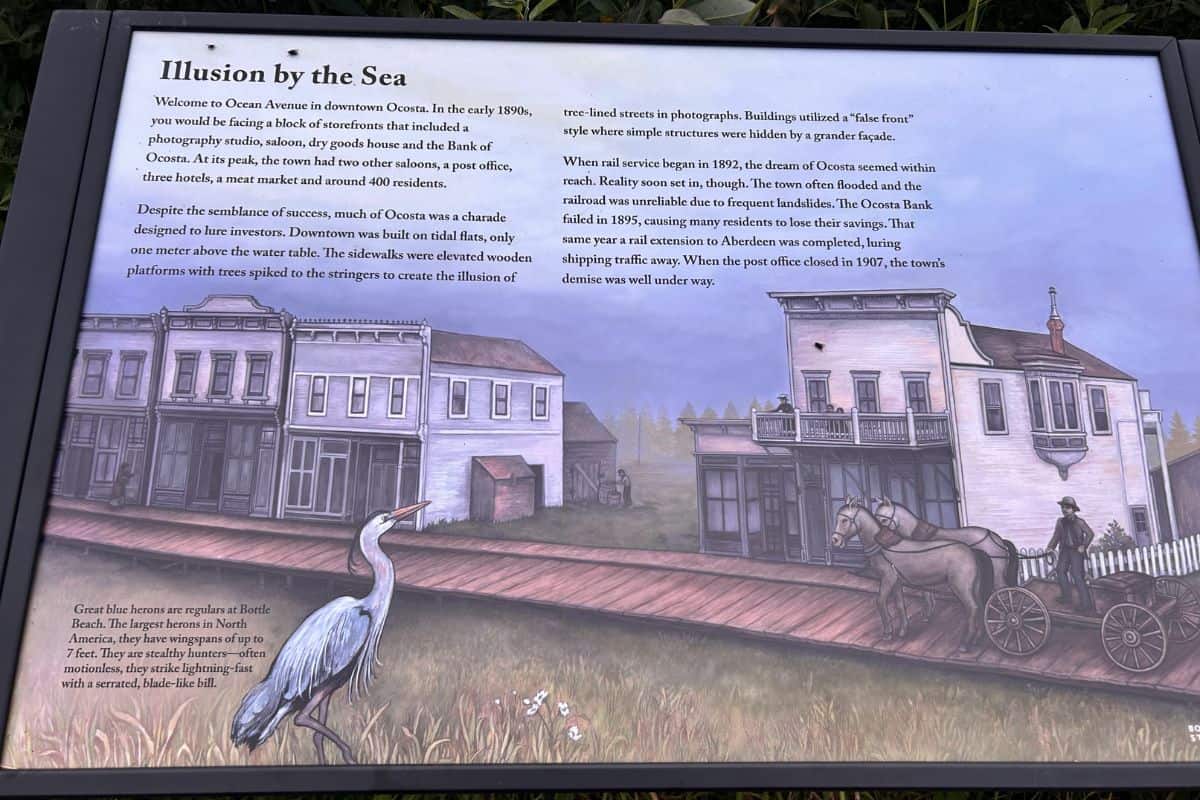
The Great Victorian Illusion
The developers were basically masters of fake-it-til-you-make-it.
To make those empty tide flats look like a thriving city, they did something a bit wild… they stuck cut evergreen trees right into the sides of the boardwalks.
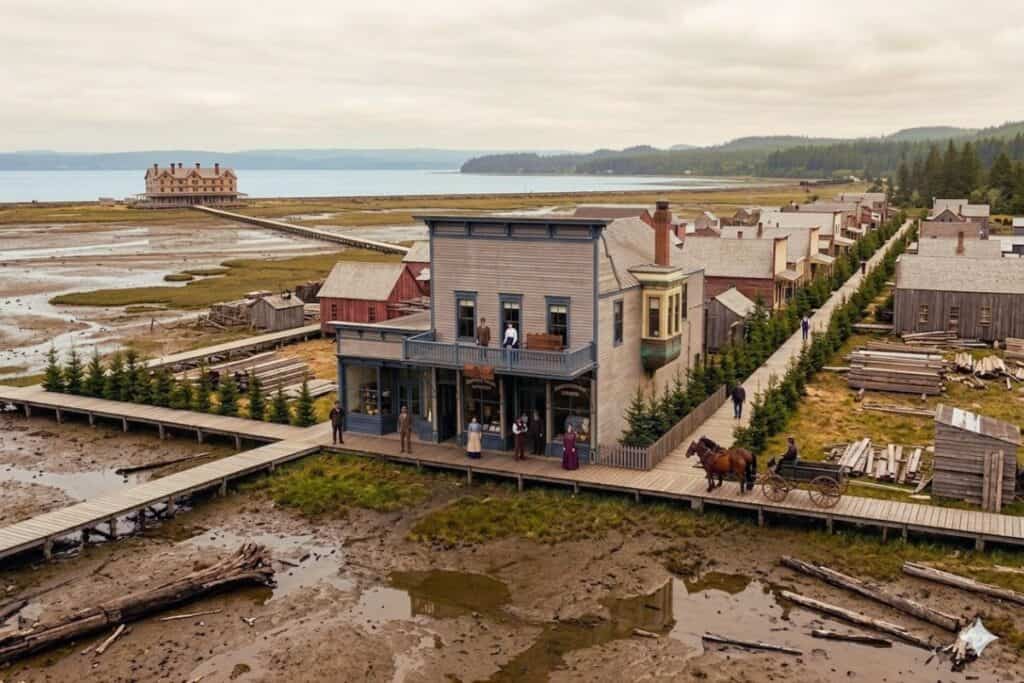
They were basically trying to create a “tree-lined boulevard” out of nothing.
For a few weeks, it looked like a garden city… but then the trees turned brown and crispy in the salty air.
Honestly, it became a perfect metaphor for the town itself… a beautiful facade that wasn’t actually rooted in anything.
The Heartbreak: The Railroad That Never Came
The success of Ocosta depended entirely on one thing…The Iron Horse.
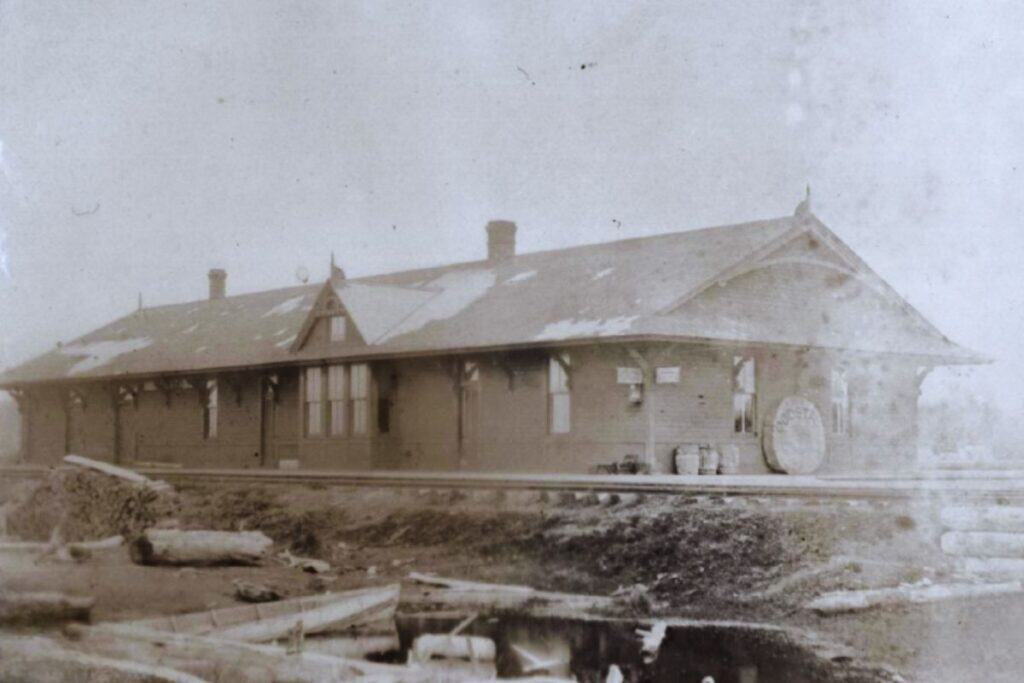
The Northern Pacific Railroad had actually begun laying tracks toward Ocosta.
The residents could almost hear the whistle.
Property values skyrocketed, and the town prepared for its coronation as the coastal capital.
Like every good Western boomtown story, things looked great… until they didn’t.
The financial panic of 1893 showed up and sucked the hope right out of Ocosta.
Funding disappeared, nearby towns pushed hard for the railroad, and eventually, the line was rerouted to Aberdeen.
That decision changed everything.
Almost overnight, Ocosta’s sails went slack.
Without the railroad, there was no way to move lumber or ship goods.
The “Future Great City” became a city stranded at the edge of nowhere.
The Slow Reclaim: What Happened to the Buildings?
Ocosta didn’t vanish in a blaze or a legendary storm. It simply faded, quietly slipping beneath the tides of time.
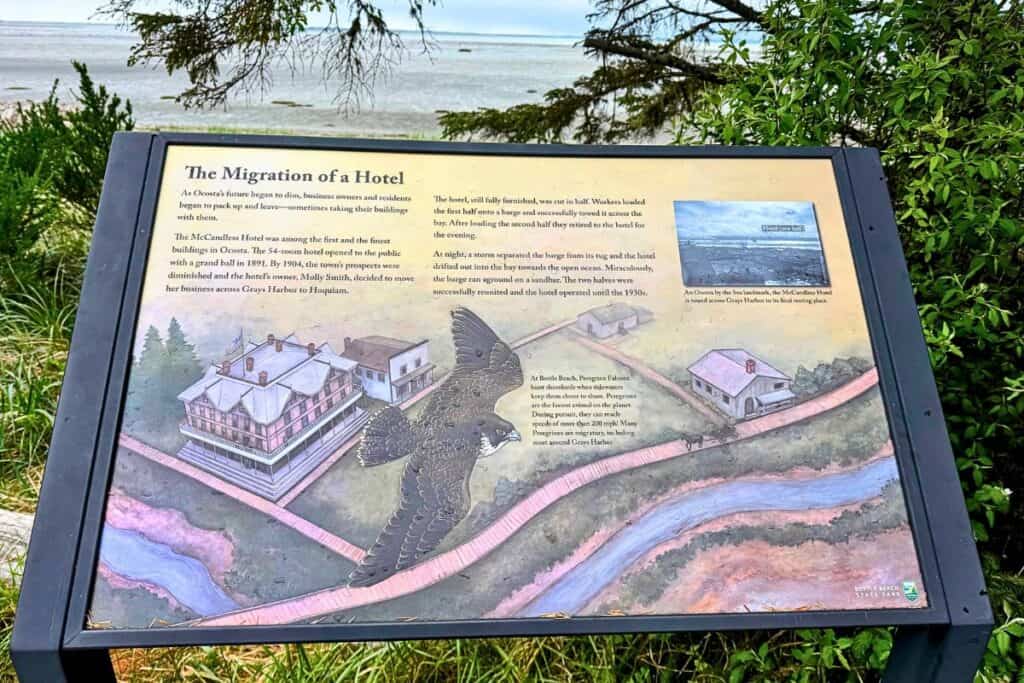
- Dismantled Dreams: Many grand Victorian homes were carefully taken apart, board by board, and ferried by barge or wagon to Aberdeen and Hoquiam. Pieces of Ocosta still linger in the bones of other coastal towns.
- The Rot: The buildings that weren’t moved were left to the salt air. The boardwalks, no longer maintained, eventually buckled and sank into the tide flats.
- The Last Stand: By the early 1900s, only a stubborn few remained. Even the schoolhouse closed its doors, and the post office fell silent.
The Shipping District: A Port to Nowhere
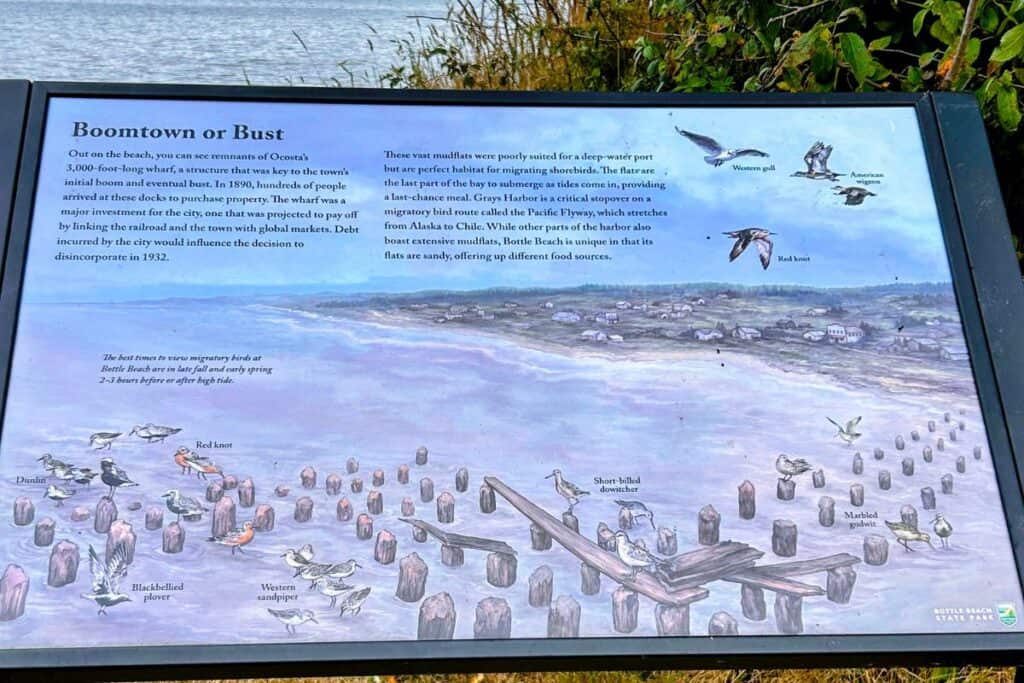
Glance at old maps of Ocosta, and you’ll spot the area near today’s Bottle Beach shoreline…once destined to be the city’s industrial heart.
This was never meant to be a tranquil park, but a bustling, gritty shipping hub.
The Ocosta Land Company envisioned a deep-water port where steamships from San Francisco and the Orient would dock alongside the Northern Pacific trains.
They built massive wharves and designated specific zones for clam canneries, shingle mills, and a railroad turntable where engines could be spun around to head back east.
What actually happened?
As time went on… the port vision remained unfinished.
Without a completed railroad line, these massive warehouses stood empty.
Ocosta didn’t buzz with the sound of steam whistles and thriving commerce, but with hopeful footsteps pacing the docks, eyes searching the horizon for ships that never arrived.
Finding the Ghosts Today: What to Look For
If you head out to Bottle Beach State Park today, don’t expect dramatic ruins.
The Pacific is pretty good at reclaiming what is hers.
But if you look closely, you’ll find the lingering ghosts.
The Graveyard of Pilings:
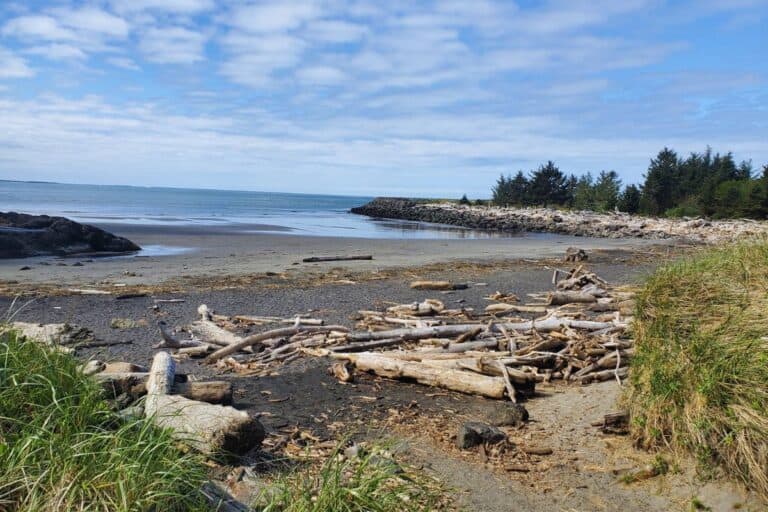
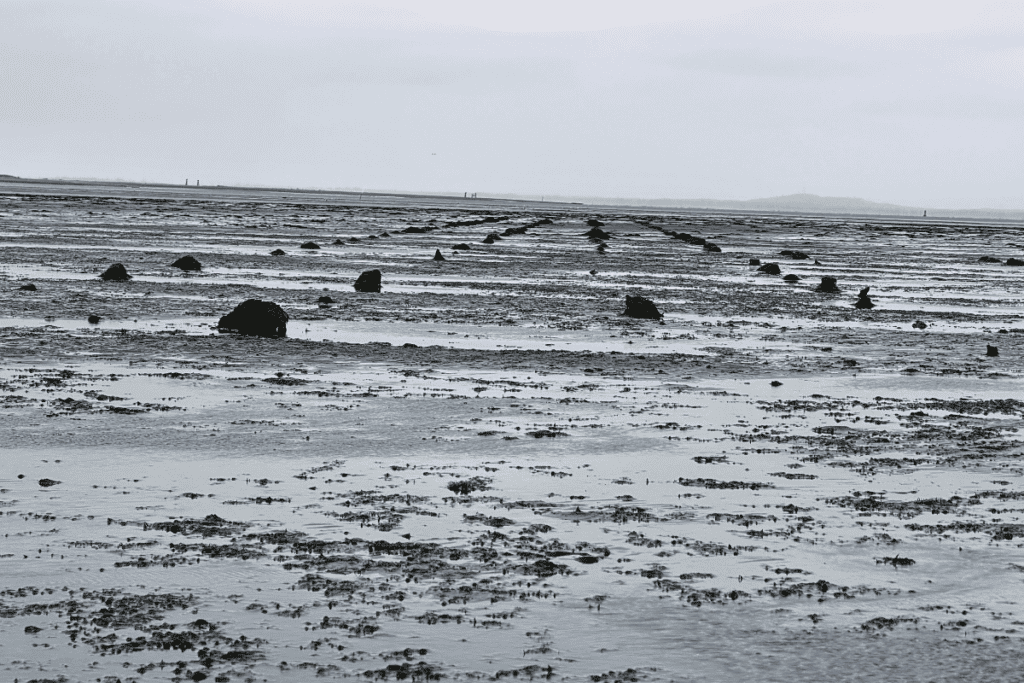
Visit at low tide and wander toward the water.
You’ll see rows of barnacle-encrusted posts jutting from the mud… the original dock pilings from the 1890s.
Stand here and trace the ghostly outline of the old pier, imagining how far this city-on-stilts once dreamed of reaching.
The Railroad Turntable:
Near the shoreline, look for the remains of brick foundations and the big circular “footprint” of the old railroad turntable.
It’s a little eerie… a huge piece of infrastructure built for trains that just stopped showing up.
The Old Railroad Grade:
As you drive toward the park, you can still see the raised berms where the tracks were intended to run.
The Modern Boardwalk:
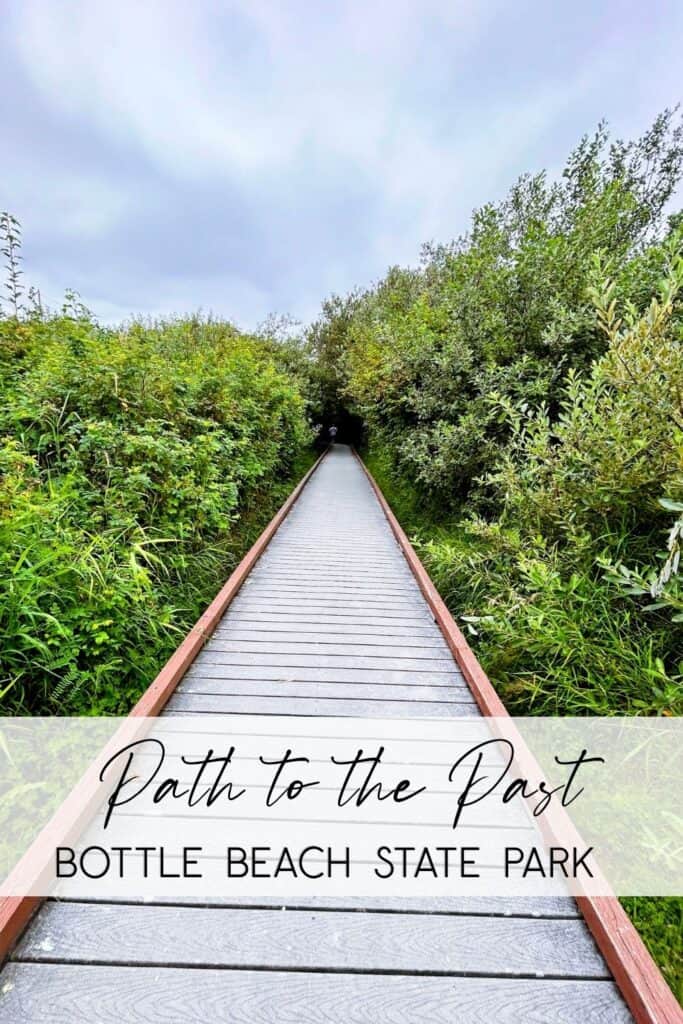
The current trail at Bottle Beach is a beautiful, unintentional tribute to the original boardwalks of Ocasta.
As you walk it, imagine the Victorian city that once stood tall on these same stilts.
The Stillness:
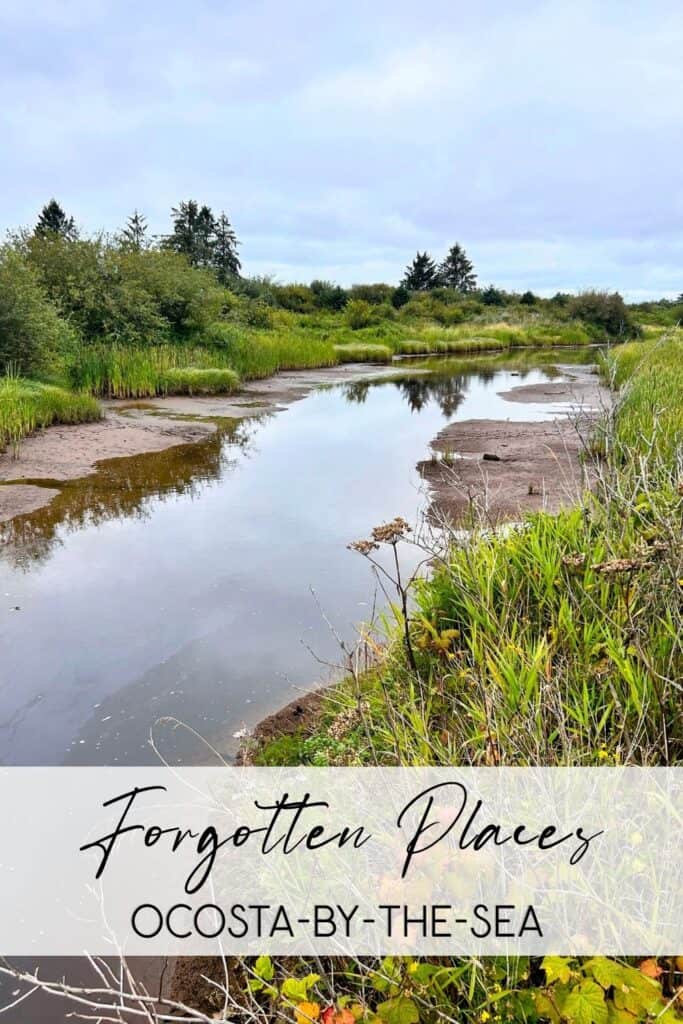
Stand at the end of the trail and look back at the trees.
That peaceful marsh?
It used to be a busy street, packed with people who thought they were building something permanent.
The Lone Survivor: The Ocosta Castle
Before you leave the park area, look across the road (Highway 105).
Standing tall among the trees is a stunning, three-story Victorian home known locally as the “Ocosta Castle.”
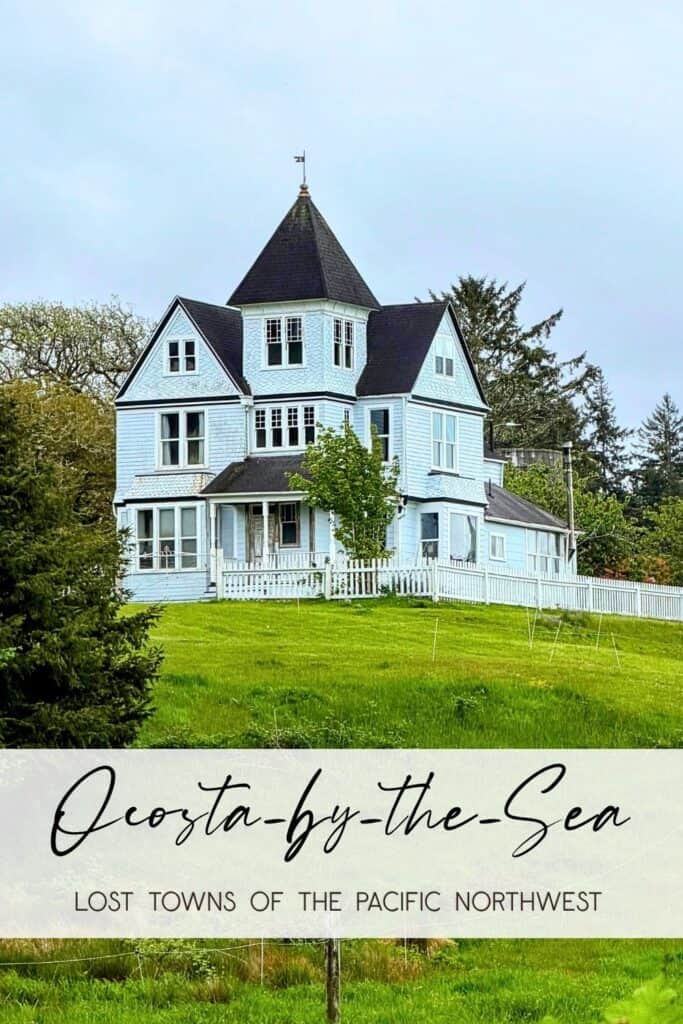
Built around 1891 for George McCandless, one of the town’s primary developers…this house is the last living witness to the “City on Stilts.”
While the rest of the town was barged away or reclaimed by the tide, the Castle stayed put.
Its ornate gables and towering presence offer a hauntingly beautiful contrast to the quiet marsh across the street.
Note: The home is a private residence, so please be respectful and view it from the road…but definitely take a moment to marvel at the fact that it’s still standing after 130 years of coastal storms.
The Contrast: Industrial Dreams vs. Natural Sanctuary
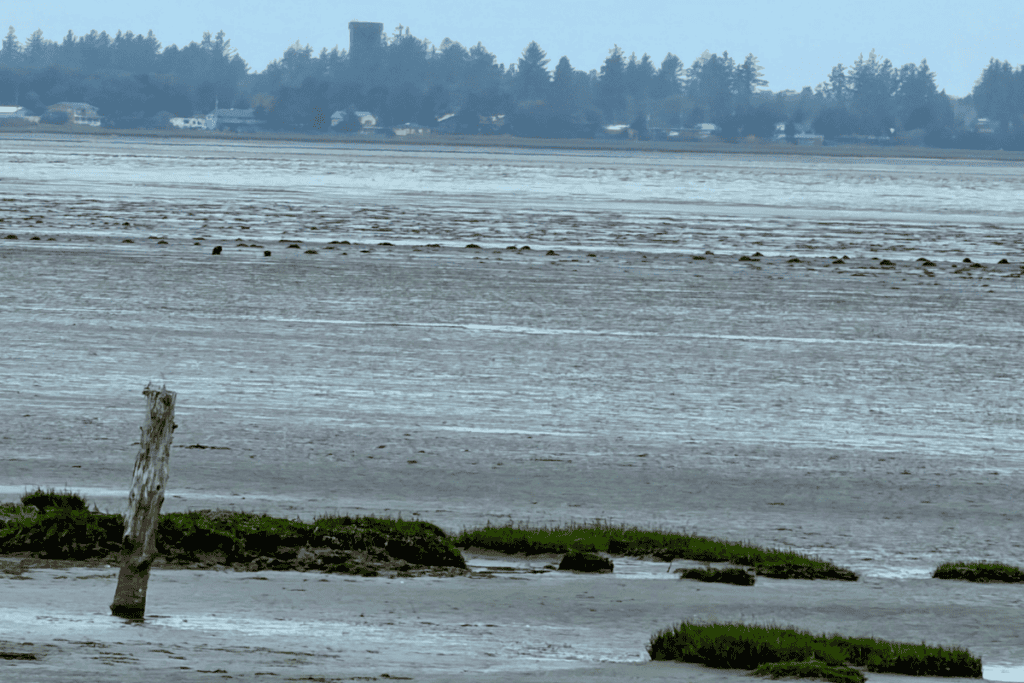
It’s very interesting, standing among these old pilings now.
The same mud that made it impossible to build a city is exactly why over a million shorebirds call this place home.
This “failed” port town turned into the perfect, untouched mudflats for the Pacific Flyway.
The pilings no longer support commerce…instead, they support herons and cormorants.
The old railroad grade has become a beautiful walking trail for birdwatching.
Time and nature have softened the edges of this place, leaving behind a kind of quiet beauty that’s hard to explain until you see it yourself.
Why Ocosta Matters Now
There’s a strange comfort in this place. It reminds us that building on uncertain ground is part of living.
We dream, we plan, and sometimes the tracks simply veer away.
Ocosta never turned into the big city its founders dreamed of, but it didn’t vanish… it just became something else.
Even stories that fade leave their imprint, and there’s a gentle resilience in forging a new way forward.
Research & Credits: Special thanks to the Polson Museum for the archival photographs. The historical visual recreations in this post were developed in collaboration with Gemini (Google AI) to help bring the 1891 “City on Stilts” into vivid color for a modern audience.
Click here to read about my solo visit to Ocosta-by-the-Sea?